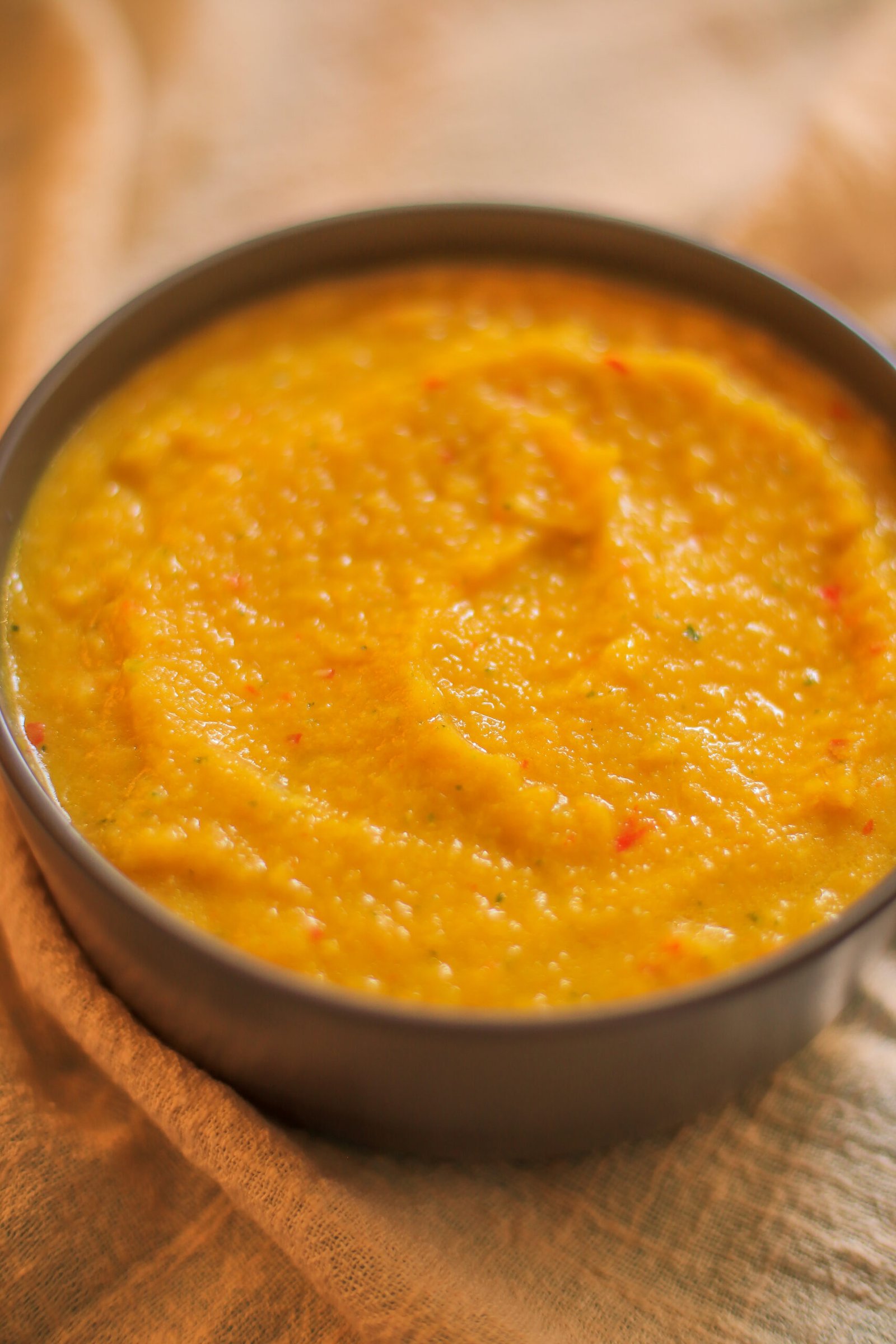
Ginger and Garlic Paste
Growing up in a Durban Indian household, there was always a container of ginger and garlic paste in the fridge. My mum made it in bulk and it went into almost every pot. It elevates every dish and it far better than anything you’ll find in a jar at the store. Once you make your own from scratch, you won’t go back.
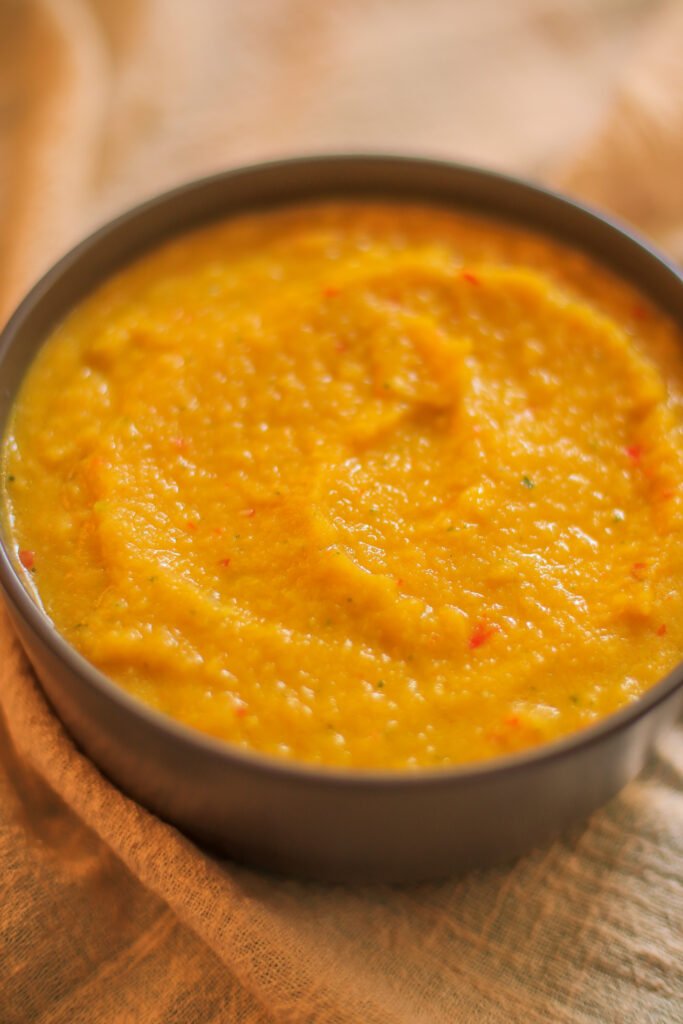
Why This Ginger and Garlic Paste Recipe Works
I make it in bulk and you should too. This recipe makes a generous batch – about three 1kg containers – so you’re not peeling ginger and garlic every time you want to cook. One goes straight into the fridge for the weeks ahead, and the rest go into the freezer until you need them.
It’s so much better than store-bought: Fresh ginger, garlic, and chillies give you a paste that’s brighter, more aromatic, and far more alive than anything pre-made.
It’s what gives Durban curries their character: The fresh red and green chillies and curry leaves aren’t just flavour boosters – they’re what make this paste distinctly Indian.
It goes into almost everything we cook: We use this paste in most of my curry recipes. If there’s a curry on this blog, this paste is almost certainly in it.
Ingredients
Garlic (1kg, peeled): Garlic is the backbone of this paste. It adds deep savouriness and warmth to every dish it’s used in. Fresh is always best.
Ginger (1kg, peeled and cut into small pieces): Ginger adds sharpness, warmth, and a slight citrusy heat. It balances the richness of the garlic perfectly.
Fresh red and green chillies (10 of each): The red chillies bring heat and a subtle sweetness and give the paste its beautiful warm colour, while the green chillies add a brighter, sharper heat. Together they create a well-rounded spice level that works across so many different dishes. Not a fan of heat? Simply leave them out and add fresh chilli directly to your pot instead of into the paste.
Curry leaves (2 sprigs): Curry leaves add an unmistakable earthy, aromatic flavour that’s signature to South African Indian cooking.
Vegetable oil (1 cup / 250ml, sunflower): Oil helps create a smooth paste and acts as a natural preservative, extending the shelf life of your paste.
Turmeric (2 tsp): Turmeric adds warm earthiness, a golden colour, and helps preserve the paste.
Water (3 cups / 750ml, lukewarm): A small amount of water helps the paste blend smoothly without becoming too watery. Add just enough to keep the blades moving.
How To Make Ginger and Garlic Paste
Step 1: Prep the ingredients
Peel the garlic and ginger and cut the ginger into smaller pieces so it blends more easily. Slice the chillies if needed.
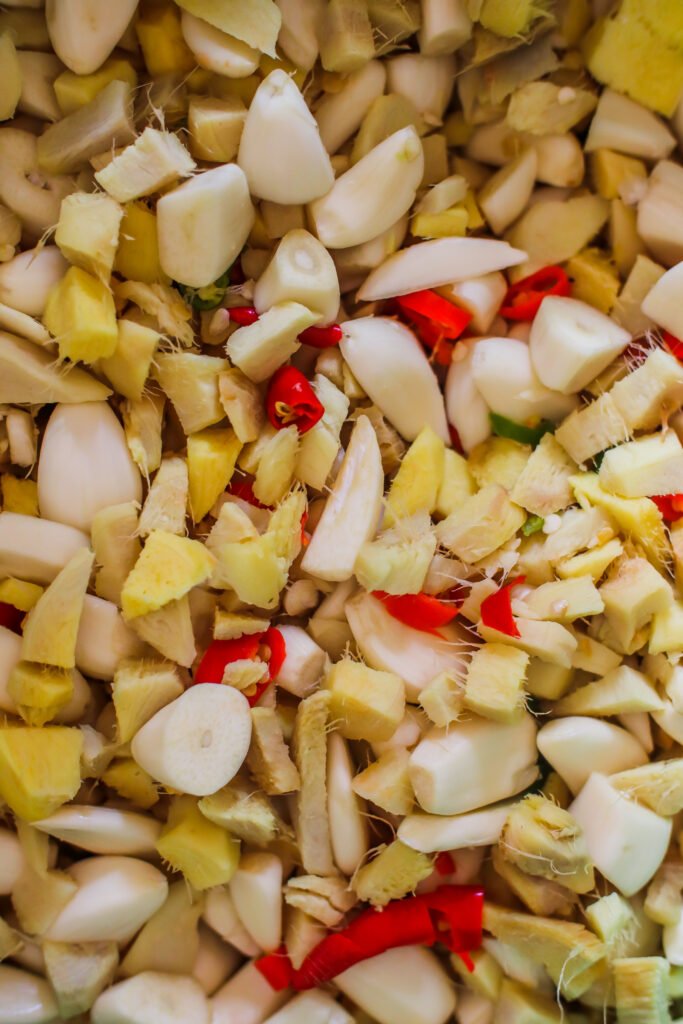
Step 2: Combine everything
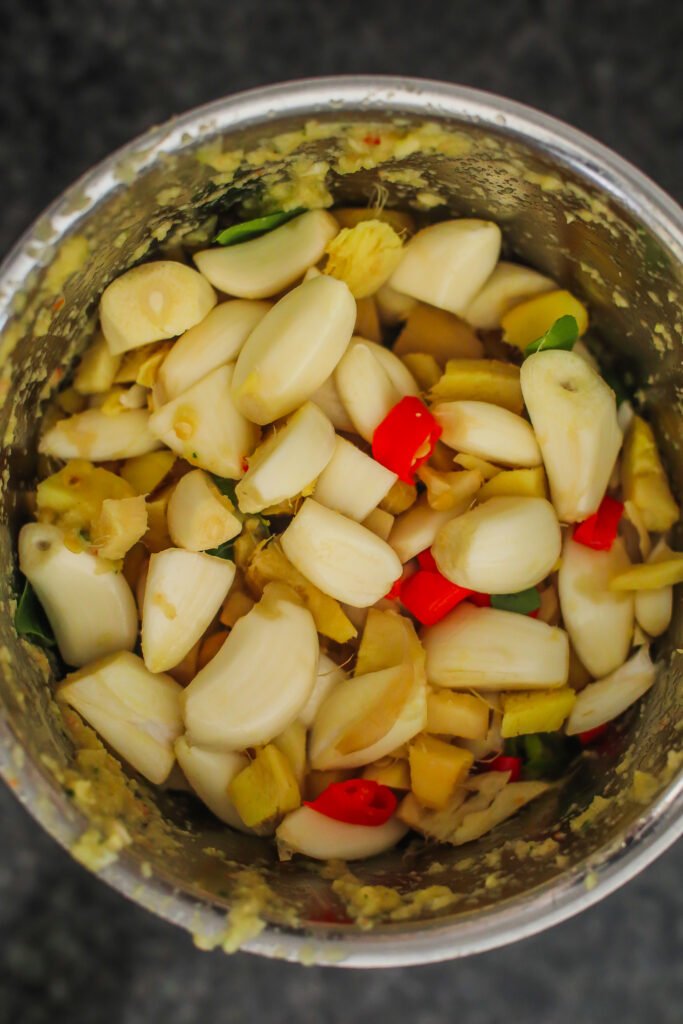
Add the garlic, ginger, red chillies, green chillies, and curry leaves into a large bowl. Mix everything together so it’s evenly distributed before blending.
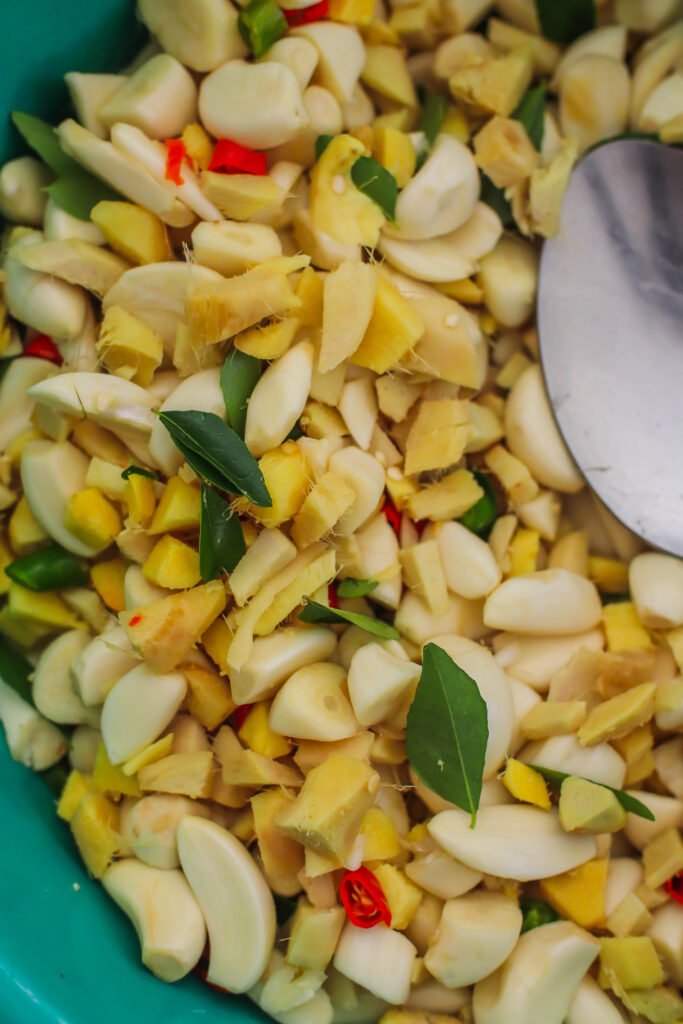
Step 3: Blend in batches
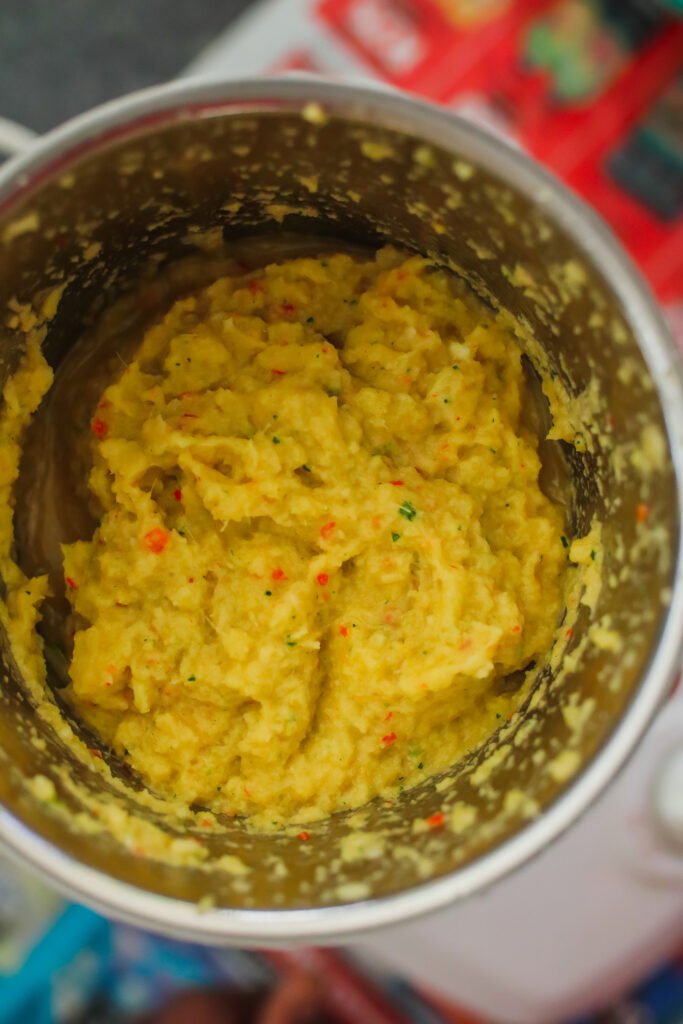
Working in batches, add a portion of the mixture to your food processor along with a little lukewarm water. Blend until a smooth paste forms. Be careful not to add too much water — you want a thick, smooth paste, not a watery one. Transfer each blended batch to a large bowl and repeat until everything is done.
Step 4: Add oil and turmeric
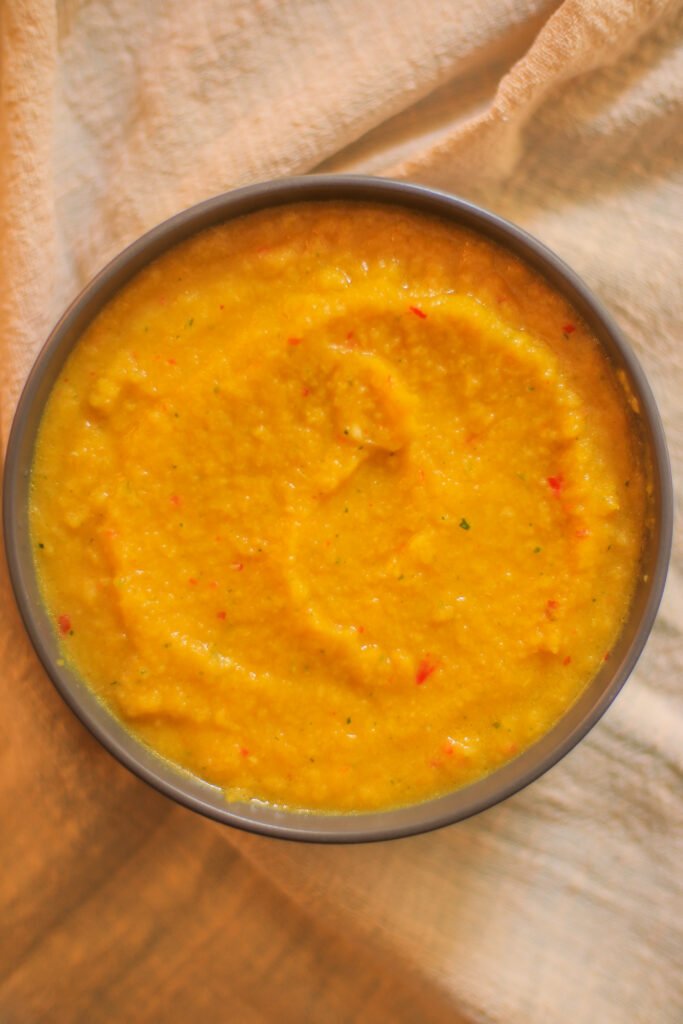
Once all the paste is blended, stir in the vegetable oil and turmeric until everything is well combined. The oil helps preserve the paste and gives it a beautiful glossy finish.
Step 5: Store
Transfer the paste into clean, dry containers – this quantity fills about three 1kg containers. One goes into the fridge for immediate use and the rest go straight into the freezer until needed. Before sealing each container, pour a thin layer of oil over the top of the paste. This creates a barrier that prevents oxidation and keeps your paste fresh for longer.
How I Use This Paste
This paste is added into almost every dish we make as a family. Here’s how I typically use it:
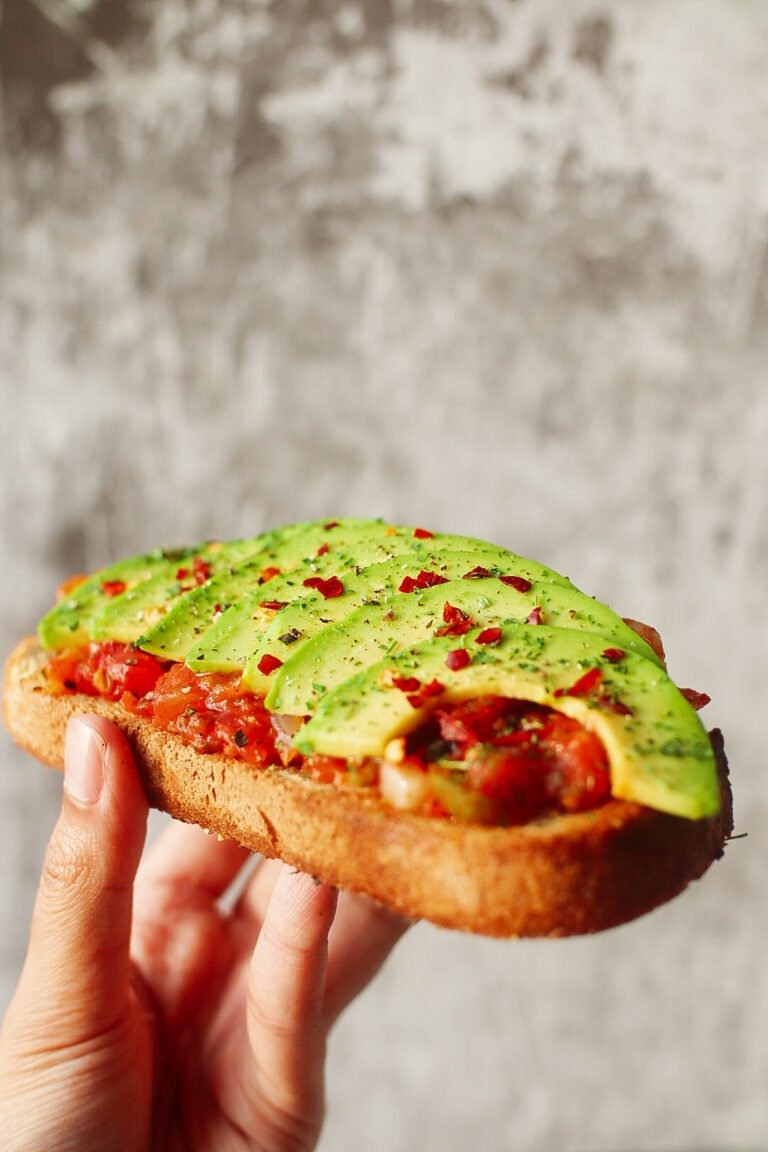
- In curries: I add 1–2 tablespoons per dish, straight into the hot oil after the onions have softened. Let it fry for a minute or two until the raw smell cooks off. You can use this ginger and galic paste in my simple sugar beans curry.
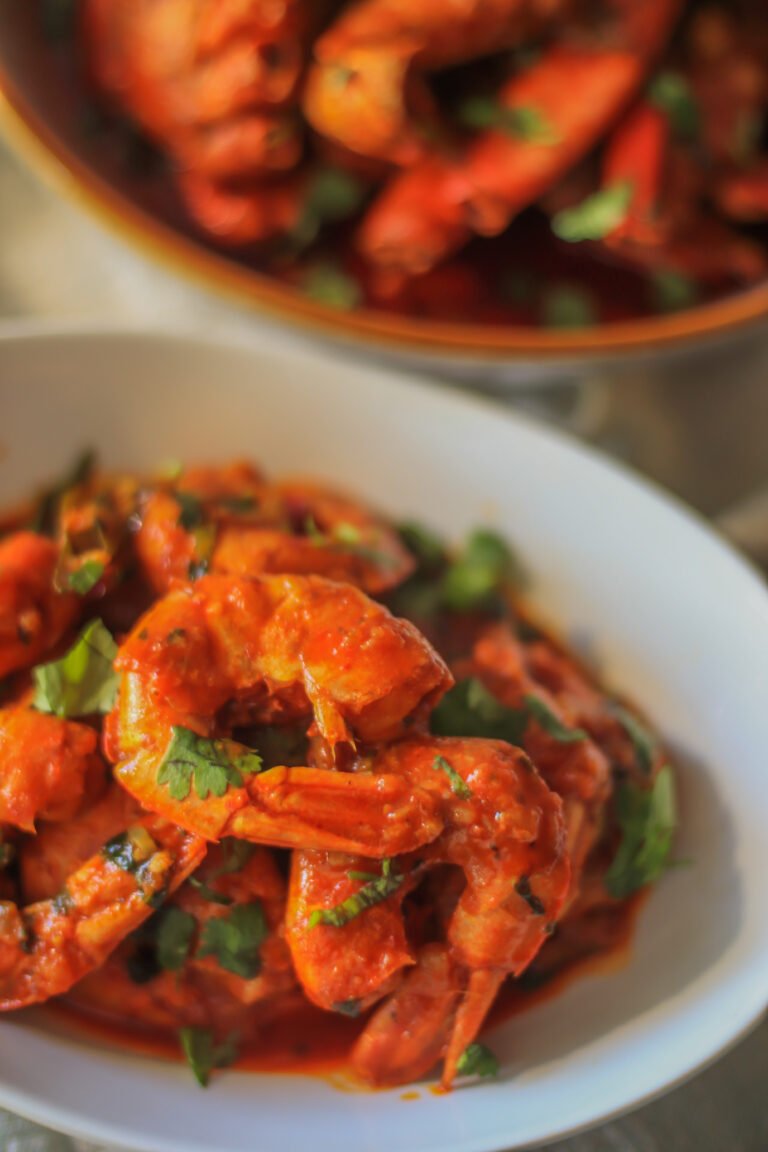
- In marinades: You can also mix it with turmeric, Kashmiri chilli powder, and salt to marinate your prawns before cooking. This is exactly how I use it in my Durban chilli garlic butter prawns. The paste does the heavy lifting in the marinade, infusing the prawns with flavour before they even hit the pan.
If you’re new to cooking with fresh paste, start with one tablespoon and taste as you go. It’s more flavorful than jarred paste, so a little goes a long way.
How To Store Ginger and Garlic Paste
We have always stored this ginger and garlic paste in Flora containers, South Africans will know the ones. Every South African household has a collection of them repurposed for everything from spice mixes to, yes, ginger and garlic paste. Since this recipe makes about three containers, here’s exactly what I do:
Fridge: One container goes straight into the fridge for immediate use over the coming weeks. Always use a clean, dry spoon when scooping out the paste and top up with a thin layer of oil to keep it fresh. It easily lasts for a couple of weeks this way.
Freezer: The remaining two containers go straight into the freezer. When the fridge one runs out, just pull a container from the freezer and let it thaw in the fridge overnight. Nothing wasted, always something ready.
Frequently Asked Questions
Can I make this paste without chillies? Absolutely. A plain ginger and garlic paste (without any chilli) is actually very useful to have on hand, especially if you’re cooking for kids or people who can’t handle heat. You can always add fresh chilli directly to the pot instead and control the heat that way.
Why is my paste turning green? Don’t panic. This is completely normal and happens when garlic oxidises after blending. It doesn’t affect the flavour. Keeping the paste well-sealed with a layer of oil on top will slow this down, but some discolouration is inevitable.
Can I use a blender instead of a food processor? Yes, a high-speed blender works well. Just be careful not to overdo it by adding in too much water. You still want a thick paste, not a smooth liquid.
How do I know if my paste has gone off? If the paste develops an unpleasant sour or fermented smell, or shows any signs of mould, discard it immediately. If you’ve been using a clean dry spoon and topping up with oil, this shouldn’t happen.
⭐ Tried this recipe? Leave a star rating and comment below – I’d love to hear how it turned out! Your feedback helps others find this recipe and cook with confidence.
Equipment
- Food processor
- Large mixing bowl
- sharp knife
- Chopping board
- Sterilised glass jars
- Measuring cups and spoons
Ingredients
- 3 cups (750ml) water (lukewarm)
- 1 kg garlic (peeled)
- 1 kg ginger (peeled and cut into small pieces)
- 10 red chillies (fresh)
- 10 green chillies (fresh)
- 2 sprigs curry leaves
- 1 cup (250ml) vegetable oil (sunflower)
- 2 tsp turmeric
Instructions
- Peel the garlic and ginger and cut the ginger into smaller pieces so it blends more easily. Slice the chillies if needed.
- Add the garlic, ginger, red chillies, green chillies, and curry leaves into a large bowl. Mix everything together so it’s evenly distributed before blending.
- Working in batches, add a portion of the mixture to your food processor along with a little lukewarm water. Blend until a smooth paste forms. Be careful not to add too much water – you want a thick, smooth paste, not a watery one. Transfer each blended batch to a large bowl and repeat until everything is done.
- Once all the paste is blended, stir in the vegetable oil and turmeric until everything is well combined. The oil helps preserve the paste and gives it a beautiful glossy finish.
- Transfer the paste into clean, dry containers – this quantity fills about three 1kg containers. One goes into the fridge for immediate use and the rest go straight into the freezer until needed. Before sealing each container, pour a thin layer of oil over the top of the paste. This creates a barrier that prevents oxidation and keeps your paste fresh for longer.
Notes
- This recipe fills about 3 x 1kg Flora containers – one for the fridge and two for the freezer.
- Add just enough water to keep the blades moving. Too much water will make the paste watery and shorten its shelf life.
- Always use a clean, dry spoon when scooping out the paste to prevent contamination.
- Top up with a thin layer of oil to keep the paste fresh for longer.
- Leave out the chillies for a plain ginger and garlic paste if preferred.