
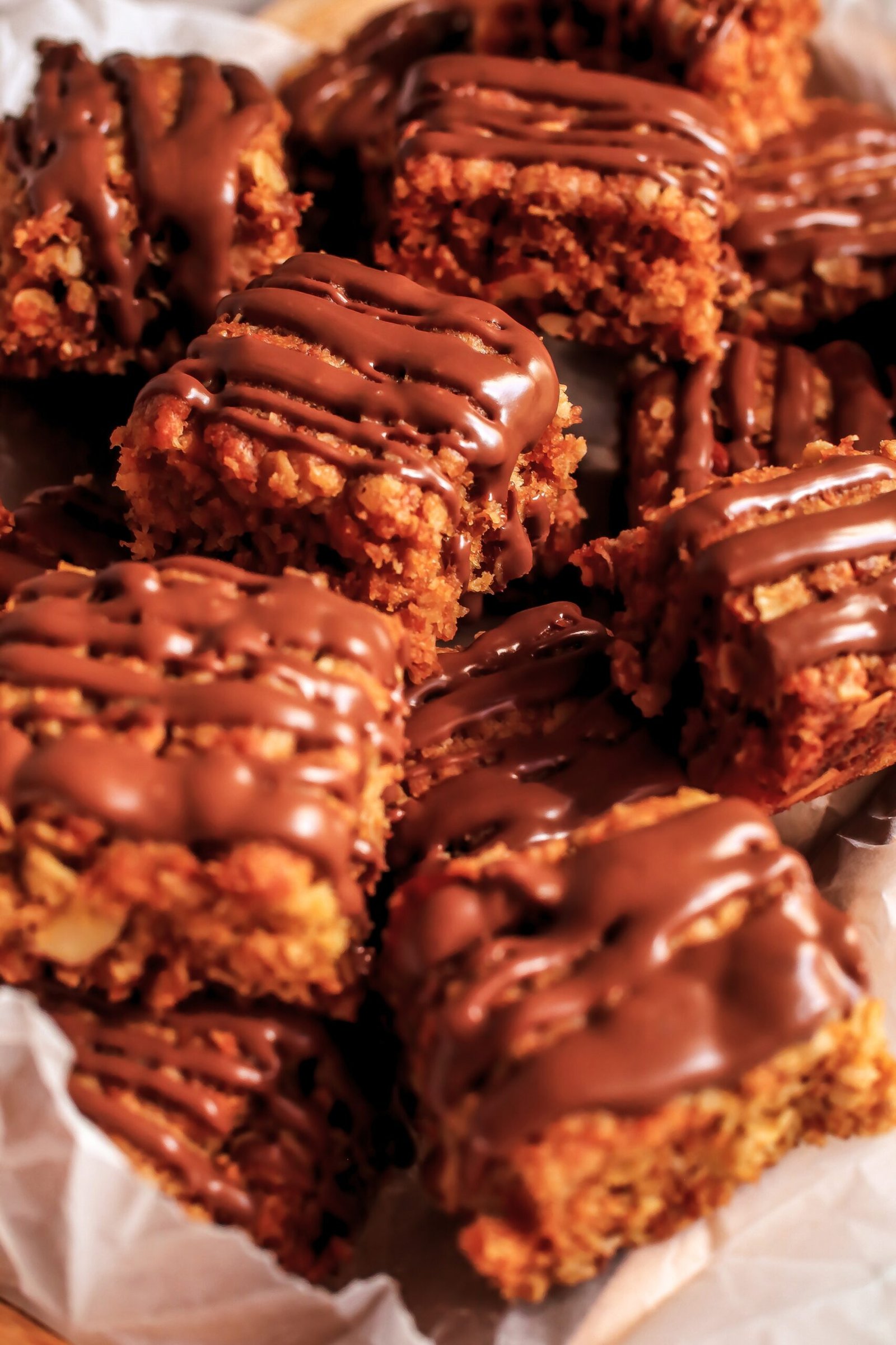
Chewy Oatmeal Bars (South African Crunchies)
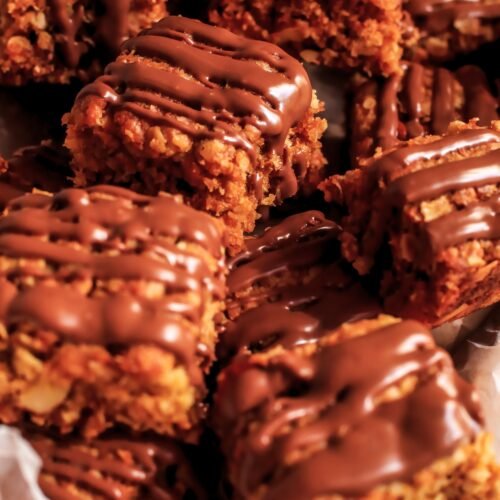
These chewy oatmeal bars will feel instantly familiar if you’ve ever had a British flapjack or an American oatmeal bar. It’s soft and chewy all the way through and sliced into squares. In South Africa we call them crunchies, and this version has chopped almonds folded through for extra bite, plus an optional chocolate drizzle. I made a batch this past Saturday and by the next day, it was already finished, so I’m making another batch to keep on hand for snacking while I work from home during the week.
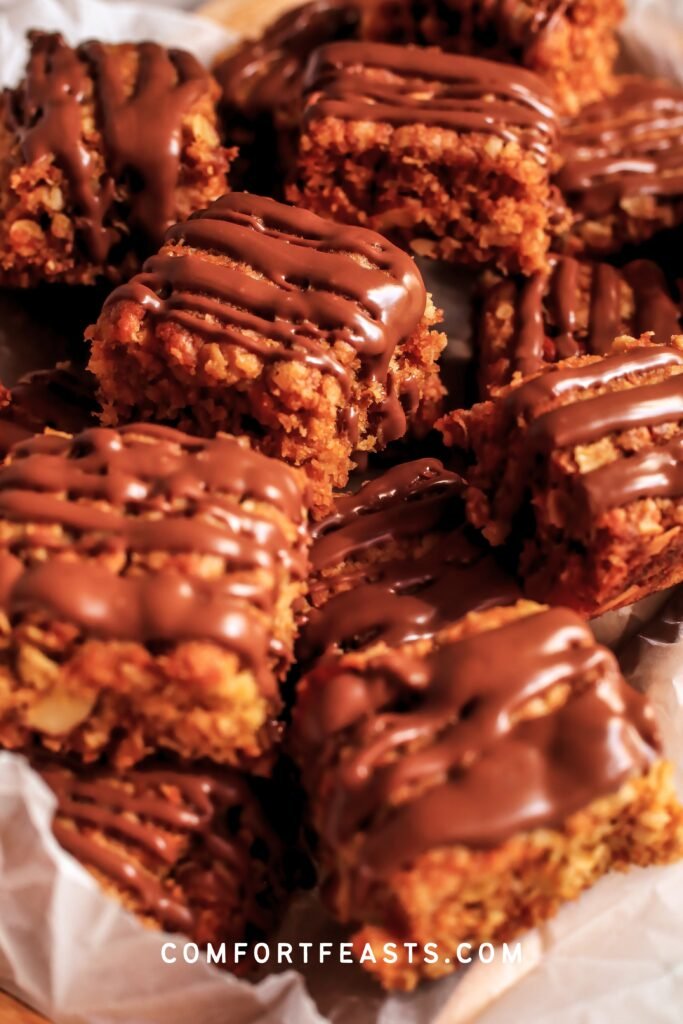
Why You’ll Love These Oatmeal Bars?
No fancy equipment needed: Just a bowl and the microwave to melt the margarine and combine the ingredients, then one tin to bake. That’s it.
Make-ahead friendly: These actually taste better the next day, so they’re perfect for baking ahead of a school week, a picnic, or a gathering.
Customisable: Swap the golden syrup with honey or maple syrup, add nuts, drizzle chocolate or leave it plain. This recipe adapts to whatever you have in the pantry.
Budget-friendly: Simple pantry staples that go a long way. One batch makes 36 small bars. However, if you prefer the sqaures to be bigger then it should make around 16-20.
Another easy no-egg bake: If you’re building out a lineup of eggless treats, these pair well with my Eggless South African Snowballs which is also quite popular on the blog.
Ingredients
Margarine: Melted margarine is the base that binds everything together and gives the bars their signature texture. Butter can be used instead for a richer flavour, though the bars may spread slightly more.
Bicarbonate of soda: This isn’t just a leavening agent here, it reacts with the hot melted margarine and helps aerate the mixture slightly, which is part of what keeps the bars from turning dense.
Golden syrup: Golden syrup gives the most authentic chewy, sweet texture and flavour, with that slightly caramelised edge. Honey or maple syrup both work as substitutes, though they might give a less chewy result.
Rolled oats: Rolled oats give the bars their structure and classic texture. I wouldn’t substitute rolled oats with instant oats because the bars will turn out too soft and won’t hold together the same way.
Cake flour: A small amount of flour helps bind the mixture without making the bars cakey.
Castor sugar Castor sugar dissolves more easily into the mixture than regular sugar, giving a smoother texture throughout. Regular white sugar can be used as a substitute.
Desiccated coconut: I love including coconut in this recipe because it adds flavour and a subtle chewiness.
Whole almonds, chopped: Chop the almonds finely and fold through the mixture. They add a great crunch and a nutty flavour that balances the sweetness. Pecans or walnuts work well too if you prefer.
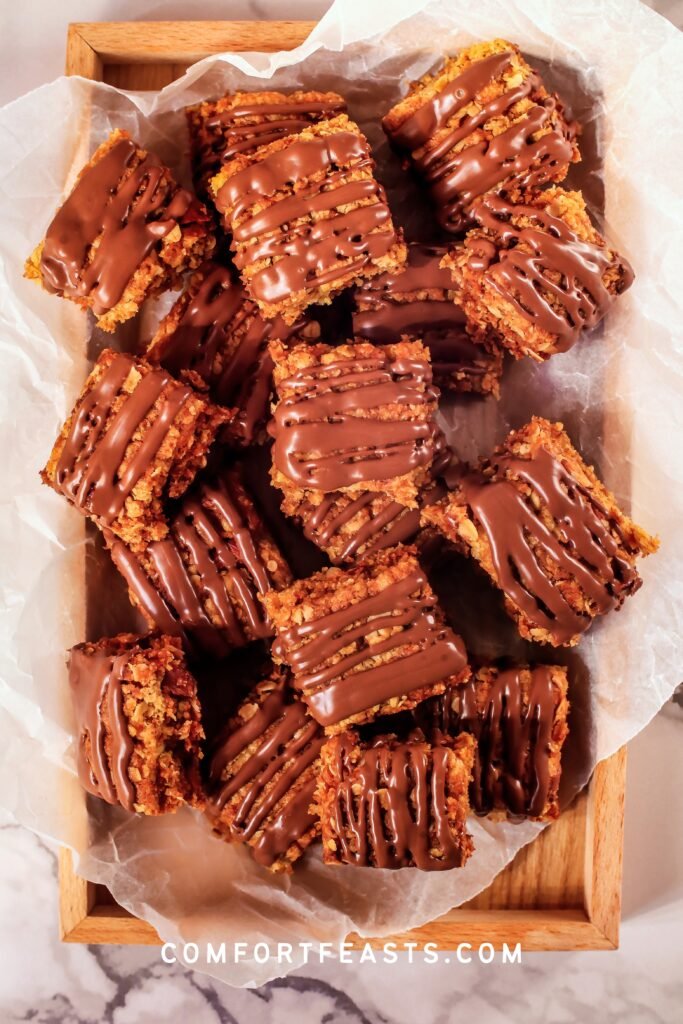
Melted chocolate: A drizzle of milk or dark chocolate over the cooled bars adds a little indulgence. Completely optional, but hard to say no to. It makes a real difference compared to having them plain, and they for sure will disappear even faster once you’ve added it.
How to Make Chewy Oatmeal Bars
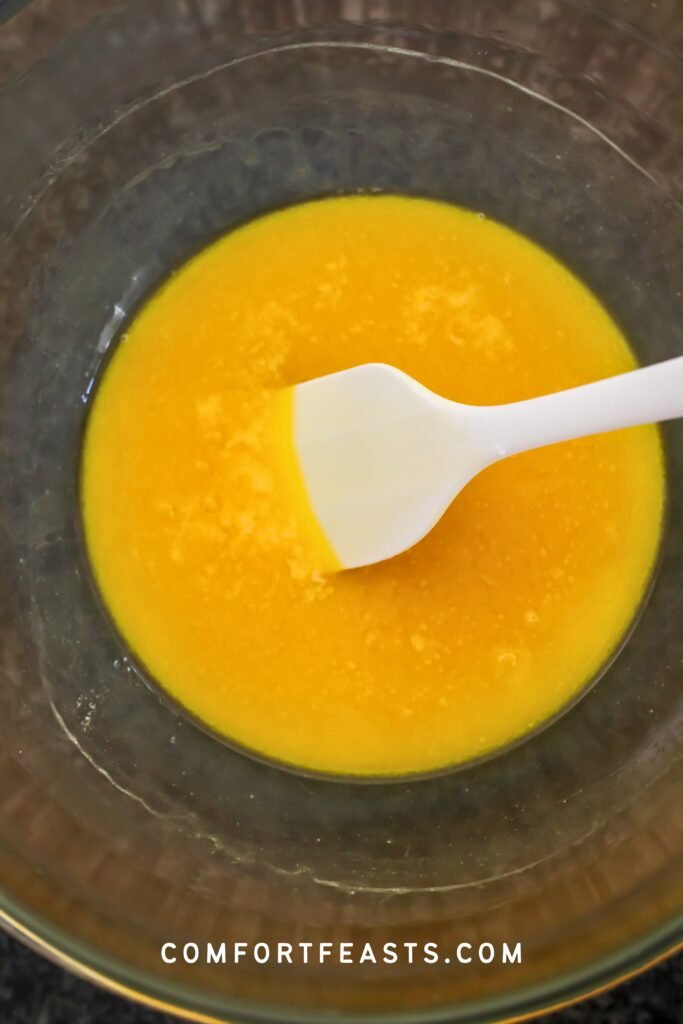
Step 1: Melt the margarine in the microwave in short bursts, this recipe is tested with the microwave method specifically, so I’d recommend sticking with it. Once fully melted, stir in the bicarb straight away. You’ll notice the mixture bubble slightly, that’s exactly what you want.
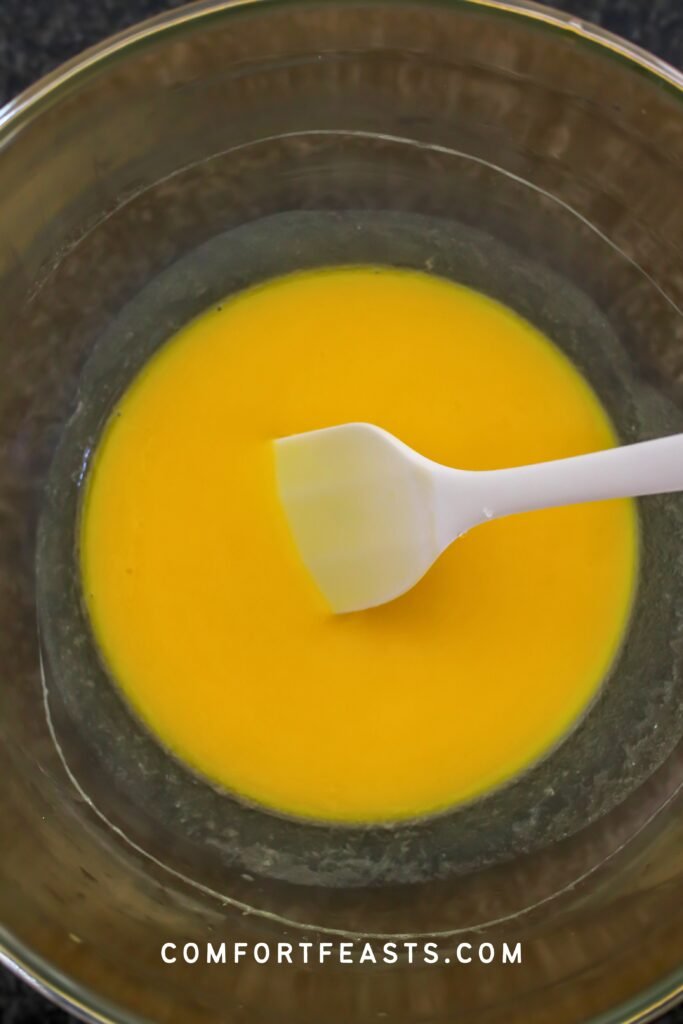
Step 2: Add the rolled oats, cake flour, castor sugar, desiccated coconut, golden syrup, and chopped almonds if using. Mix until everything is well combined and no dry patches remain. The mixture should clump together – thats when you know you got it right.
NOTE: If the mixture feels dry and won’t clump together, you may have overheated the margarine which has caused it to separate, so be careful. Margarine is an emulsion of fat and water (plus milk solids), held together in a stable structure. When it’s overheated, that emulsion can break, causing the fat to separate out from the water content instead of staying blended together.
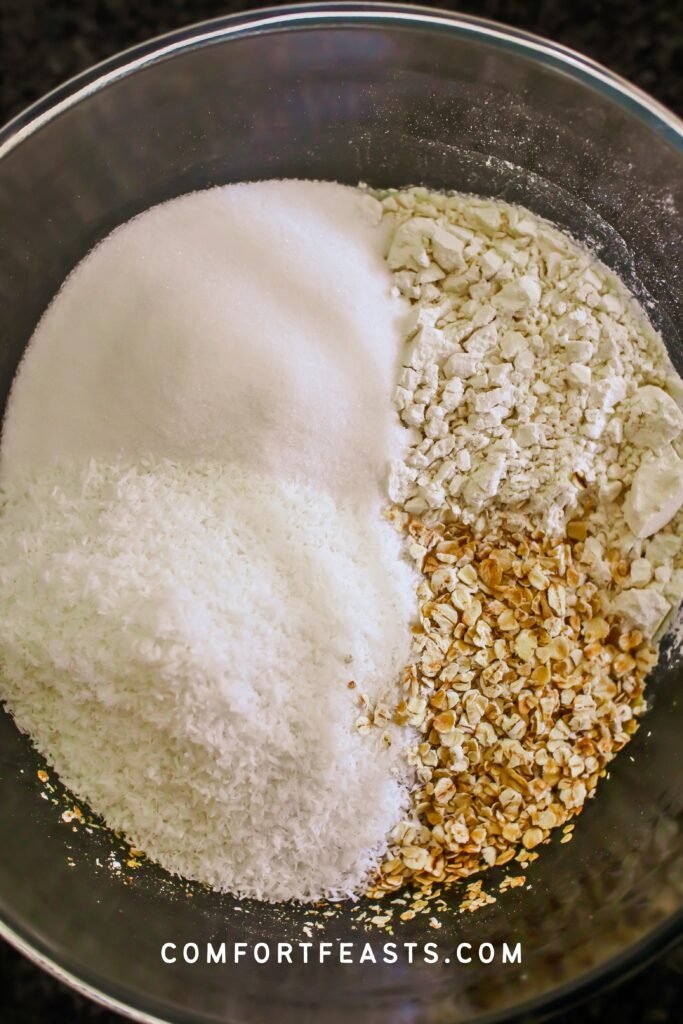
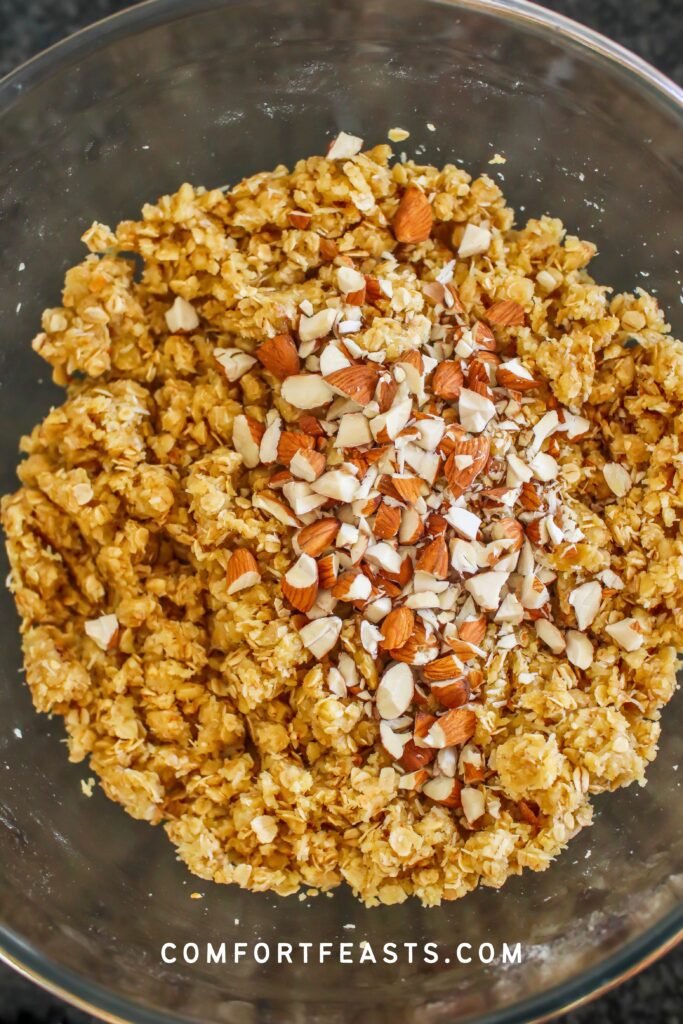
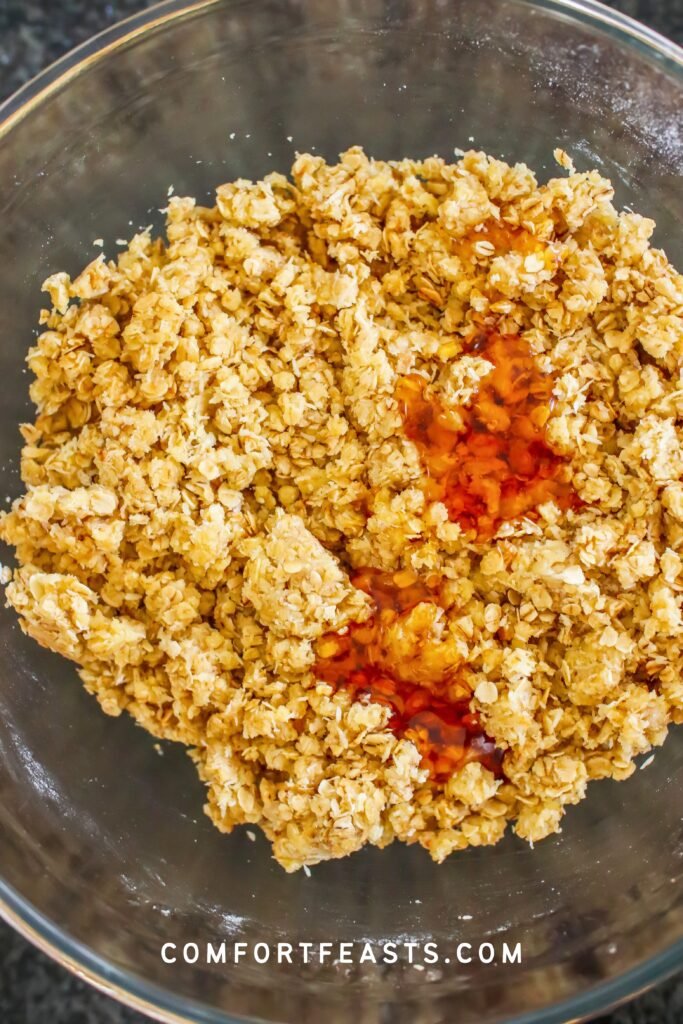
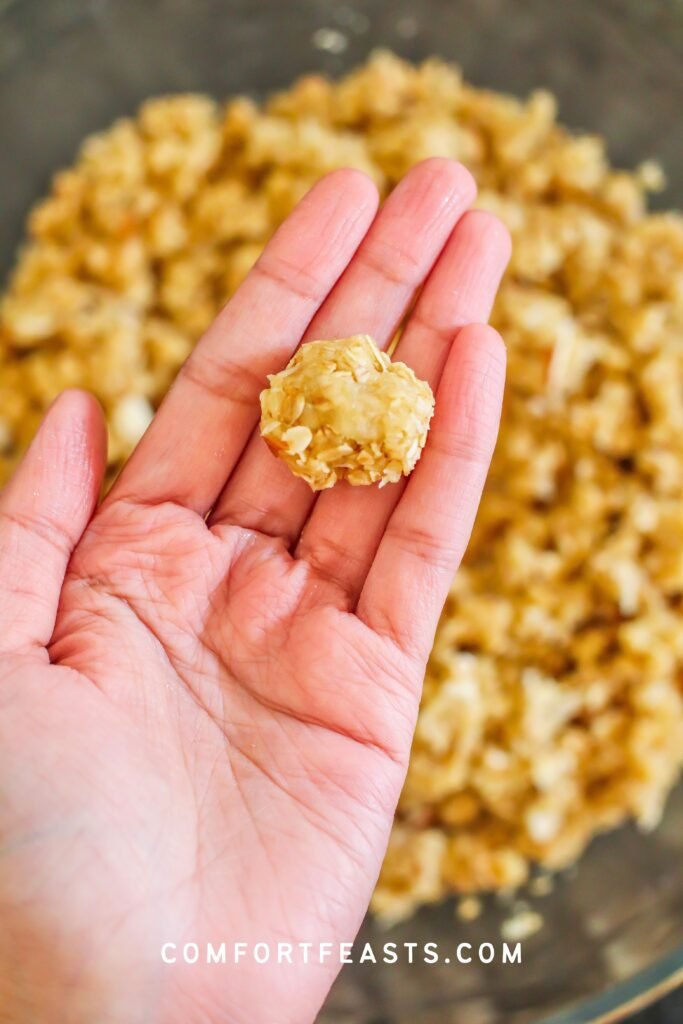
Step 3: Transfer the mixture into a 23cm x 23cm x 7.5cm square baking tin, or a similar rectangular tray. Press and flatten until the mixture is even across the tin.
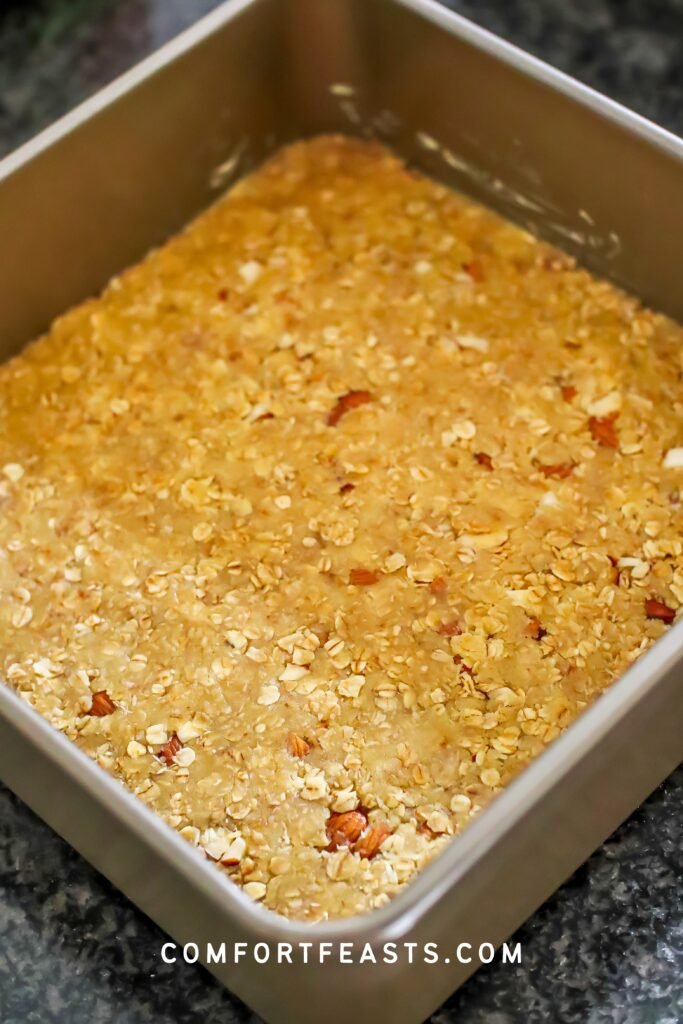
Step 4: Slice the mixture into 36 small pieces, or cut it into 16 to 20 larger pieces if you prefer bigger bars. Scoring the mixture before baking makes it much easier to slice cleanly once it comes out of the oven.
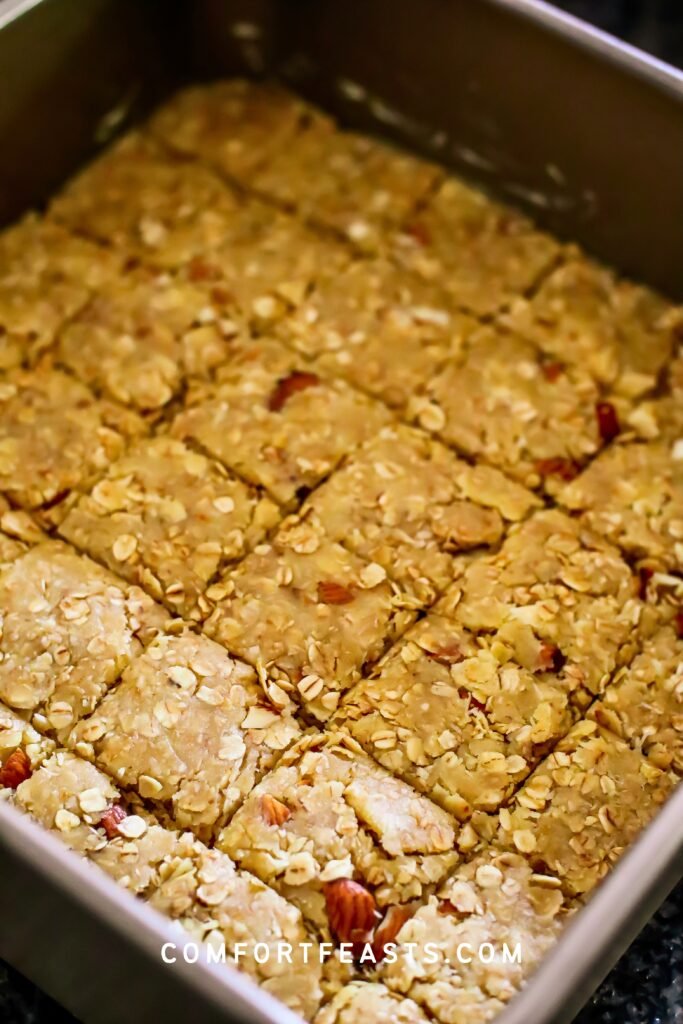
Step 5: Bake for 25 to 30 minutes at 160°C. Every oven runs slightly differently, so keep an eye on colour rather than the clock. You’re looking for golden brown, not deep brown.
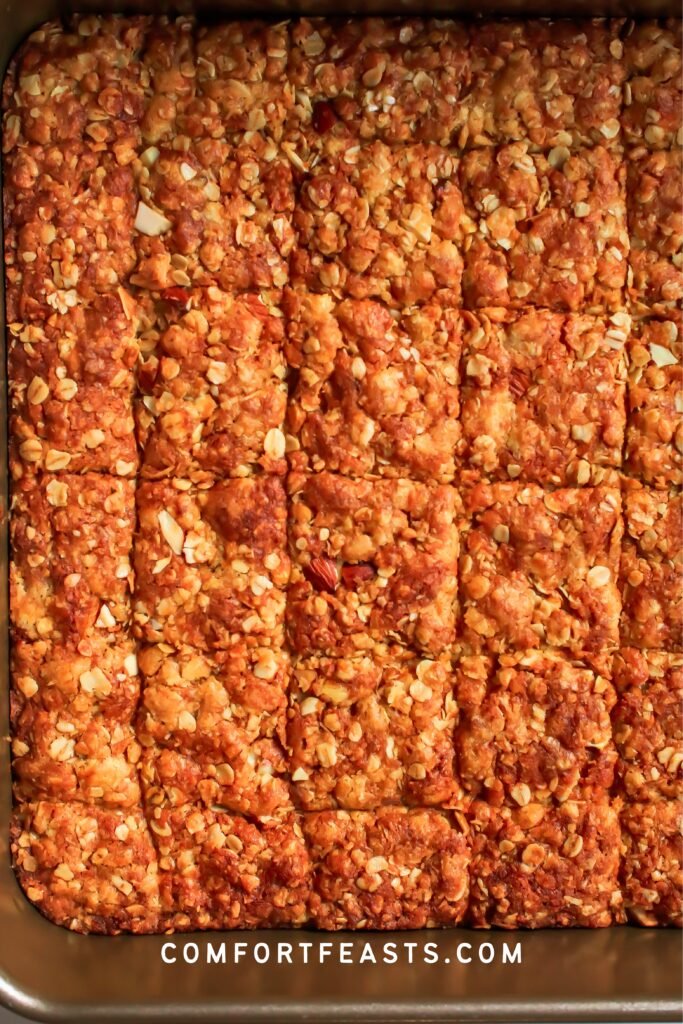
Step 6: The bars will still be soft straight out of the oven. This is the best time to cut along your scored lines, before they firm up. Leave them to cool and set completely for 2 to 4 hours.
Step 7: If using, drizzle the cooled bars with melted chocolate. For the best texture and flavour, let them rest overnight and enjoy the next day.
How to Store These Chewy Oatmeal Bars
Room temperature: Store in an airtight container for up to a week. The flavour, if anything, improves after day one as the bars settle and firm up.
Make-ahead tip: These oatmeal bars genuinely taste better the next day, so this is a great one to bake a day ahead of when you need it.
Variations of Oatmeal Bars to Try
Once you’ve made the base recipe a few times, it’s easy to make it your own. A handful of sunflower or pumpkin seeds adds extra crunch and a bit more nutrition. Chocolate chips folded through the mixture (in addition to or instead of the drizzle) give a more indulgent bar. A handful of raisins or dried cranberries works well if you like more chew and tartness against the sweetness. You can also swap the almonds for pecans, walnuts, or leave nuts out entirely for a nut-free lunchbox version.
Frequently Asked Questions
Are Crunchies the same as flapjacks or oatmeal bars? Essentially, yes. If you’re familiar with British flapjacks or American oatmeal bars, this recipe will feel very familiar in method and texture. Crunchies are the South African name and version, with golden syrup, desiccated coconut and bicarb giving it a slightly different flavour and texture profile from a classic flapjack.
Why didn’t my bars bind when I melted the margarine on the stovetop? This recipe is tested using the microwave method, and I’d recommend sticking with it. Stovetop melting is much easier to overheat, and margarine that gets too hot can start to split, which affects how well it coats and binds the oats and flour. It also changes the timing with the bicarb: you want to stir the bicarb in right as the margarine finishes melting, while it’s still actively reacting, so it can aerate the mixture as it’s mixed through. On the stovetop, that reaction often fires off too early or too fast, before it’s properly incorporated. Microwaving in short bursts gives you much more control over both of these things.
Why are my oatmeal bars too crumbly? This usually comes down to two things: the mixture wasn’t pressed firmly and evenly into the tin before baking, or the bars were left to cool completely before slicing. Cold bars tend to crack and crumble when cut, so slice along your scored lines while they’re still warm, then let them finish cooling for 2 to 4 hours once cut.
Can I make these without coconut? Coconut adds a lot of the flavour in this recipe, but if you’re not a fan, you can reduce the amount slightly and add a bit more oats to make up for it. The texture will change slightly, but the bars will still hold together and bake well.
Can I use instant oats instead of rolled oats? I wouldn’t recommend it. Instant oats break down too much and the bars will lose their chewy structure. Rolled oats are worth sticking to here.
How do I get a chewier bar versus a crunchier one? Bake time is the key variable. Pull them at 30 minutes for a chewier centre, or 5-10 minutes longer if you prefer a firmer, snap-in-half bar.
More Eggless Recipes to Try
⭐ Tried this recipe? Leave a star rating and a comment below, I’d love to hear how your oatmeal bars turned out.
Equipment
- Microwave-safe mixing bowl
- Wooden spoon or spatula
- Square baking tin, 23cm x 23cm x 7.5cm (or similar rectangular tray)
- sharp knife
Ingredients
- 200g margarine
- 1½ tsp bicarb
- 2 tbsp golden syrup (or honey or maple syrup)
- 2 cups (500ml) rolled oats
- 1 cup (250ml) cake flour
- ¾ cup (187.5ml) castor sugar
- ¾ cup (187.5ml) dessicated coconut
- 75g melted chocolate
Instructions
- Melt the margarine in a microwave, then stir in the bicarbonate of soda. You should see a very slight bubble.
- Add the rolled oats, cake flour, castor sugar, desiccated coconut, golden syrup, and chopped almonds. Mix until well combined.
- Press the mixture evenly into a greased 23cm x 23cm x 7.5cm baking tin.
- Score into 36 squares (or 16–20 larger pieces) before baking.
- Bake for 25 to 30 minutes at 160°C. Every oven runs slightly differently, so keep an eye on colour rather than the clock. You’re looking for golden brown, not deep brown.
- Cut along the scored lines while still warm, then cool completely for 2–4 hours.
- Once completely cooled, drizzle with melted chocolate (if using) and enjoy!
Notes
- Melt the margarine in the microwave, not on the stovetop. This recipe is tested using the microwave method specifically. Stovetop heat is much easier to overheat, which can affect how well the margarine binds with the dry ingredients.
- Bicarb reacts with the hot margarine and will bubble, this is normal and part of what gives the bars their texture and slight rise.
- Golden syrup gives the most authentic flavour and texture. Honey or maple syrup work as substitutes but may give a less chewy result.
- Score the mixture before baking so it’s easier to slice cleanly once baked.
- Cut along the scored lines while the bars are still warm. Cutting once fully cooled and hardened causes crumbling.
- The oatmeal bars taste even better the next day once fully set, so they’re great to make ahead.

These crunchies are absolutely delicious…
Hey Vesilia 💖 Thank you so much for trying out these crunchies! Im glad you enjoyed them 😁