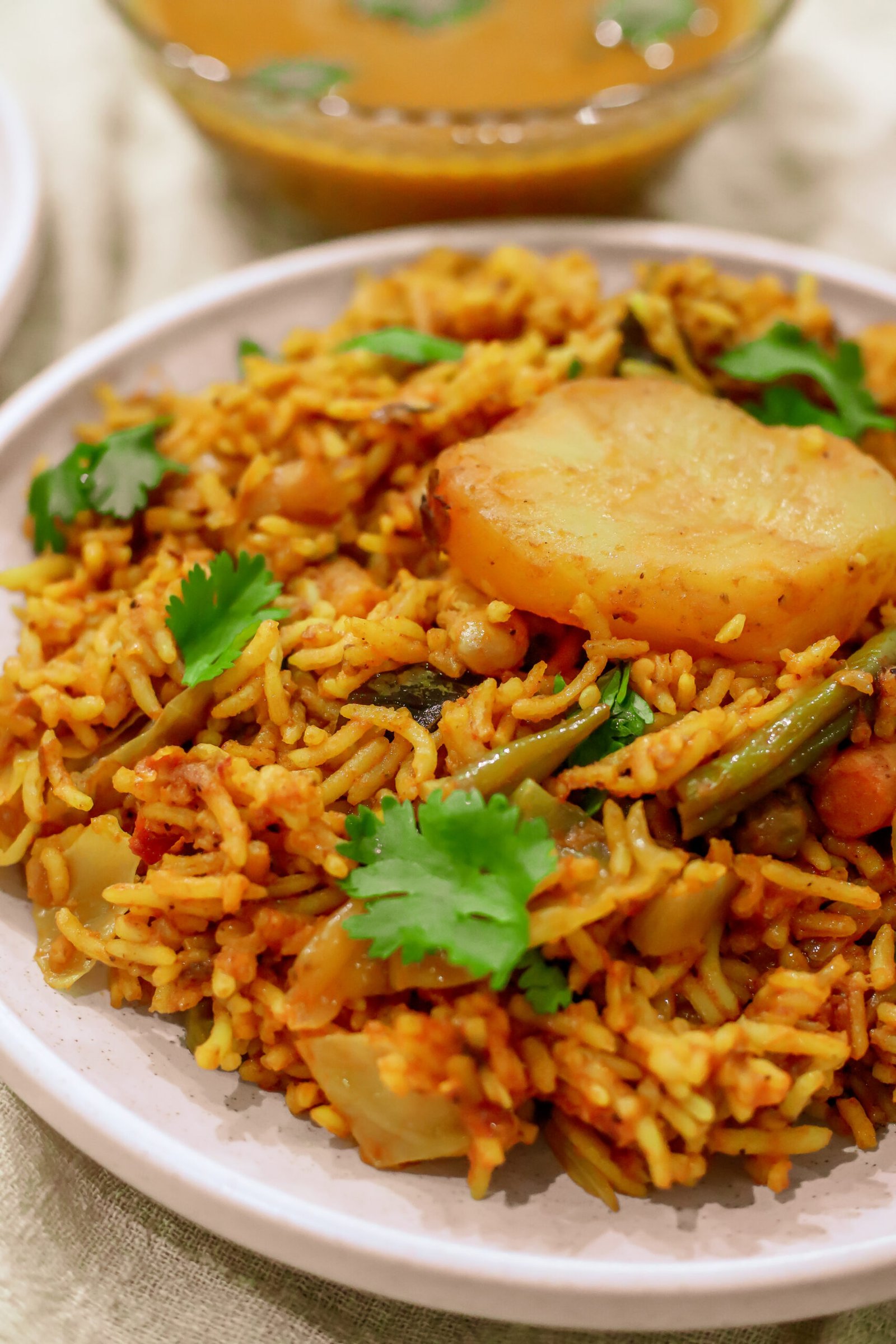
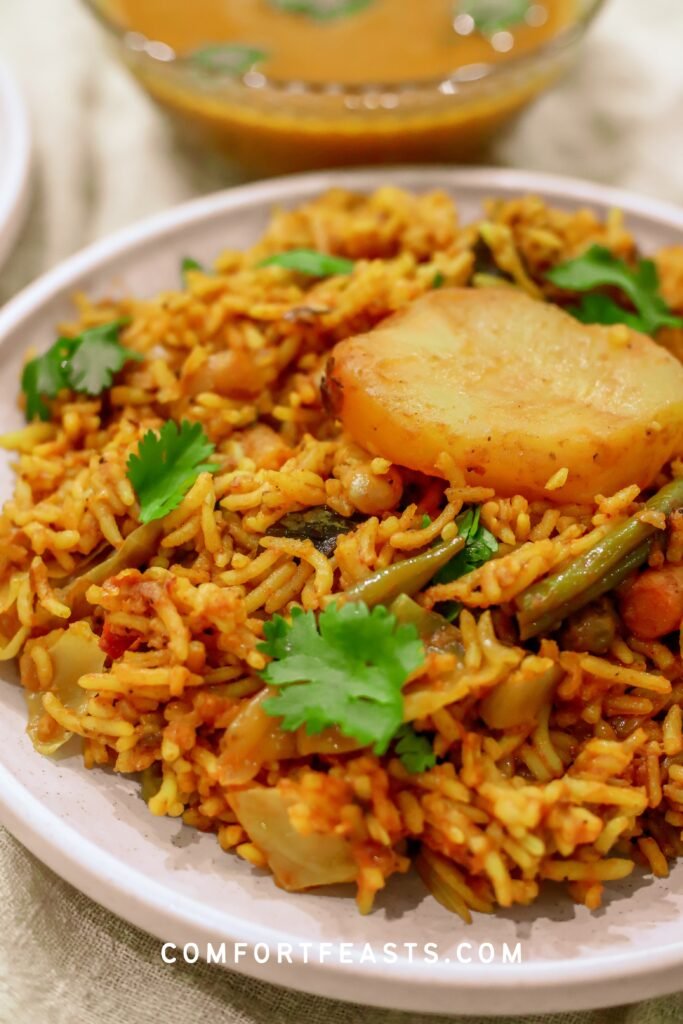
Durban Vegetable Biryani
During Purtassi, when we fast from meat for the month, and even on weekly fasting days, this vegetable biryani is what gets made and honestly, it’s really comforting, especially with my easy dhal recipe. It’s slow cooked with warming spices and tastes just like wedding biryani. Today I will be sharing my mum’s recipe. You can use whatever vegetables are on hand. It’s become one of those dishes that works just as well on a quiet weekday as it does when the whole family is around the table.
Why You’ll Love This Vegetable Biryani
A balanced vegetarian meal: Rice, vegetables, and biryani dhal come together to create a filling, well-rounded dish that doesn’t need extra sides to feel satisfying.
Versatile and adaptable: This recipe works with a wide range of vegetables and can easily be adjusted to what you have on hand, making it practical and budget-friendly.
Good for everyday cooking: Made with indian ingredients and simple techniques, this is a practical recipe you can cook confidently, not just for special occasions.
Supports flexible, plant-forward eating: Ideal if you’re looking to include more vegetarian meals without giving up flavour or comfort.
Great for leftovers and meal planning: This biryani reheats beautifully and tastes even better the next day as the flavours deepen.
Ingredients
For the Vegetable Masala
Margarine and Vegetable Oil – Adds richness and prevents the spices from burning. I used vegetable oil, but any neutral oil works.
Curry Leaves – Add a fragrant, citrusy aroma typical of Indian cooking.
Cinnamon Stick – Adds warmth and depth.
Fresh Green Chillies – Add gentle heat. Adjust to taste.
Onions – Form the flavour base and add natural sweetness. Half are reserved for topping.
Garlic Cloves – Infuse the margarine and oil with flavour.
Turmeric – Gives colour and a subtle earthy note.
Ginger and Garlic Paste – Brings fragrance and savoury depth.
Vadouvan (optional) – A mild French Indian style spice blend that adds gentle warmth.
Garam Masala – An Indian spice blend of ground cumin, coriander, and cloves.
Mixed Kashmiri Chilli Powder – Adds vibrant colour and mild heat. Adjust to taste.
Boiling Water – Added hot so the vegetables and rice cook evenly.
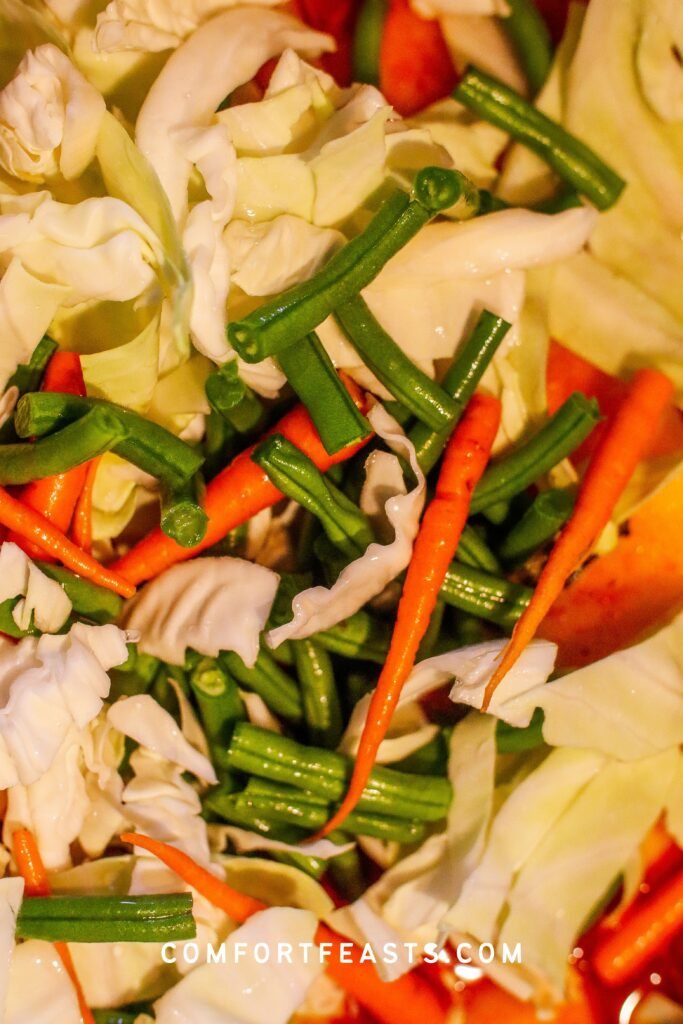
Mixed Vegetables – I used cabbage, baby peas, green beans, baby carrots, potatoes, and gadhra beans, but any combination works.
Coarse Salt – Seasons the vegetables and balances the flavours. Fine salt works too, just taste as you go.
Fresh Mint Leaves – Add freshness and balance the spices.
Tomato – Adds subtle tang and builds a rich, saucy base.
Plain Yogurt – Softens the veggies and adds gentle creaminess.
Biryani Dhal – I pressure-cook it for about 8 minutes, just until firm, so it finishes cooking with the rice. You can cook a larger batch and freeze the extra.
For the Rice
Basmati Rice – The long-grain rice cooks up fluffy, helping the biryani stay light rather than sticky.
Boiling Water – Added hot to maintain cooking temperature and help the rice cook evenly without slowing the process.
How to Make Vegetable Biryani
Step 1: Steam the gadhra beans and cook the biryani dhal
Steam the gadhra beans in boiling water for about 15 minutes, until just soft, then drain and set aside. Rinse the biryani dhal and pressure cook for about 8 minutes, until just firm, then drain.
Step 2: Prep the vegetables and rice
Chop all your vegetables and set them aside. Wash the basmati rice, rinsing 2 to 3 times until the water runs clear.
Step 3: Fry the onion base
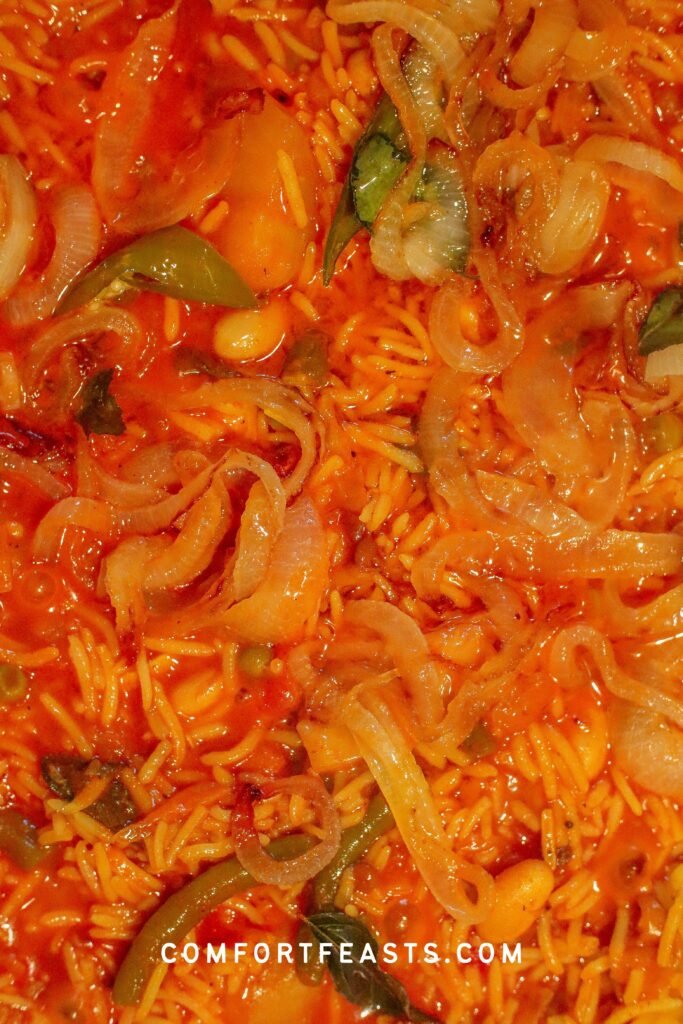
Heat margarine and oil in a large pot over medium-low. Add the cinnamon stick, curry leaves, green chillies, onions, and garlic. Cook until the onions are translucent. Remove half the onion mixture and set aside for topping later.

Step 4: Add the spices and potatoes
Stir in turmeric, ginger and garlic paste, vadouvan (if using), garam masala, and mixed Kashmiri chilli powder, mixing well to coat. Add the sliced potatoes and pour in enough boiling water to halfway cover them.


Step 5: Cook the vegetables
Add all the chopped vegetables, salt, mint, and 25g margarine. Pour in enough boiling water to cover, stir in the yogurt, cover, and cook until soft, about 45 to 60 minutes.

Step 6: Add the rice and dhal
Add the raw soaked rice and the cooked biryani dhal to the pot, mixing gently so nothing breaks apart. Pour in enough boiling water to fully submerge the rice, then cover with a slight gap and cook until the rice is soft.

Step 7: Steam
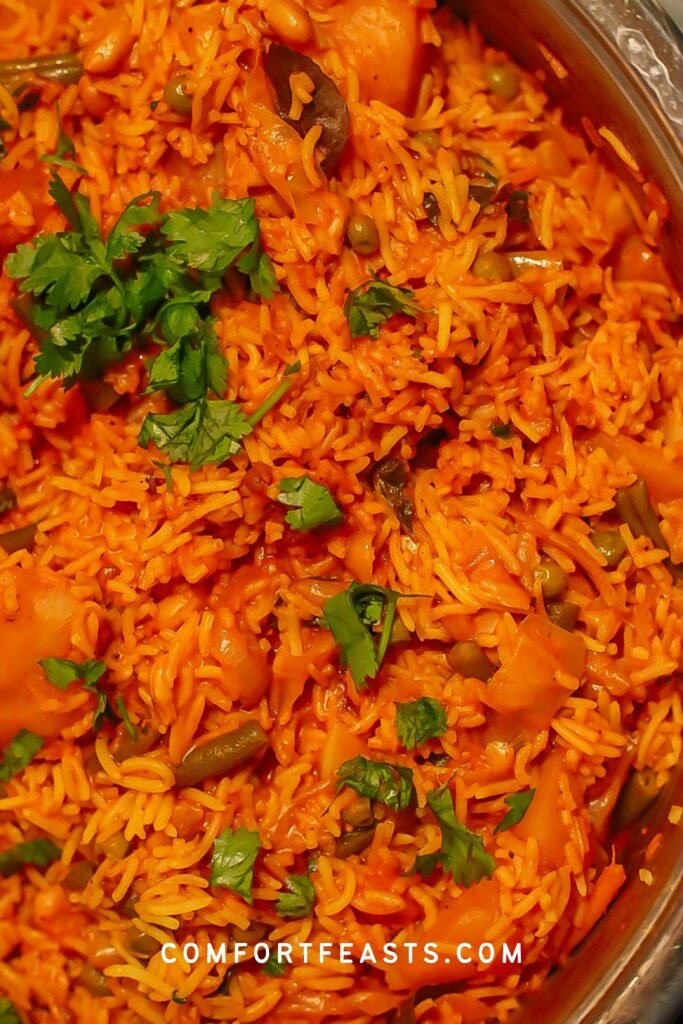
Once the rice and vegetables are cooked and most of the water has evaporated, leaving the pot moist but not dry, top the biryani with a little more margarine and the reserved fried onions. Steam gently on low heat for about 15 minutes, allowing all the flavours to come together before garnishing with fresh coriander.
Step 8: Serve
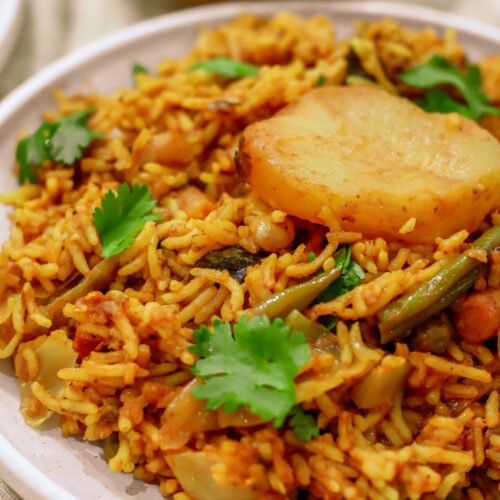
Enjoy this comforting vegetable biryani on its own, with dhal or with any of your favourite sides. If you love this veg biryani recipe, you should try my other flavorful vegetarian recipes like gram dhal with brinjal or even this Durban sugar bean curry.

Can I Make This Ahead of Time?
Prepping Ahead: You can chop the vegetables and cook the biryani dhal a day in advance, then store the vegetables in the fridge and freeze the biryani dhal until you’re ready to cook. This cuts down on prep time on the day.
Cooking Ahead: The entire biryani can be cooked a day ahead, and like many curries, the flavours deepen and improve after resting overnight. However, for the fluffiest rice, it’s best to cook and steam the biryani on the day you plan to serve it.
How to Store Vegetable Biryani?
Store leftover vegetable biryani in an airtight container in the refrigerator for up to 3 days. To prevent the rice from drying out or hardening, reheat gently on the stovetop or in the microwave.
Frequently Asked Questions
What are gadhra beans, and can I substitute them? Gadhra beans, also known as borlotti or cranberry beans, are a staple in Indian homes. They add a soft, slightly nutty bite among the vegetables. If you can’t find them, dubla beans, also known as lima or double beans, work just as well. And if neither is available where you live, canned butter beans make a good substitute. Just drain and rinse them before adding, and cut back on the steaming time slightly since they’re already soft.
Do you layer or mix the vegetable biryani? Traditional Indian biryani is usually layered and sealed to steam separately. I sometimes do it that way too. But for this recipe, the rice and vegetable dhal mixture get mixed gently in the pot, rather than layered. This way, every grain of rice picks up the masala instead of sitting on top of it. It also helps keep the dish from drying out. The moisture from the vegetables carries through as the rice steams.
How do you stop the biryani from drying out or getting mushy? The trick is adding the boiling water in stages rather than all at once. In Step 4, you only cover the potatoes halfway. In Step 5, you cover the vegetables fully. By Step 6, the rice gets just enough water to submerge it. This staged approach means the rice cooks through without turning mushy. The pot stays moist rather than watery once everything comes together in the final steam.
⭐ Tried this recipe? Leave a star rating and a comment below – I’d love to hear how it turned out! Your feedback helps others find this recipe and cook with confidence.
Equipment
- 30cm high pot (for the veg biryani)
- 20cm high pot (to set aside washed rice)
Ingredients
- 1/2 cup (125ml) vegetable oil
- 150 g margarine
- 1 sprig curry leaves
- 1 cinnamon stick
- 4 fresh green chillies
- 2 onions
- 8 garlic cloves
- 1 tsp turmeric powder
- 1 tsp ginger and garlic paste
- 2 tsp vadouvan (optional)
- 3 tsp garam masala
- 3 1/2 tsp mixed Kashmiri chilli powder
- boiling water
- 6 soft cooking potatoes, sliced in halves
- 1/2 large cabbage, sliced
- 200g baby peas
- 200g green beans, sliced
- 200g baby carrots, sliced
- 200g gadhra beans (also known as cranberry beans)
- 1 tbsp coarse salt (to taste)
- 100g fresh mint leaves
- 1 tomato
- 250g plain yogurt
- 100g boiled biryani dhal
- 3 cups (250g) basmati rice
- 2 tbsp margarine
Instructions
- Steam the gadhra beans in boiling water for about 15 minutes, until just soft, then drain and set aside. Rinse the biryani dhal and pressure cook for about 8 minutes, until just firm, then drain.
- Chop all your vegetables and set them aside. Wash the basmati rice, rinsing 2 to 3 times until the water runs clear.
- Heat margarine and oil in a large pot over medium-low. Add the cinnamon stick, curry leaves, green chillies, onions, and garlic. Cook until the onions are translucent. Remove half the onion mixture and set aside for topping later.
- Stir in turmeric, ginger and garlic paste, vadouvan (if using), garam masala, and mixed Kashmiri chilli powder, mixing well to coat. Add the sliced potatoes and pour in enough boiling water to halfway cover them.
- Add all the chopped vegetables, salt, mint, and 25g margarine. Pour in enough boiling water to cover, stir in the yogurt, cover, and cook until soft, about 45 to 60 minutes.
- Add the raw soaked rice and the cooked biryani dhal to the pot, mixing gently so nothing breaks apart. Pour in enough boiling water to fully submerge the rice, then cover with a slight gap and cook until the rice is soft.
- Once the rice and vegetables are cooked and most of the water has evaporated, leaving the pot moist but not dry, top the biryani with a little more margarine and the reserved fried onions. Steam gently on low heat for about 15 minutes, allowing all the flavours to come together before garnishing with fresh coriander.
- Enjoy this comforting vegetable biryani on its own, with dhal or with any of your favourite sides.
Notes
- Add the boiling water in stages rather than all at once, halfway over the potatoes, then fully over the vegetables, then just enough to submerge the rice. This keeps the biryani moist without turning mushy.
- No gadhra beans? Use dubla (lima) beans or canned butter beans instead, just drain, rinse, and reduce steaming time slightly.