
Gulab Jamun with Coconut (South African Style)
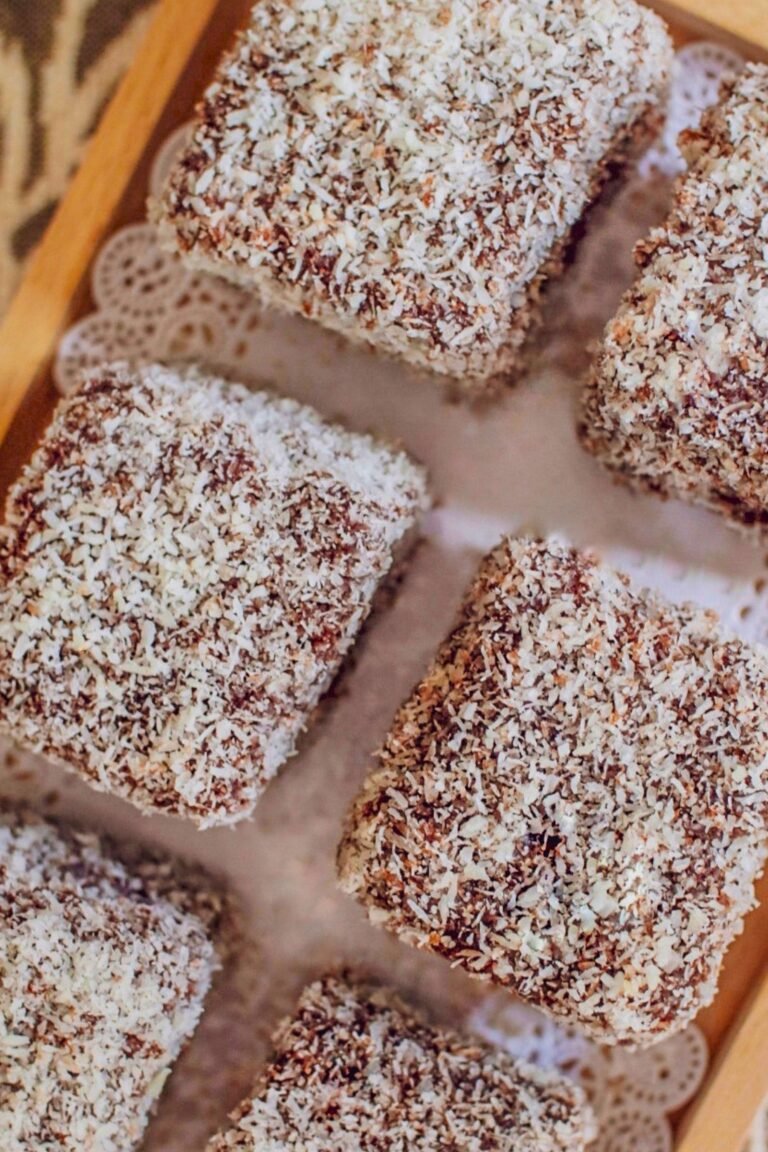
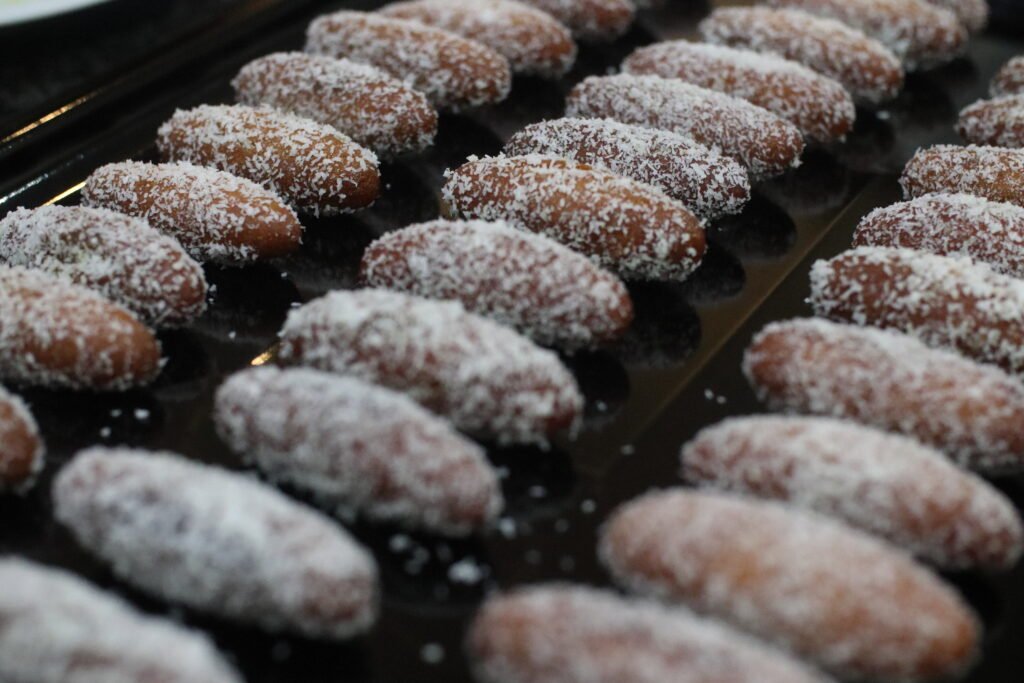
Gulab Jamun with coconut is a favourite South African Indian treat, especially during Diwali. It’s soaked in fragrant cardamom syrup, and generously rolled in desiccated coconut, making it irresistibly nostalgic. This is not the round, milk-powder version you’ll find elsewhere. This is the version passed down through South African kitchens, made with condensed milk and semolina, soft and syrupy in the centre with a coconut coating that adds just the right amount of texture.
What Makes South African Gulab Jamun Different?
Traditional Indian gulab jamun is typically made with khoya (dried milk solids) or milk powder. The South African version takes a different approach entirely, using sweetened condensed milk as the base, combined with self-raising flour and fine semolina. This gives the dough a softer, more pliable texture that fries beautifully and soaks up syrup from the inside out.
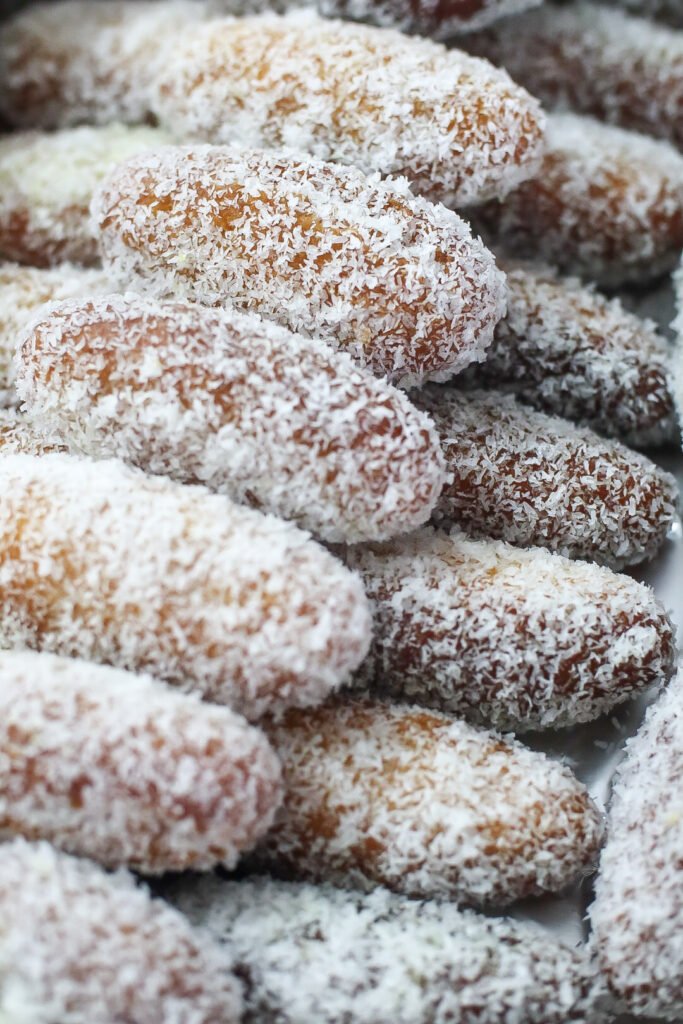
The other defining characteristic is the coconut coating. Once the jamuns are fried and soaked in warm cardamom syrup, they are rolled generously in desiccated coconut, a finishing touch that adds a slightly nutty, sweet contrast to the syrupy centre.
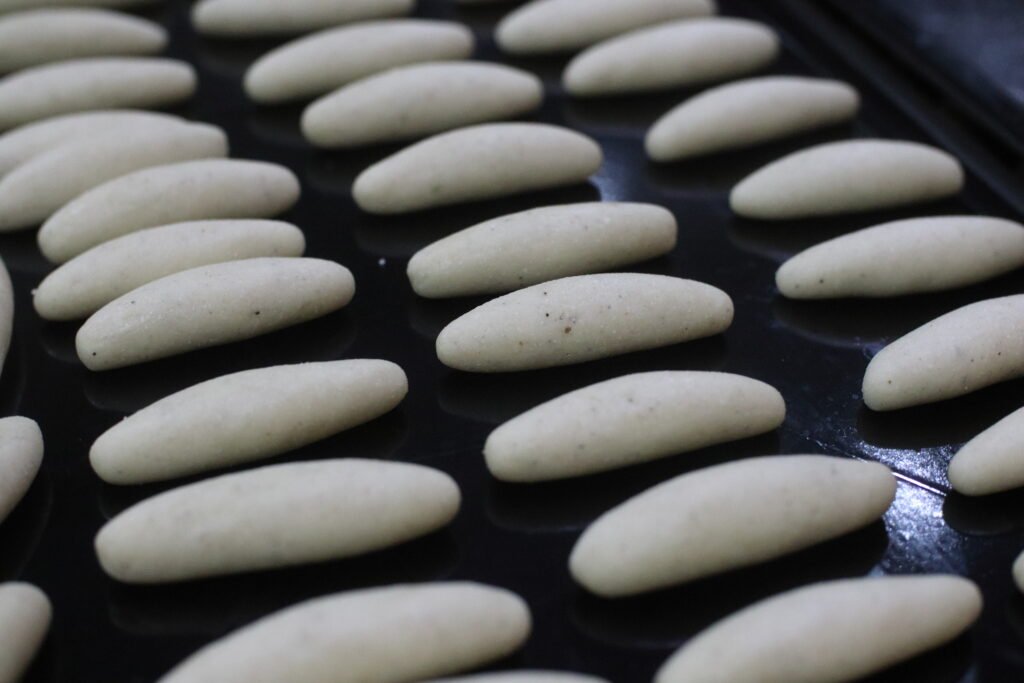
These gulab jamuns are also elongated ovals rather than round balls, making them easy to roll in coconut and giving them more surface area to soak up the syrup.
Why You’ll Love This Gulab Jamun Recipe
Foolproof dough: The condensed milk does the heavy lifting. It sweetens, moistens, and binds the dough all at once, making it easy to work with even for first-time bakers.
No khoya or milk powder needed: Everything you need is a standard South African pantry staple. Condensed milk, self-raising flour, semolina, butter, and cardamom.
Soft and syrupy every time: Frying on medium-low heat and soaking immediately in warm syrup ensures every jamun is soft through to the centre.
The coconut coating: This is what sets South African gulab jamun apart. The desiccated coconut adds texture and a beautiful finish that makes these impossible to stop eating.
Even better the next day: Like most syrup-soaked sweets, gulab jamun tastes even better after resting overnight as the flavours deepen and the syrup fully absorbs.
Perfect for any celebration: Whether it’s Diwali, a wedding, or a family gathering, these gulab jamuns are always on the table alongside favourites like barfi, sweet rice, and other Indian desserts.
Ingredients for Gulab Jamun
For the Dough
Condensed milk: It provides sweetness, moisture, and richness all in one, binding the dough and giving the gulab jamuns their soft, tender interior. Use full-fat condensed milk for the best results
Self-raising flour: Gives the dough structure and helps the jamuns puff slightly during frying. Sift it before using to remove any lumps and keep the dough smooth.
Semolina: Adds a subtle texture that helps the jamuns hold their shape while remaining soft inside. Use fine semolina for the softest result.
Baking powder: Gives a gentle lift, keeping the jamuns light and airy rather than dense and heavy.
Butter: Adds richness and smoothness to the dough. Use softened butter so it rubs evenly into the flour.
Elachi / Cardamom powder: The signature spice of gulab jamun. It gives the dough and the syrup that warm, aromatic flavour.
Bicarbonate of soda: Works alongside the baking powder to ensure the jamuns are light inside.
For the Sugar Syrup
Sugar: Forms the base of the soaking syrup. White granulated sugar works best for a clean, clear syrup.
Water: Boiling water dissolves the sugar into a syrup the jamuns can absorb evenly.
Cardamom pods: Infuses the syrup with that warm, floral aroma. Lightly crush them before adding to the pot to release more flavour.
Orange or yellow food colouring: Gives the syrup and jamuns their warm golden hue. Optional but traditional.
For the coating
Desiccated coconut: Roll the soaked jamuns generously in coconut while still warm. This helps the coconut stick evenly to the surface, adds a light texture contrast, and prevents the jamuns from sticking together while serving.
How to Make South African Gulab Jamun
Step 1: Mix the Dry Ingredients
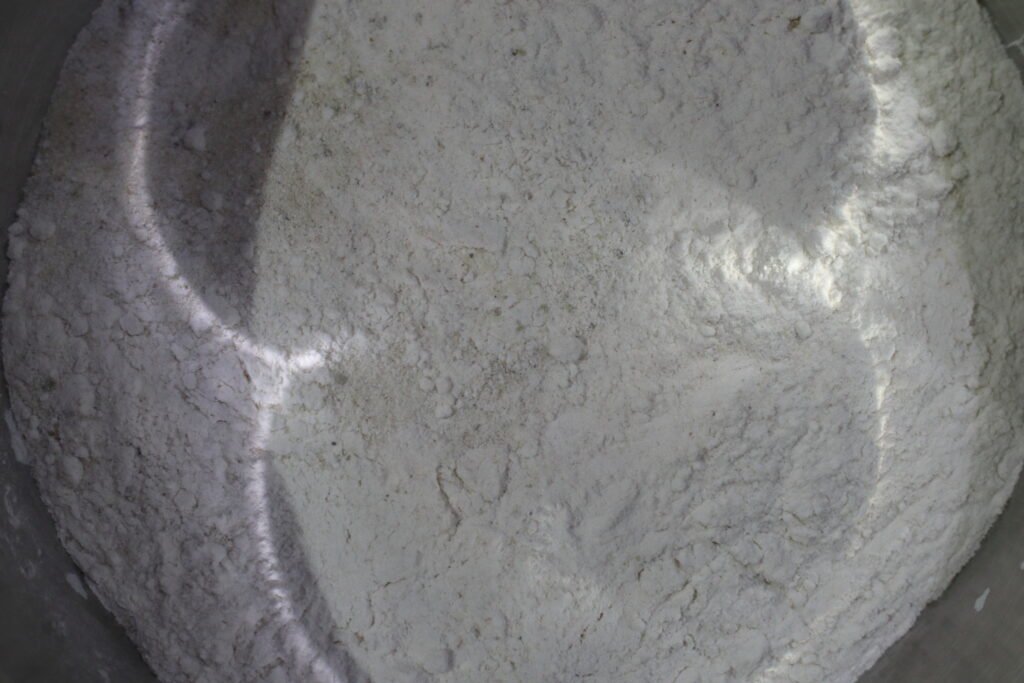
In a large bowl, combine the self-raising flour, semolina, baking powder, bicarbonate of soda, and cardamom powder. Mix well so everything is evenly distributed.
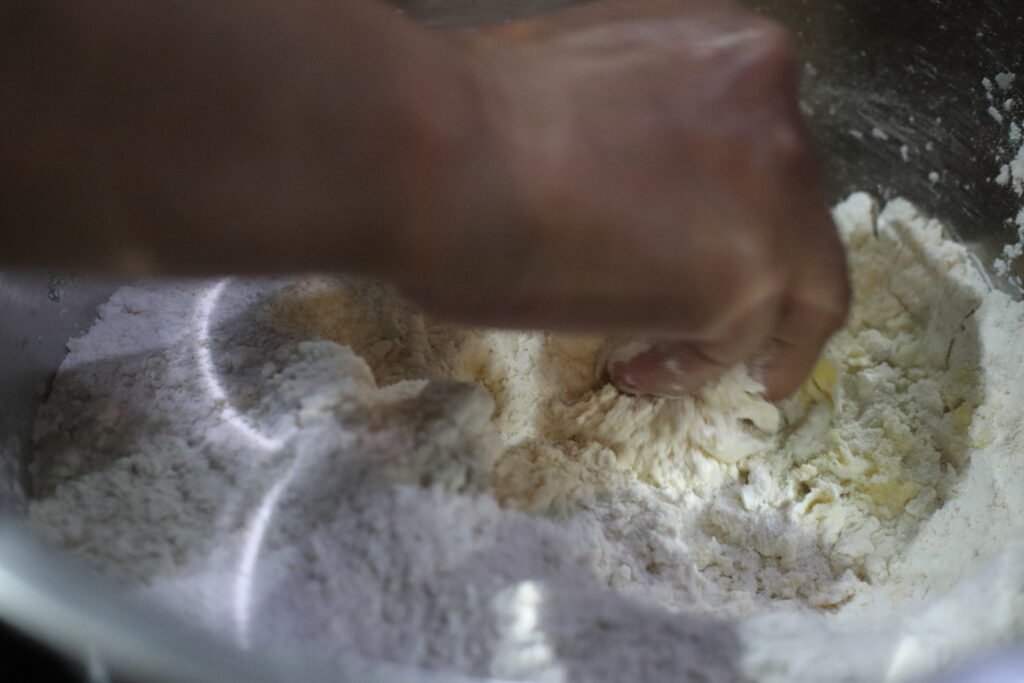
Step 2: Rub in the Butter
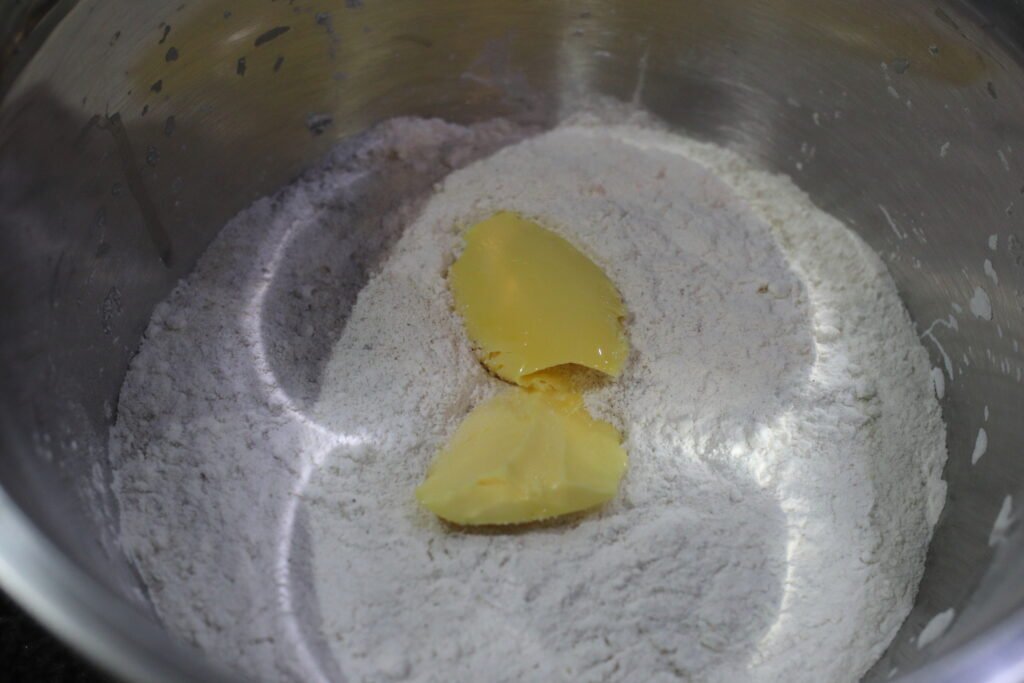
Add the softened butter to the dry mixture and rub it in gently with your fingertips until the mixture resembles fine breadcrumbs. This step creates a tender texture in the final jamun.
Step 3: Add the Condensed Milk
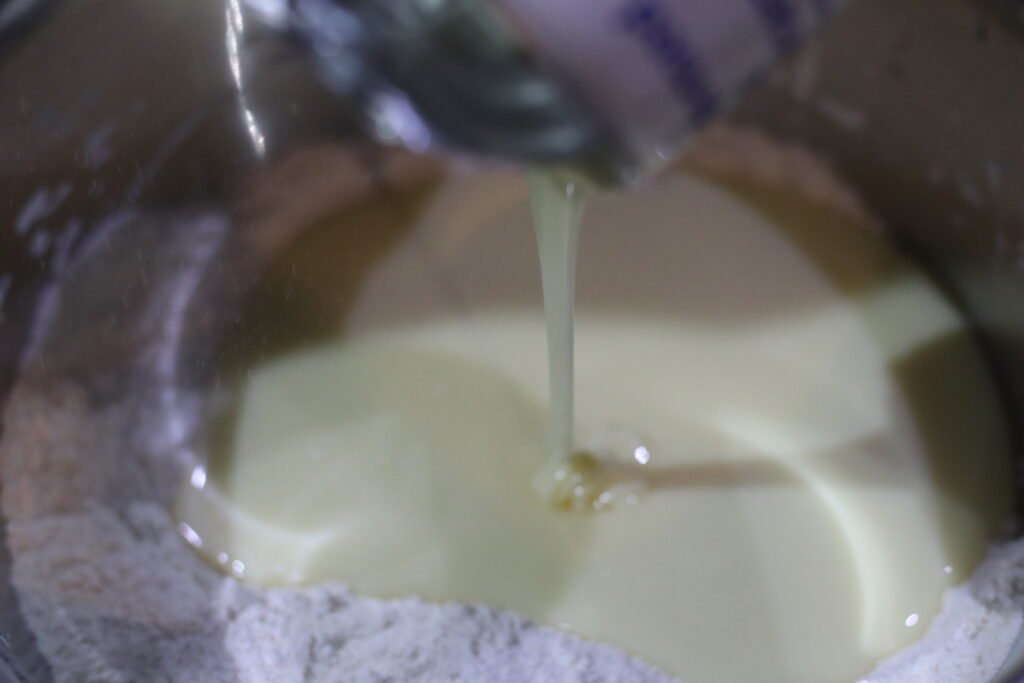
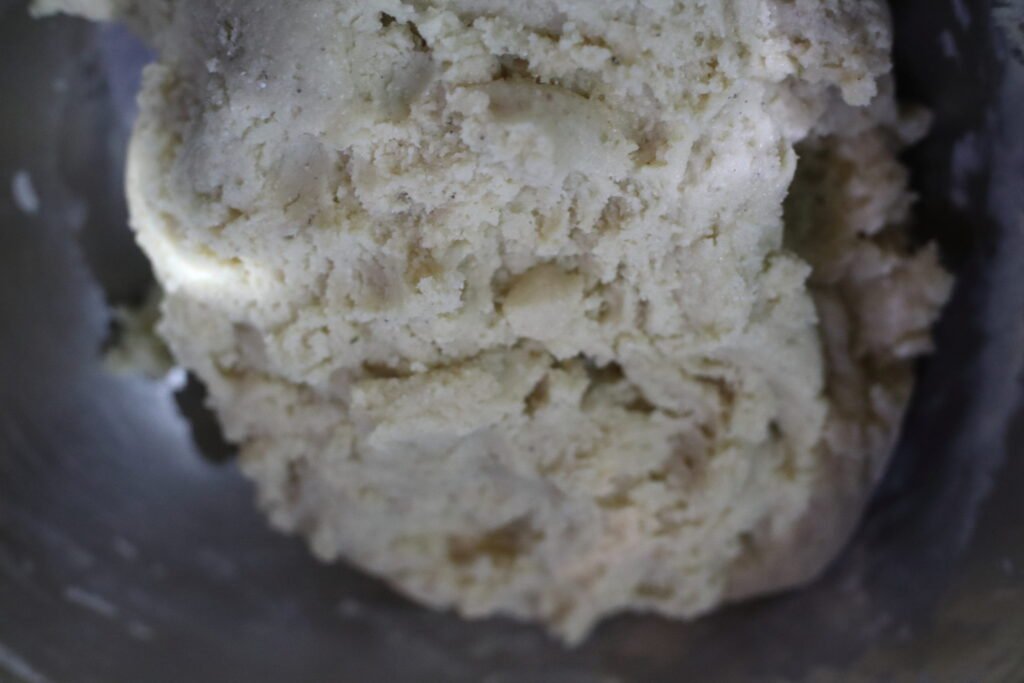
Pour in the condensed milk and mix until a soft, pliable dough forms. The dough should be smooth and slightly sticky but easy to handle. If it feels too sticky, dust lightly with a little extra flour.
Step 4: Shape the Gulab Jamun
Lightly grease your hands with a little butter to prevent sticking. Divide the dough into small portions and roll each one into a smooth, elongated oval shape. Make sure the surface is completely smooth with no cracks, as any cracks will cause the jamun to break open during frying. Place them on a lightly greased tray to rest while you prepare the syrup.
Step 5: Make the Sugar Syrup
In a pot, combine the sugar, water, and cardamom pods. Heat gently over medium heat, stirring only at the beginning until the sugar dissolves completely. Once the sugar has dissolved, stop stirring. Reduce the heat and simmer until the syrup feels slightly sticky. Add the food colouring if using. Keep the syrup warm on very low heat while you fry the jamuns. It must be warm (not boiling) when the jamuns go in.

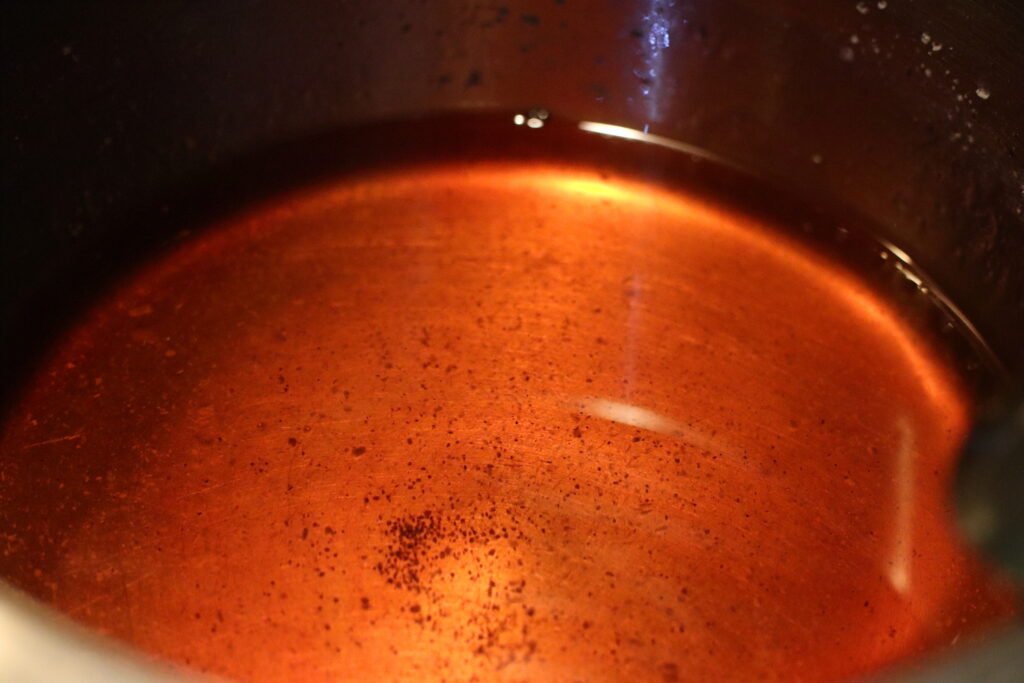
Step 6: Fry the Gulab Jamun
Heat enough oil for deep frying in a pot over medium-low heat. To test if the oil is ready, drop a tiny piece of dough into the oil. It should slowly rise to the surface and form small, steady bubbles. If it rises too quickly or browns immediately, the oil is too hot. Lower the heat and wait a minute before trying again.
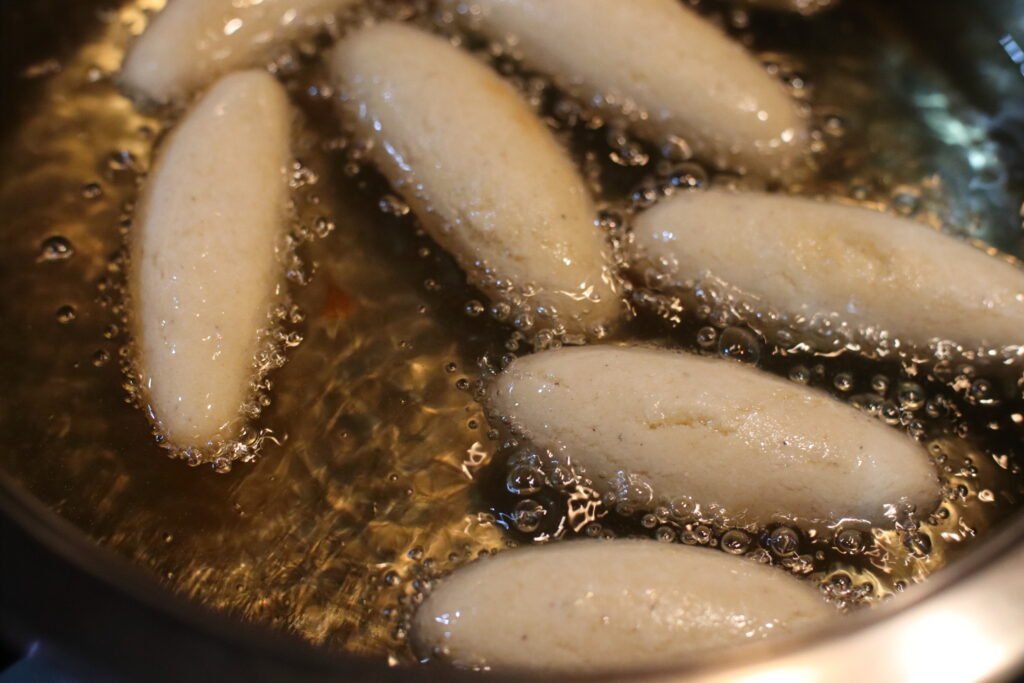
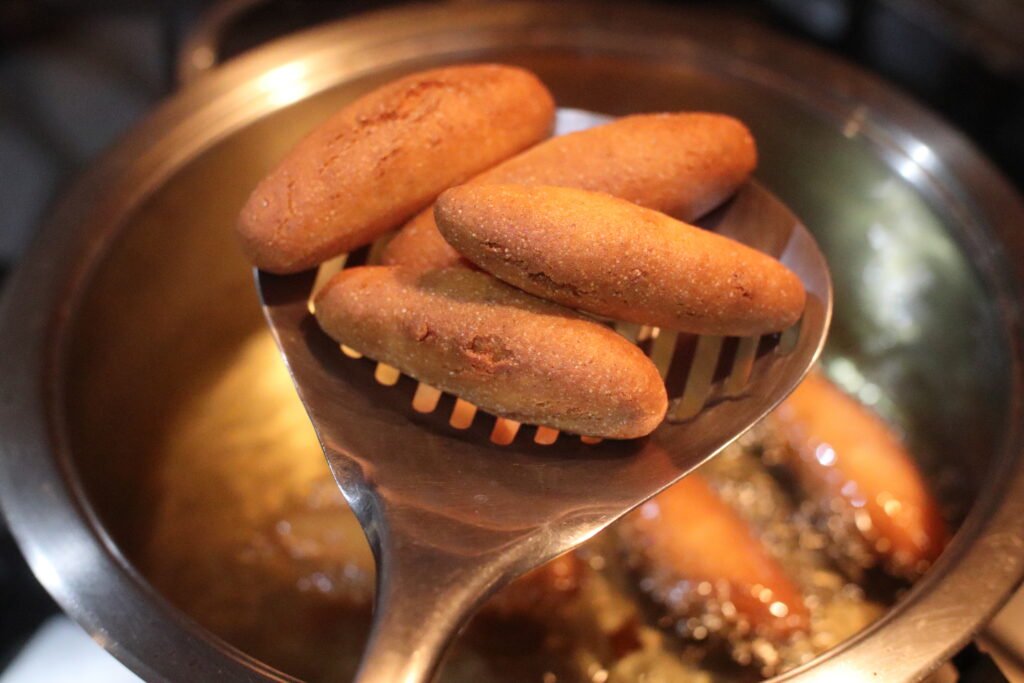
Gently lower the shaped jamuns into the oil in small batches. Do not overcrowd the pot. The jamuns will slowly rise to the surface as they fry. This is a good sign as it shows they are cooking well. Once they rise, continue frying and turning gently with a slotted spoon until they are evenly golden brown all over.
Step 7: Soak in the Syrup
Remove the fried jamuns with a slotted spoon and immediately transfer them to the warm sugar syrup. Let them soak briefly about 30 seconds to 1 minute for a lightly syrupy texture, or longer if you prefer them extra soft and sweet. Adjust the soaking time to suit your taste.

Step 8: Roll in Coconut
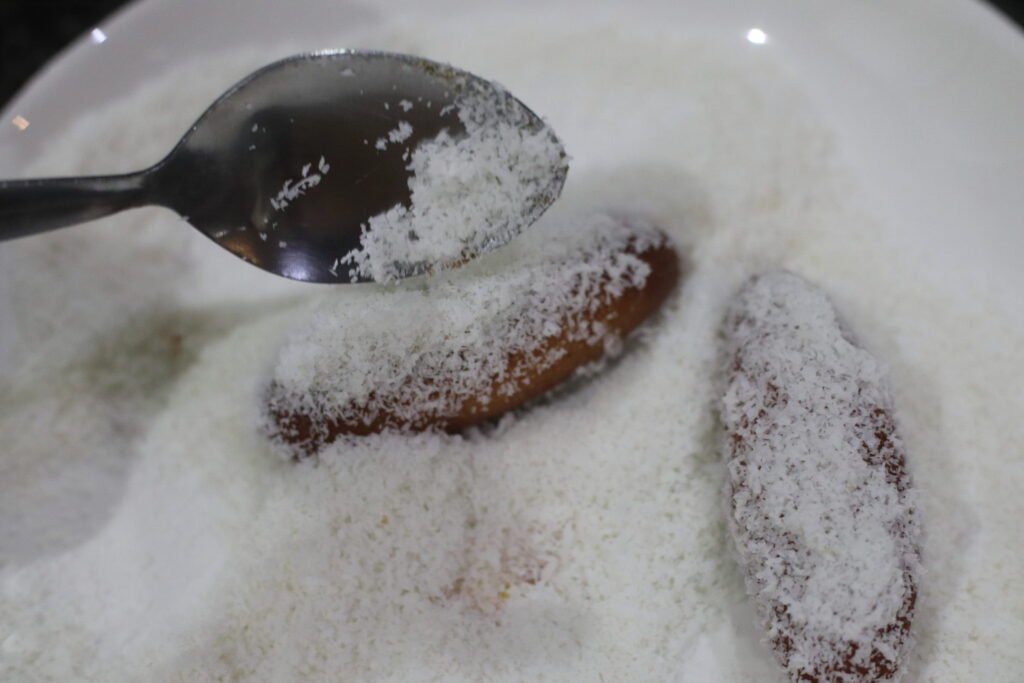
Remove the soaked jamuns from the syrup and let any excess drip off for a few seconds. While they are still warm, gently roll each one in desiccated coconut until evenly coated all over. Use a spoon to help roll them if they are too hot to handle.
Serve warm or at room temperature. They taste even better the next day.
Storage
Room temperature: Store in an airtight container at room temperature for up to 3 days, depending on the weather. If it’s too hot, they may spoil quickly, so it’s best to refrigerate in warmer conditions.
Refrigerator: Store in an airtight container in the fridge for up to 5 days. Bring to room temperature or warm slightly before serving.
Freezer: I don’t recommend freezing jamuns, as it can affect their soft texture and syrup absorption. They are best enjoyed fresh or stored in the fridge and served within a few days.
Frequently Asked Questions
⭐ Tried this recipe? Leave a star rating and a comment below – I’d love to hear how it turned out! Your feedback helps other food lovers find this recipe and cook with confidence.

Equipment
- Large mixing bowl
- sifter
- Measuring cups and spoons
- Pot for frying dough in oil
- Pot for syrup
- Wire rack
Ingredients
- 1 tin (385g) condensed milk
- 2 cups (500ml) self-raising flour
- 3/4 cup semolina
- 2 tsp baking powder
- 2 tbsp butter
- 3 tsp ground cardamom (elachi)
- 1/2 tsp bicarb
- 2 cups (500ml) sugar
- 2 cups (500ml) water
- 3 cardamom pods
- 1 drop orange or yellow food coloring
- 200 g dessicated coconut
Instructions
Gulab Jamun Dough
- In a large bowl, mix the self-raising flour, semolina, baking powder, bicarbonate of soda, and cardamom powder.
- Rub in the softened butter until the mixture resembles fine breadcrumbs.
- Add condensed milk and mix until a soft, smooth dough forms.
- Lightly grease hands with butter. Divide dough into small portions and roll each into a smooth, crack-free oval shape.
- Rest on a lightly greased tray while you prepare the syrup.
Sugar Syrup
- Combine sugar, water, and cardamom pods in a saucepan. Heat over medium heat, stirring until sugar dissolves.
- Once dissolved, stop stirring. Simmer until slightly sticky. Add food colouring if using.
- Keep warm on very low heat while frying.
Frying
- Heat oil for deep frying over medium-low heat. Test with a small piece of dough, it should rise slowly with small bubbles.
- Fry jamuns in small batches, turning gently, until evenly golden brown.
- Remove with a slotted spoon and immediately place into warm syrup.
- Soak for at least a minute, longer for a more syrupy result.
Finishing
- Remove jamuns from syrup and let excess drip off.
- While still warm, roll generously in desiccated coconut until evenly coated.
- Serve warm or at room temperature. It is best enjoyed the next day.
Notes
- Fry on medium-low heat only. High heat browns the outside before the inside cooks through.
- Make sure dough surface is smooth and crack-free before frying.
- Syrup must be warm (not boiling, not cold) when gulab jamuns go in.
- Do not stir syrup once it begins simmering. This causes crystallisation
- Roll in coconut while still warm so it sticks onto the gulab jamuns.