Easy Moist Christmas Fruit Cake (No Alcohol, No Soak)
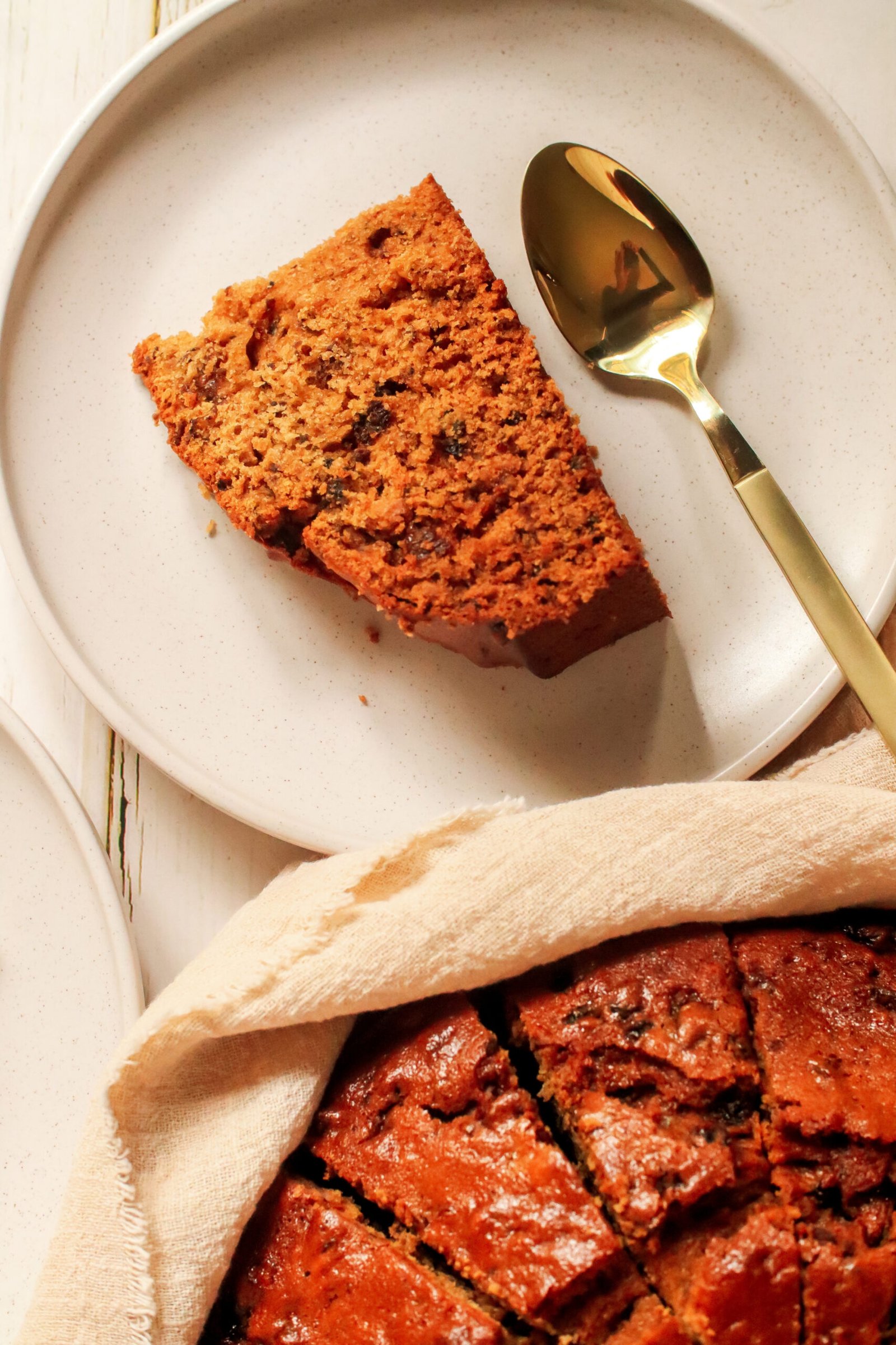
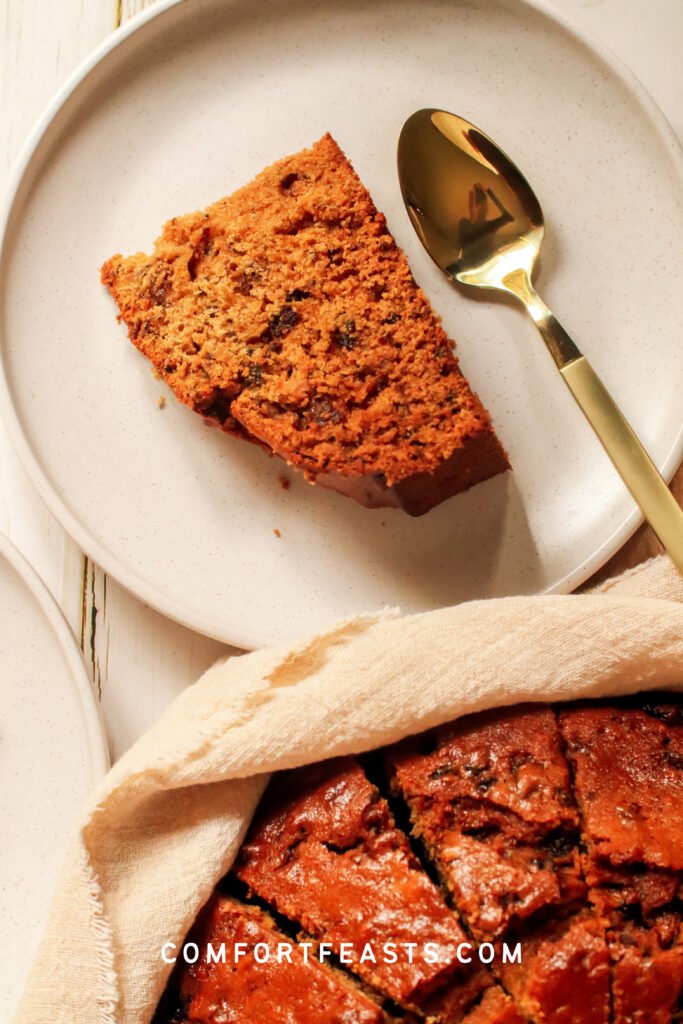
This easy Christmas fruit cake is a boiled fruit cake. Instead of soaking dried fruit in alcohol for weeks like a traditional British Christmas cake, this method boils the currants with butter until they turn a deep golden brown, giving the cake its rich colour and flavour in one pot, no waiting required. This makes a moist Christmas fruit cake packed with that unmistakable currant taste that says the festive season has arrived.
Why You’ll Love This Christmas Fruit Cake
- No weeks of soaking. The currants get all their flavour from one quick boil, so you can make this cake same-day.
- Deep colour and flavour. Boiling the fruit with butter caramelises it slightly, giving the cake its signature golden-brown tone without any food colouring.
- Simple pantry ingredients. No specialty items, just flour, sugar, currants, and a few staples.
- A festive tradition. This Christmas fruitcake is the one so many households make every year, now easy to recreate at home.
Ingredients You’ll Need
- Currant mix – The heart of the cake. Washing and straining first removes any sand or grit that can sometimes hide in dried fruit.
- Butter – Boiled together with the currants, it helps them caramelise and adds richness to the crumb.
- Cake flour – A lighter flour keeps the dense fruit cake from turning heavy or gummy.
- Granulated sugar – Sweetens the cake and balances the deep, slightly caramelised flavour of the boiled fruit.
- Fine salt – Just a touch, to sharpen the overall flavour.
- Bicarbonate of soda – Added straight after boiling, this reacts with the hot mixture and foams up, which helps lighten the texture of an otherwise dense batter.
- Water – Used to boil the currant mixture down to that golden colour.
- Eggs – Added once the mixture has cooled, these bind everything together and give the cake structure.
How to Make This Christmas Fruit Cake
Step 1: Rinse the currants. Place your currant mix in a bowl of warm water and let it soak for a few minutes. Any sand or grit that sometimes ends up in dried fruit packaging will settle out. Strain well and set aside to drain.
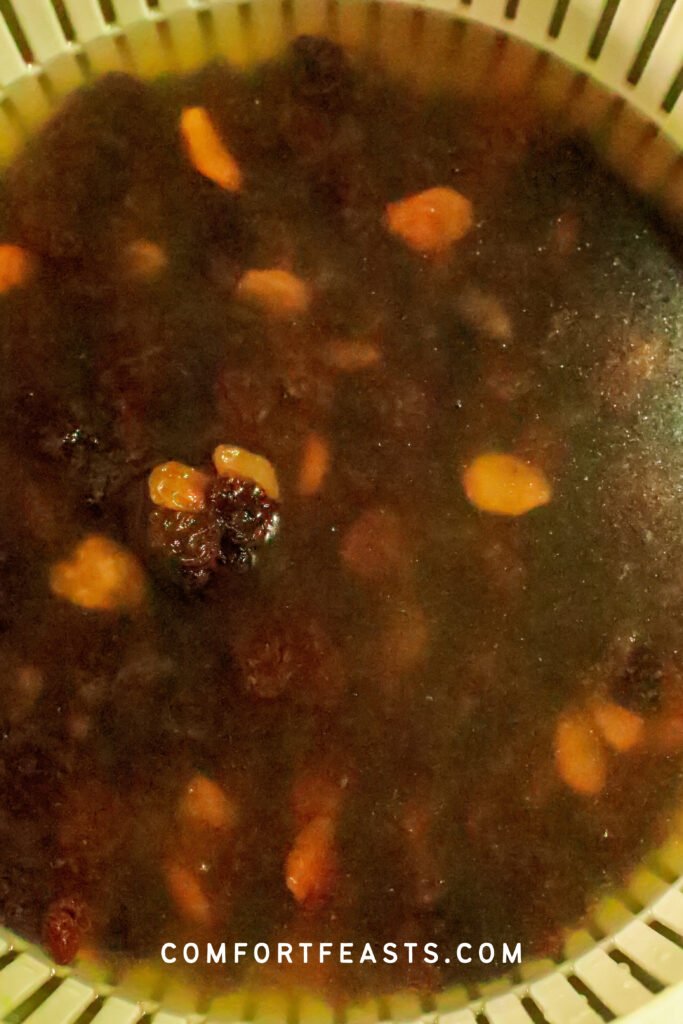
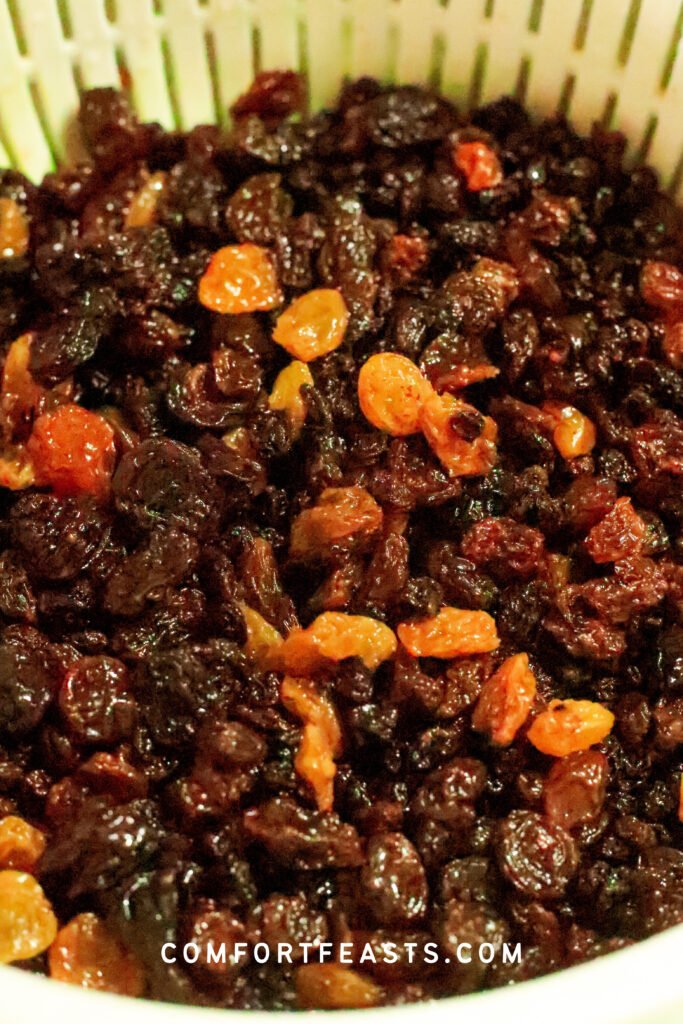
Step 2: Boil the fruit until golden. In a pot, combine the soaked currants, butter, water, and salt. Place over medium heat and bring to a boil, stirring occasionally, until the mixture turns a deep golden brown. Keep an eye on the water level here. You want the colour to develop without the water boiling away completely, so lower the heat if it starts reducing too fast. There should still be a little liquid left in the pot when it’s ready.
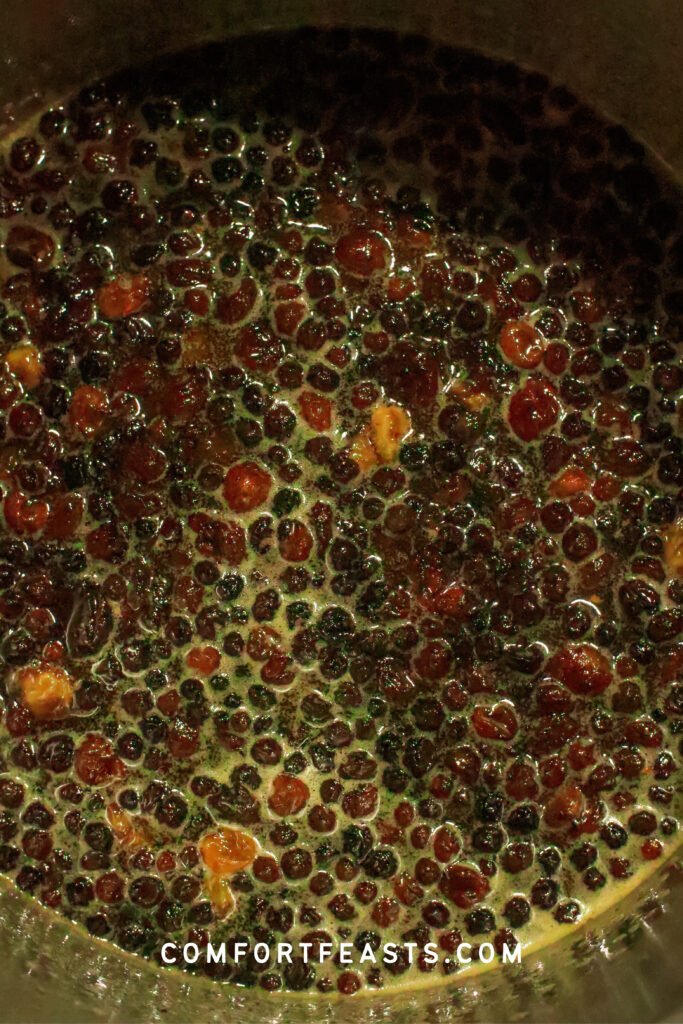
Step 3: Add the bicarb and let it foam. Take the pot off the heat and stir in the bicarbonate of soda right away. It will bubble up, which is exactly what you want. Keep stirring until the foam settles back down and dissolves into the mixture.
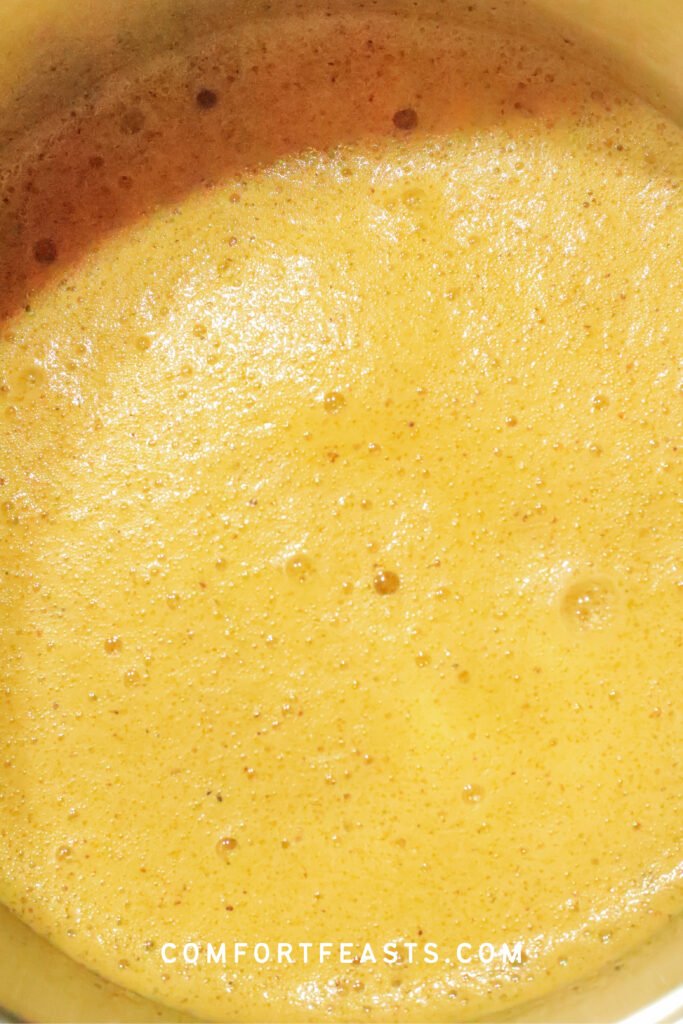
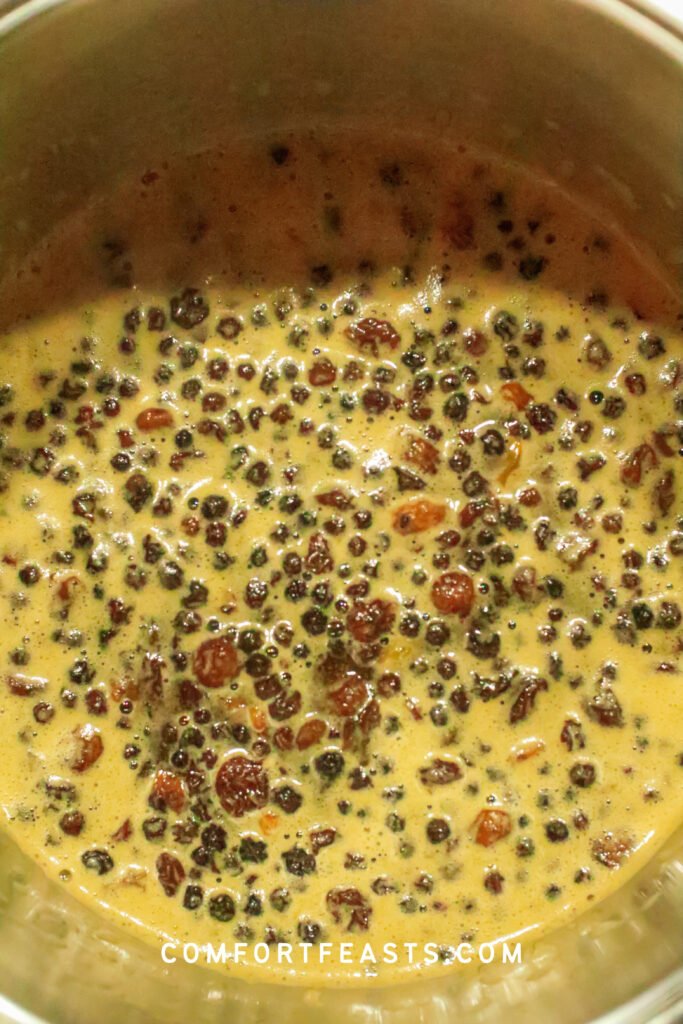
Step 4: Mix in the sugar and flour. Add the sugar and cake flour to the pot and stir until fully combined and no dry pockets of flour remain.
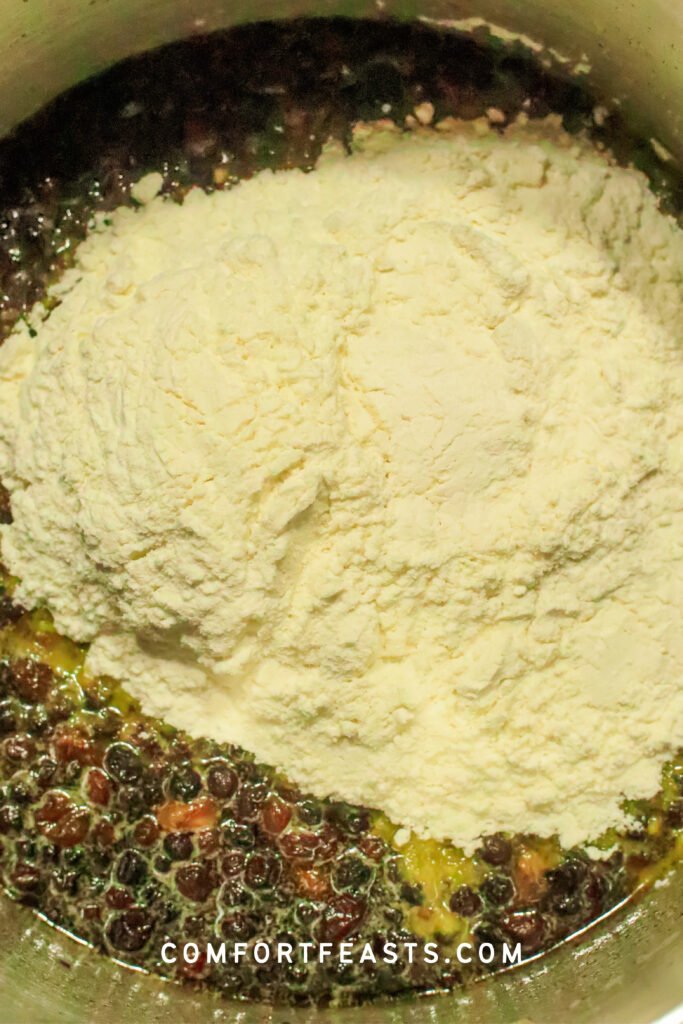
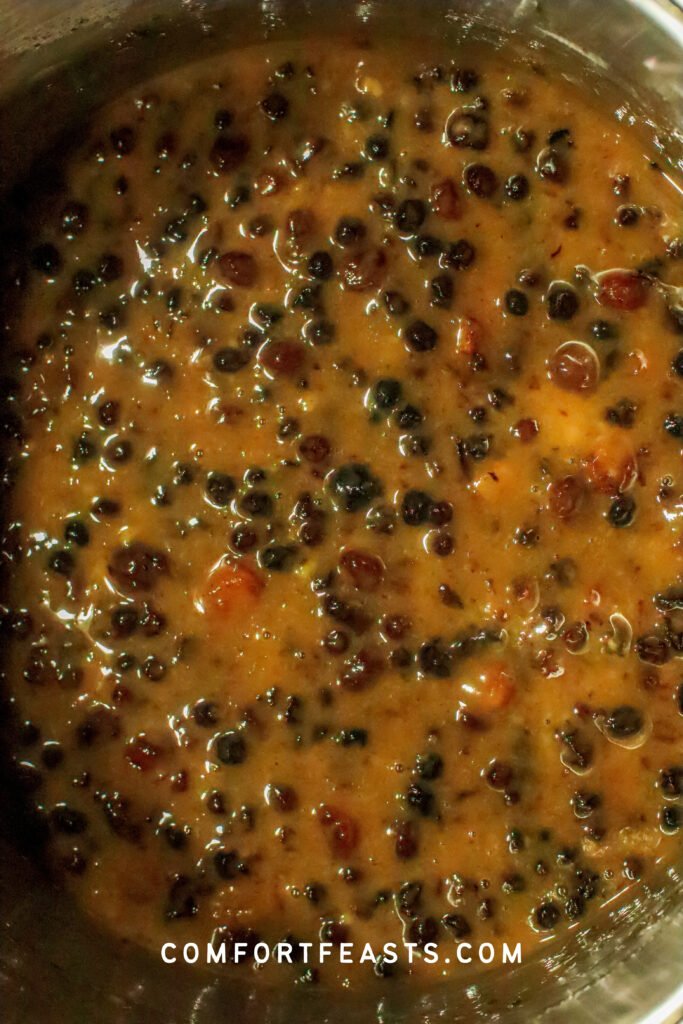
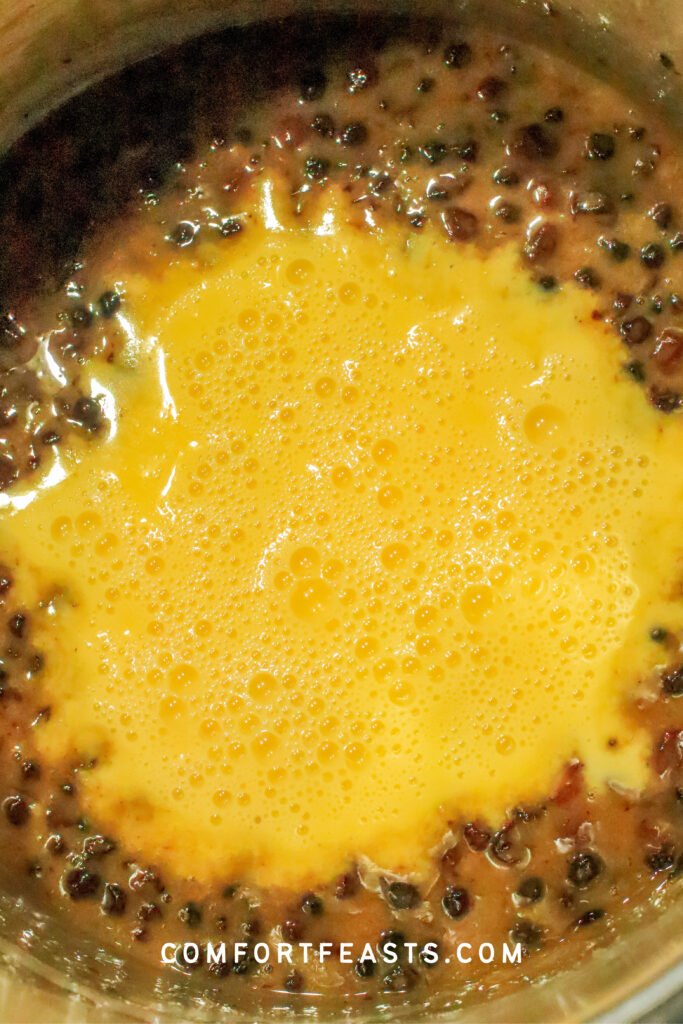
Step 5: Cool, then add the eggs. Let the mixture cool down before adding your beaten eggs. If the batter is still too hot, the eggs will start to scramble instead of blending in smoothly. Once cooled, stir the eggs through until the batter is even and glossy.

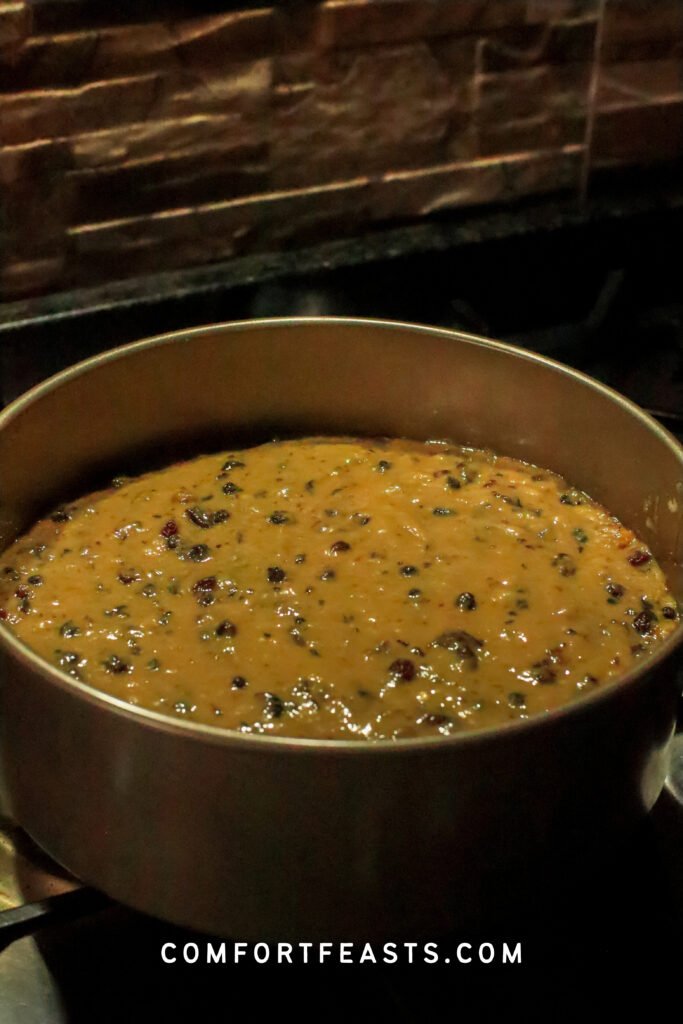
Step 6: Bake. Grease a 24cm round baking tin with butter and pour in the batter. Bake at 160°C for 45 to 60 minutes, checking doneness by inserting a knife into the centre. When it comes out clean, the cake is ready. Let it cool in the tin for a few minutes before turning it out.
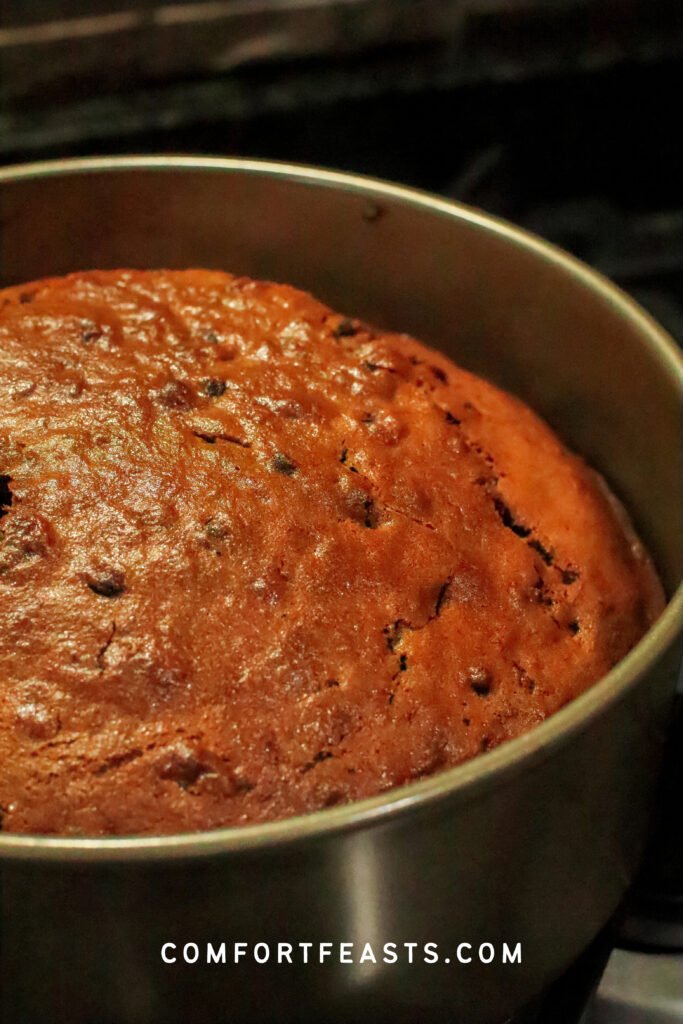
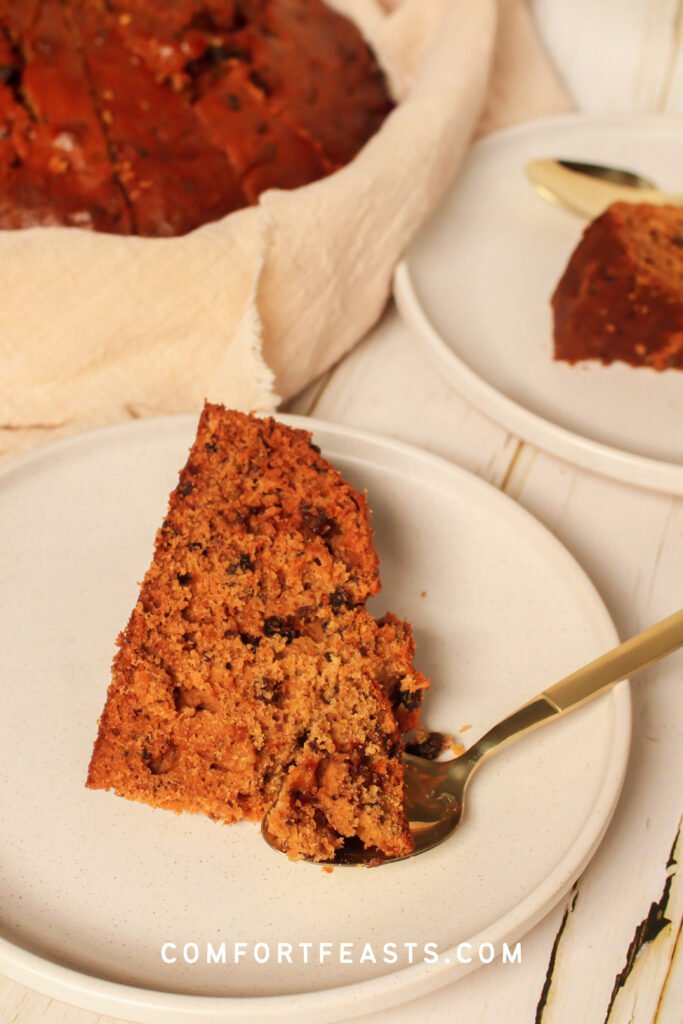
Step 7: Serve. Slice the cake once cooled and serve with cream, custard or simply butter. You should get about 16 slices.
Can I Make This Ahead of Time?
Yes, this is actually a cake that improves with a day or two of resting, as the flavours settle and deepen. Bake it up to 3 days before you plan to serve it, and store it in an airtight container at room temperature until you’re ready.
How to Store
Once fully cooled, wrap the cake tightly in cling film or store it in an airtight container at room temperature for up to a week. For longer storage, keep it in the fridge for up to 2 weeks, or slice and freeze individual portions for up to 3 months. Thaw at room temperature before serving.
Frequently Asked Questions
Can I use raisins or sultanas instead of currants? Yes, though the texture and sweetness will vary slightly. Currants give the most traditional flavour for this style of cake.
Why does the bicarb need to foam up? The reaction between the bicarb and the hot, slightly acidic fruit mixture helps aerate the batter, giving the finished cake a lighter crumb than the boiled fruit alone would produce.
Can I add spices like cinnamon or nutmeg? Definitely. Stir in a teaspoon of mixed spice, cinnamon, or nutmeg along with the sugar and flour if you’d like a warmer, more spiced flavour.
If you make this Christmas Fruit Cake, I’d love to know how it turns out. Leave a comment or a rating below, it means a lot to me.
Equipment
- 24cm round baking tin
- Medium pot
- Fine strainer
- Wooden spoon
- Wire cooling rack
Ingredients
- 2 cups (500ml) currant mix
- 4 tbsp butter
- 4 cups (1000ml) cake flour
- 2 cups (500ml) granulated sugar
- ⅛ tsp fine salt
- 2 tsp bicarb
- 2 cups (500ml) water
- 2 eggs
Instructions
- Soak the currant mix in a bowl of warm water for a few minutes, then strain to remove any sand or grit. Set aside to drain.
- Add the currants, butter, water and salt to a pot. Bring to a boil over medium heat, stirring occasionally, until the mixture turns a deep golden brown. Lower the heat if the water starts reducing too fast. The water should not dry out completely, so there should still be a little liquid left in the pot.
- Take the pot off the heat and stir in the bicarb straight away. Let it foam up, then mix until the foam dissolves.
- Add the sugar and cake flour and stir until fully combined with no dry pockets.
- Let the mixture cool completely, then stir in the beaten eggs until the batter is even and glossy.
- Preheat the oven to 160°C. Grease the 24cm tin with butter and pour in the batter. Bake for 45 to 60 minutes, until a knife inserted in the centre comes out clean.
- Cool in the tin for a few minutes, then turn out. Slice once fully cooled.
Notes
- Cool the mixture properly before adding the eggs, or they will scramble instead of blending in.
- Watch the water level while boiling. You want the colour to develop without the liquid boiling away.
- Raisins or sultanas work instead of currants, but the flavour and sweetness will be slightly different.
- For a spiced version, stir in 1 tsp mixed spice, cinnamon or nutmeg with the sugar and flour.