
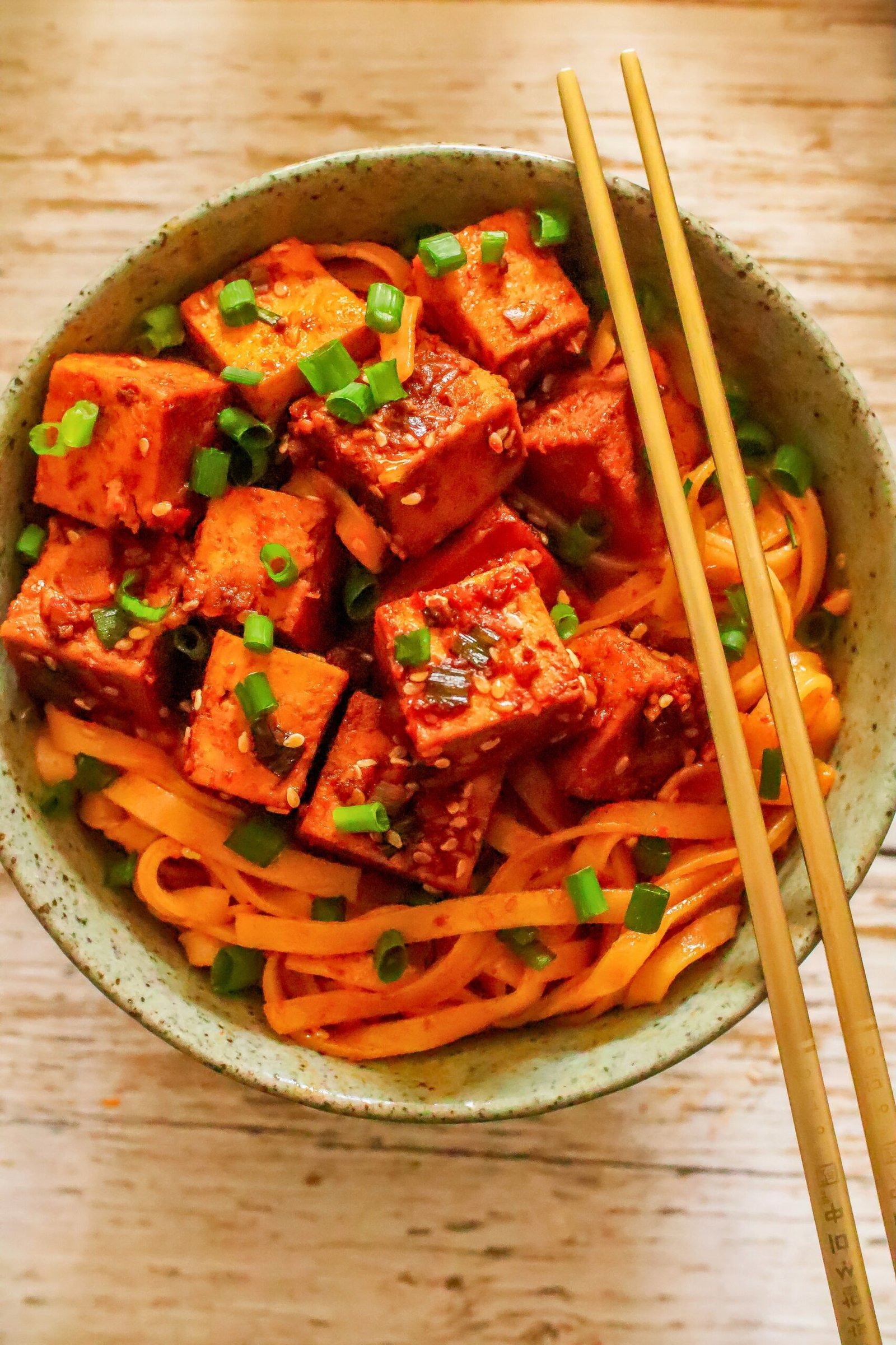
Gochujang Rice Noodles with Tofu
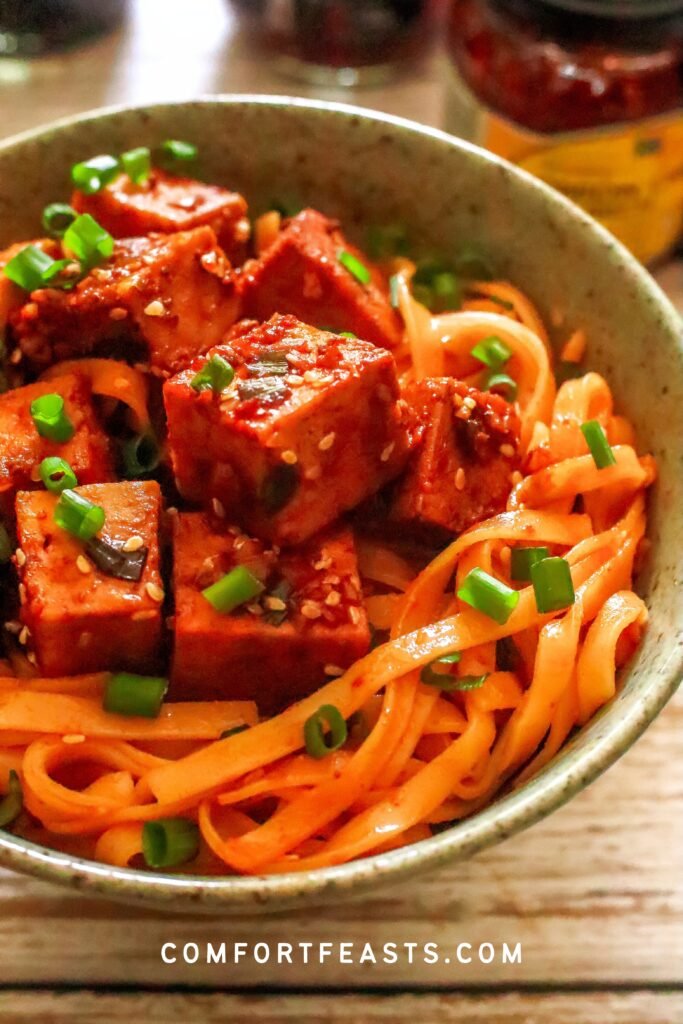
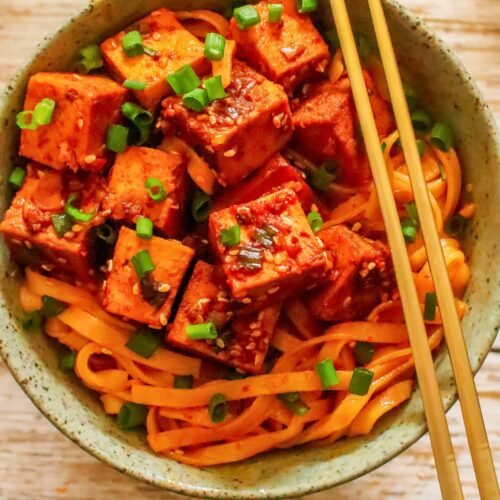
I’ve been cutting back on gluten lately, and these rice noodles were one of the first things I made that came out good. They didn’t leave me with that heavy, sluggish feeling I’ve had after wheat noodles, and they still tasted like something I’d genuinely want to eat again. Golden tofu is simmered in a savoury-sweet gochujang sauce, then tossed through soft rice noodles and finished with a touch of chilli oil. Every bite is flavourful, a little sweet, a little spicy, and it’s naturally gluten-free without trying to be.
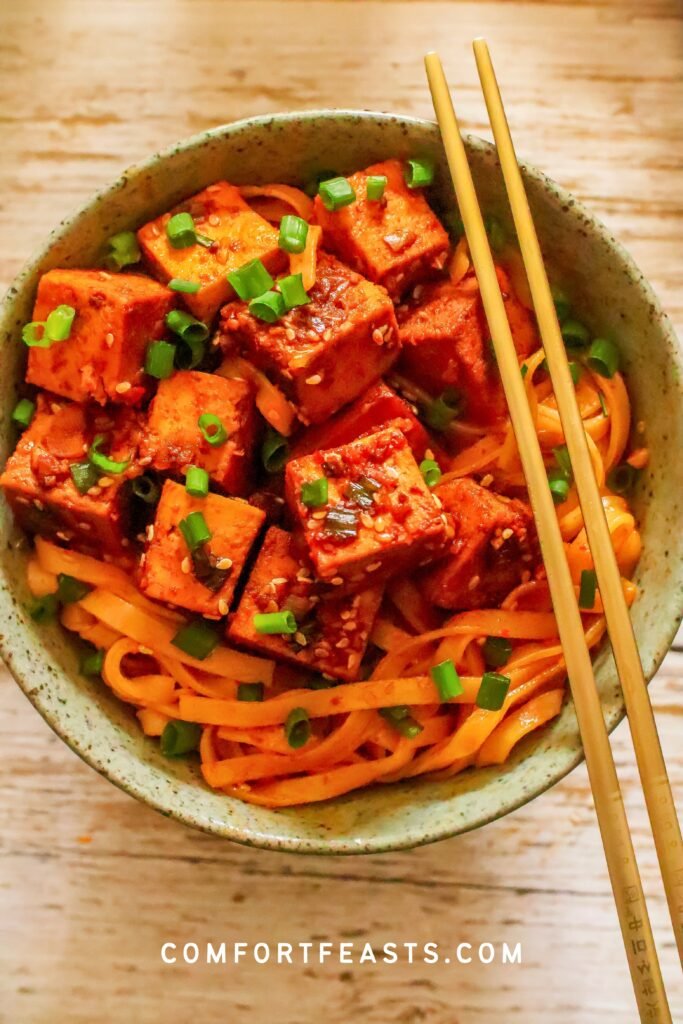
Why You’ll Love This Gochujang Rice Noodles
- No fancy equipment needed: One pan for the tofu and sauce, one bowl for soaking the noodles. That’s it.
- Every component is properly seasoned: The tofu and the noodles are seasoned separately, so you’re never left with bland noodles hiding under well-flavoured tofu.
- Big flavour, balanced heat: Gochujang and chilli oil bring warmth and depth without tipping into overly salty or one-note spicy.
- Quick enough for a weeknight: Between soaking the noodles and frying the tofu, this is on the table in 30 minutes.
- Gluten-free: Rice noodles are naturally GF, and the sauce is too, tamari stands in for regular soy sauce so there’s nothing to swap out. However, remember to always check ingredient labels though, since brands vary and some products can sneak in gluten.
How to Cook Rice Noodles
Most people default to boiling rice noodles the way they would pasta, but soaking them in just-boiled water off the heat is usually the better method, especially for a dish like this one where the noodles get more heat again later in the pan.
Why I prefer this method:
- Much lower risk of overcooking. Since the noodles aren’t sitting in actively boiling, agitating water, they cook more gently and evenly, so it’s harder to end up with mushy noodles.
- Less clumping and breakage. Rice noodles are delicate, and a rolling boil can knock them around and cause them to tear or stick to each other more than a gentle soak would.
- More forgiving timing. With boiling, a minute or two too long can mean mush. With soaking, you have a bit more of a window since the water is gradually cooling the whole time.
How to do it well:
- Step one: Boil water in a kettle or pot.
- Step two: Place the dry rice noodles in a heatproof bowl.
- Step three: Pour the boiling water over them, enough to fully submerge.
- Step four: Let sit for 5-10 minutes (check package guidance and test a strand), stirring gently once or twice to prevent sticking.
- Step five: Drain once they’re al dente. For this recipe, skip the cold rinse, the noodles are going straight into a sauced pan, and rinsing washes away the surface starch that helps the sauce cling properly.
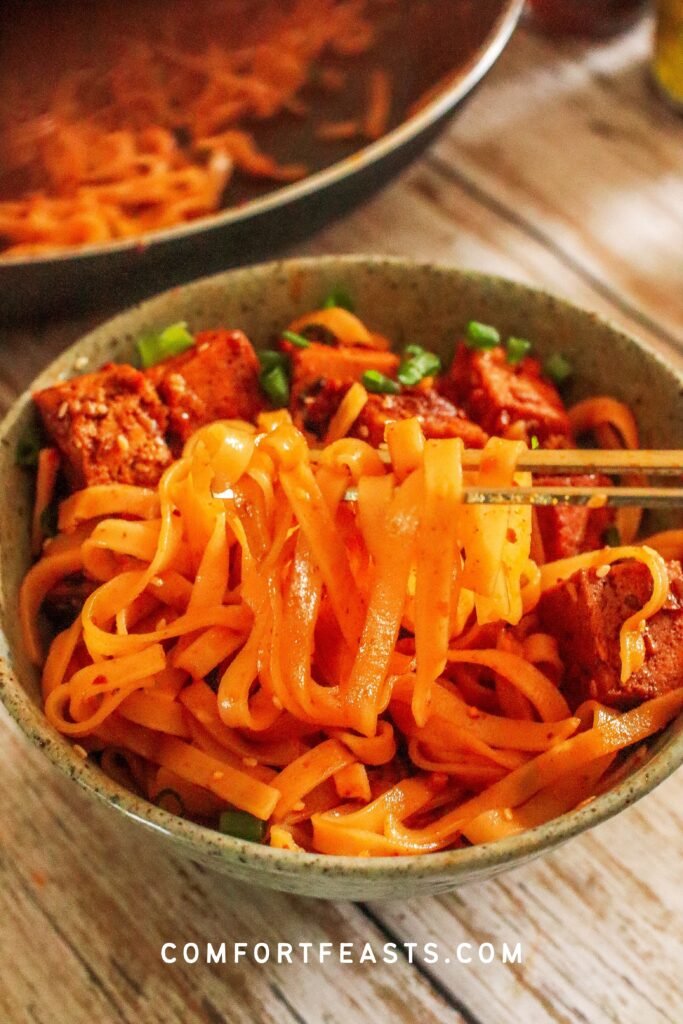
Ingredients to Make Gochujang Rice Noodles with Tofu
Rice noodles: They carry almost no flavour alone, so a portion of the sauce is reserved just for them and tossed in the pan.
Firm tofu: Holds its shape well when pan-fried and gets a lovely golden crust. Pat it dry thoroughly before cooking, this is the difference between a crisp exterior and a soggy one.
Canola oil: For frying the tofu. Any neutral, high-heat oil works here.
Tamari soy sauce: Tamari is naturally gluten-free and a touch milder than regular soy sauce, which helps keep the final dish from tasting overly salty.
Sesame oil: Adds a toasty, nutty background note.
Chilli oil: For a touch of warmth in the sauce, a small amount to season the noodles, and a drizzle at the end for shine and a fresher hit of heat.
Water: Balances and loosens the sauce so it coats everything evenly rather than turning sticky-thick too fast.
Sugar: Rounds out the heat and saltiness with a touch of sweetness. Don’t skip this, it’s what keeps the sauce tasting balanced rather than sharp.
Gochujang: Gochujang gives a thicker, fermented depth to the sauce with that touch of umami.
Garlic: Freshly minced, for aromatic depth.
Scallions: Used both in the sauce and as a finishing garnish.
Sesame seeds: For texture and a nutty finish.
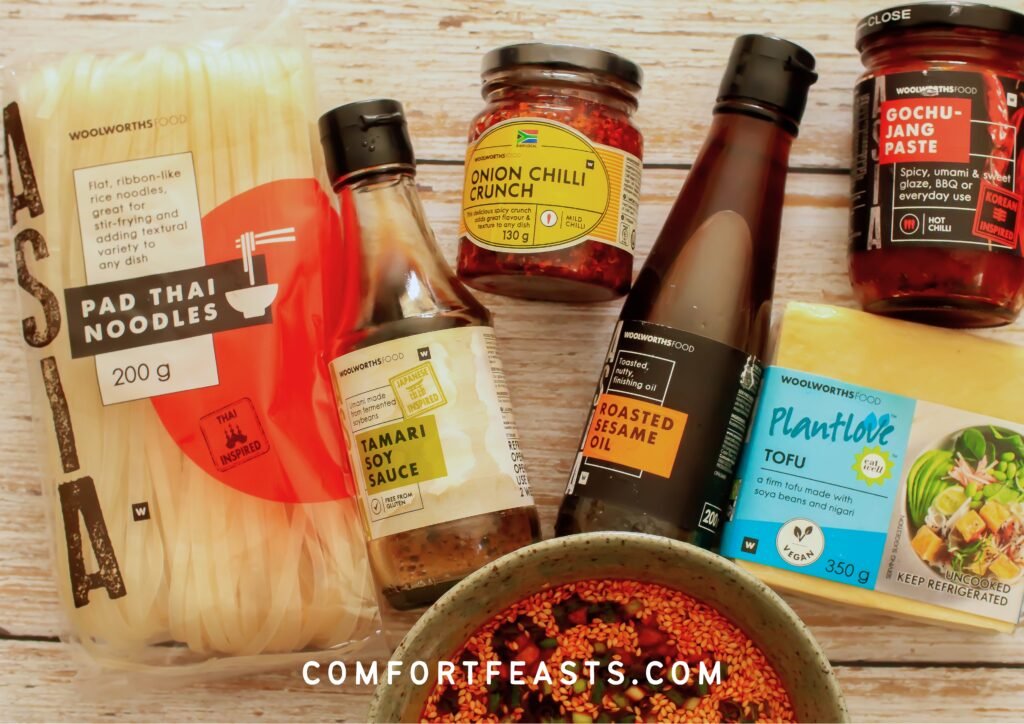
Here are some ingredients which I purchased from Woolworths South Africa to make my Gochujang rice noodles with tofu.
How to Make Gochujang Rice Noodles with Tofu
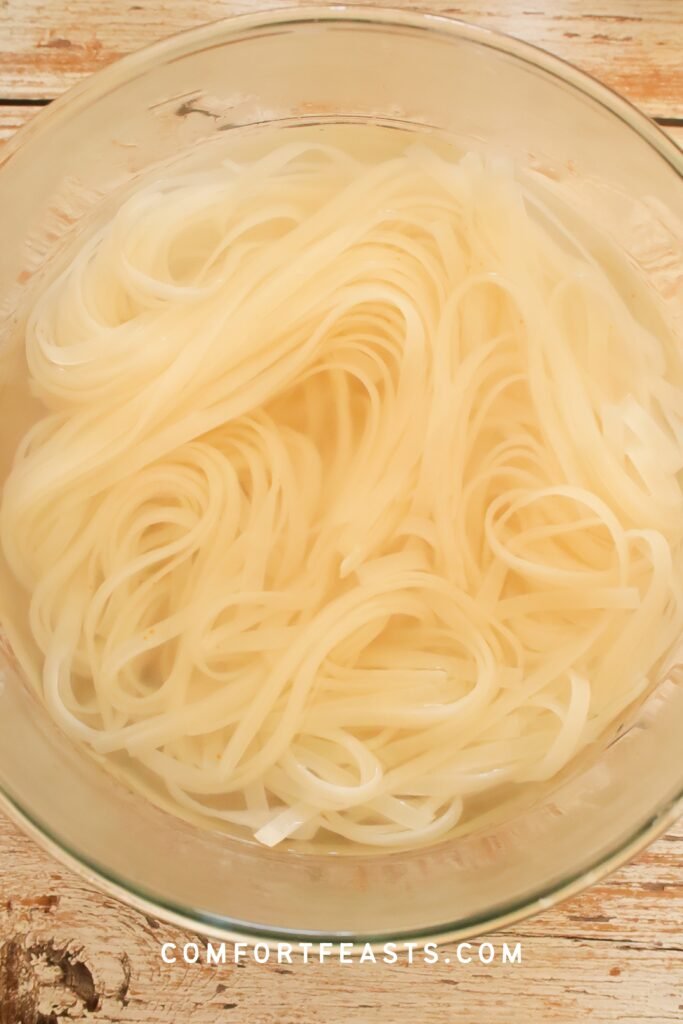
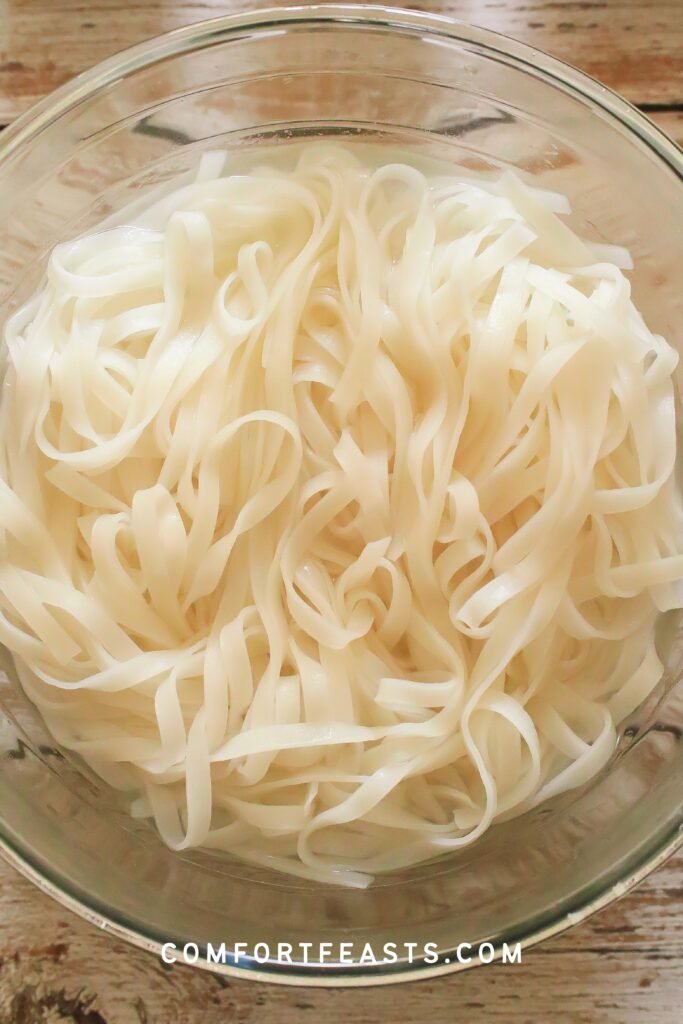
Step 1: Soak the rice noodles. Bring a pot of water to the boil, then remove it from the heat. Pour the boiling water over the rice noodles in a heatproof bowl (or add the noodles to the pot off the heat). Let them soak, stirring occasionally, until al dente, this usually takes 5 to 10 minutes, but check your package instructions for exact timing. Once soft, drain them, but skip the cold water rinse. Rinsing washes away the surface starch that helps sauce cling to the noodles later.
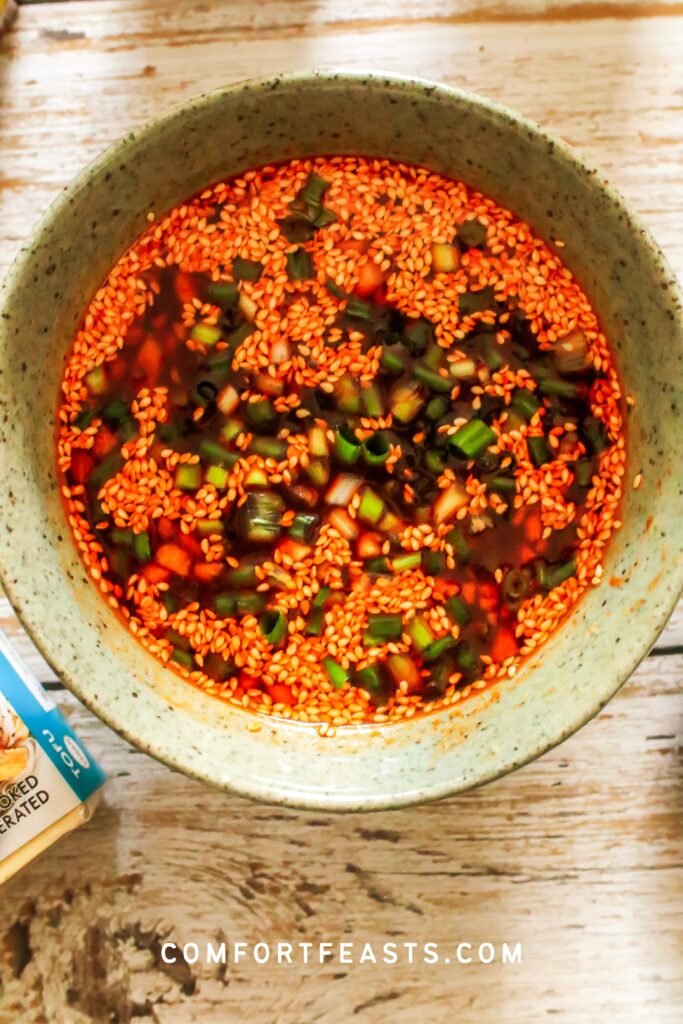
Step 2: Make the sauce. In a bowl, whisk together the tamari soy sauce, sesame oil, chilli oil, water, sugar, gochujang, minced garlic, scallions and sesame seeds. Set this aside while you prep the tofu.
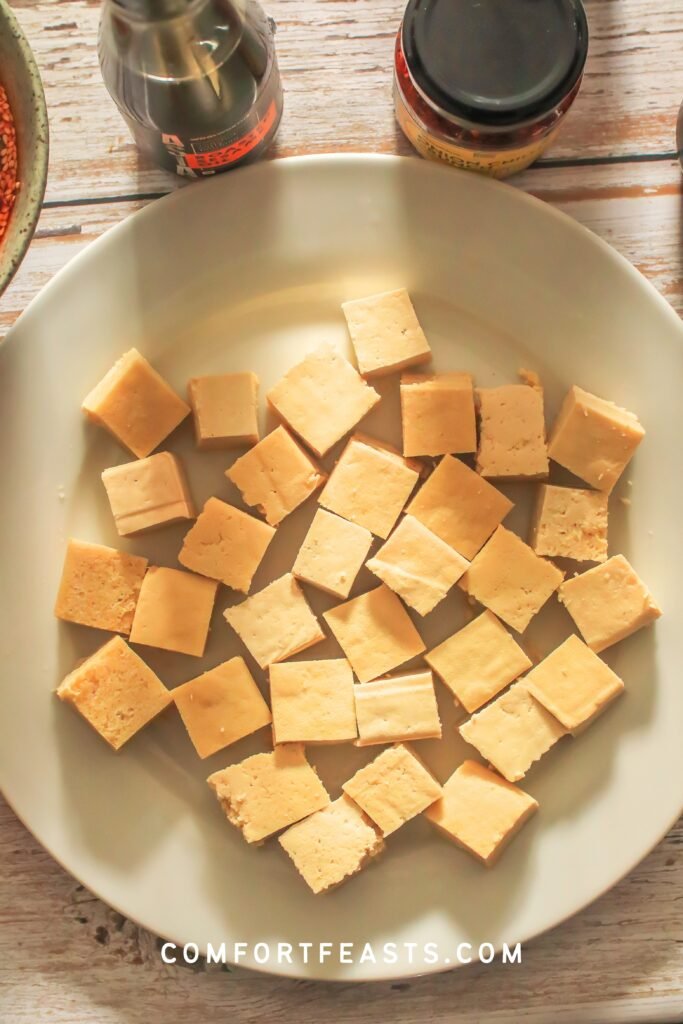
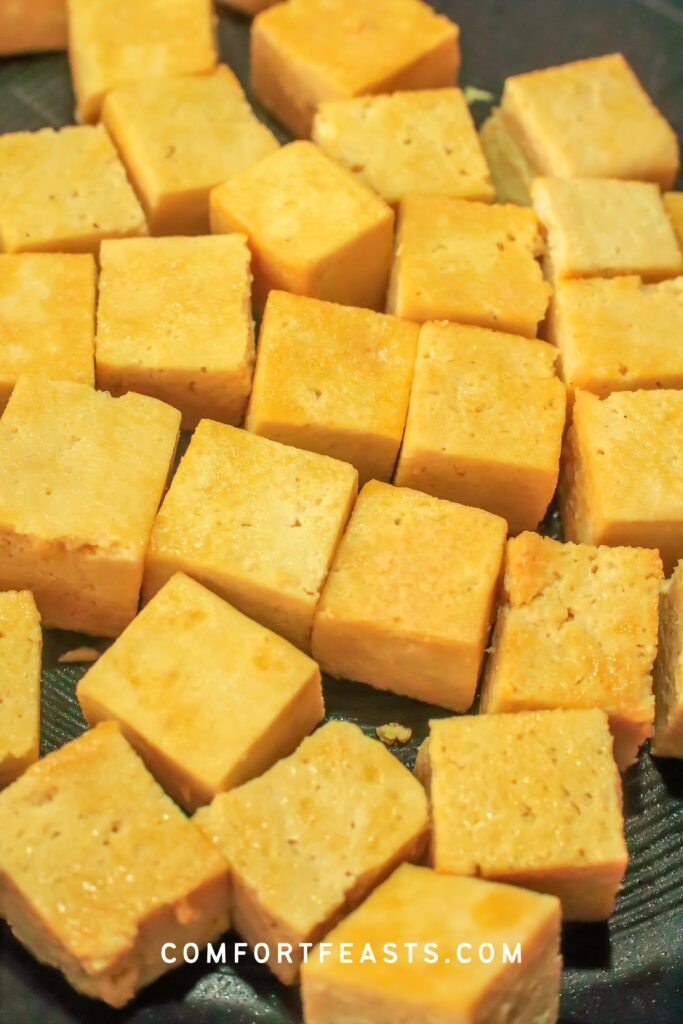
Step 3: Prep the tofu. Drain and pat the tofu really dry, then slice it into smaller cubes. Getting as much moisture off as possible here is the key to a proper golden crust.
Step 4: Fry the tofu. Heat the canola oil in a pan over low-medium heat. Fry the tofu on all sides until golden and crisp, this takes a little patience, so don’t rush it or turn the heat up too high, a slower fry gives a better crust.
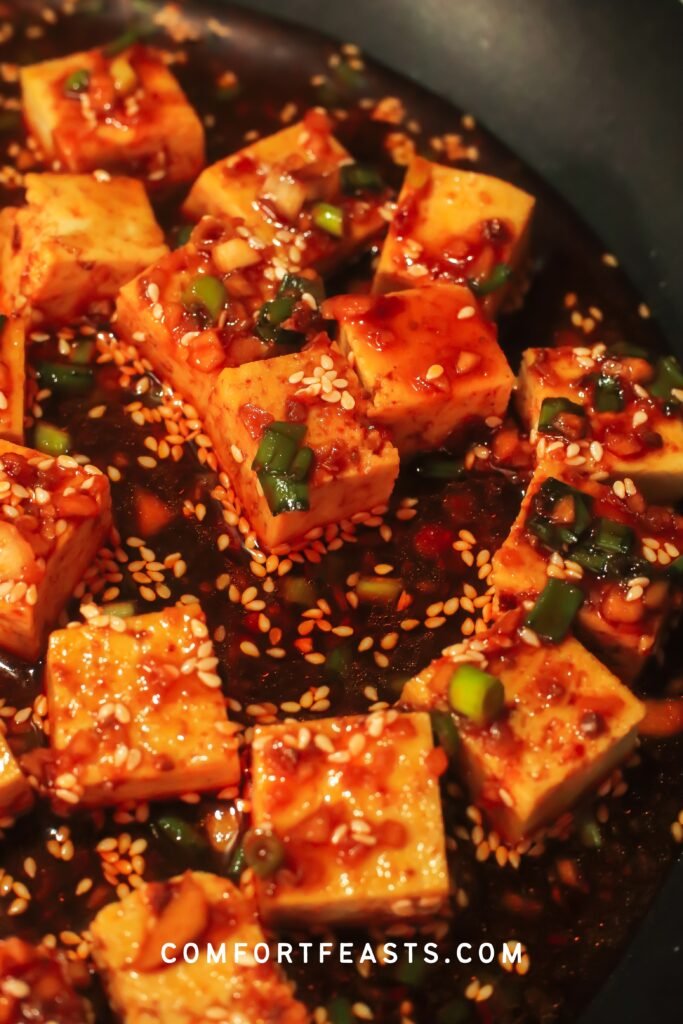
Step 5: Coat the tofu in half of the sauce, then set it aside. Pour half of the prepared sauce over the tofu in the pan, coating each piece evenly. Let it simmer gently for a few minutes so the tofu really absorbs the flavour. Once it’s glossy and well coated, remove the tofu to a plate, leaving any remaining sauce behind in the pan.
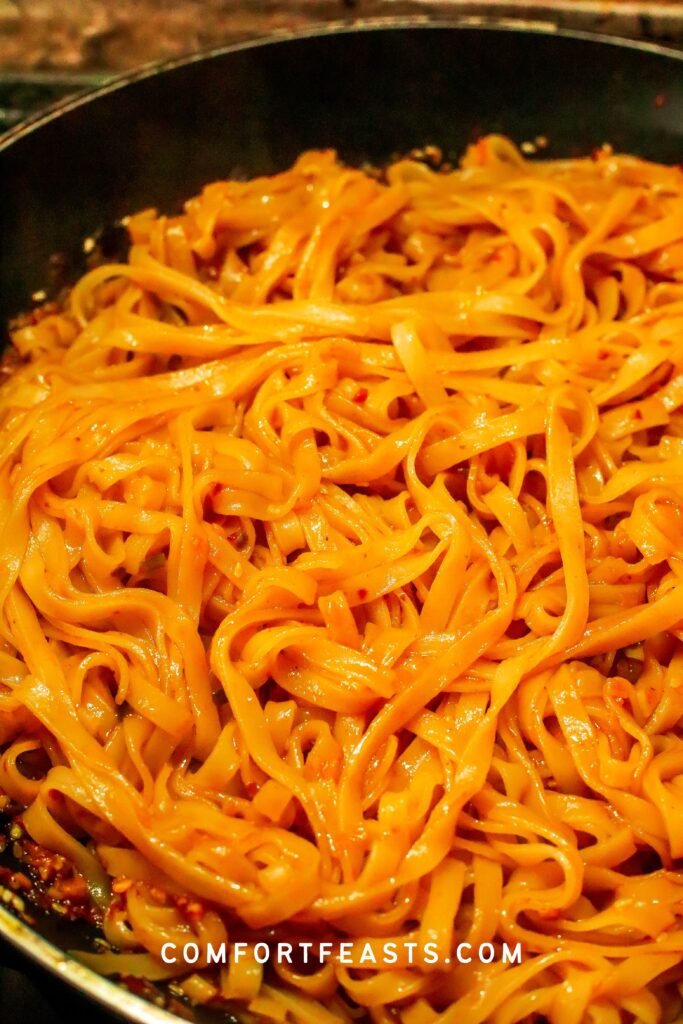
Step 6: Toss the noodles in the pan. Add the drained noodles to the same pan along with the remainder of the sauce. Toss gently over low heat for a minute or two, giving them real contact time with the sauce so they absorb flavour. Be careful not to stir these noodles too much as rice noodles tend to break easily.
Step 7: Bring it back together. Return the tofu to the pan, or plate the noodles first and top with the tofu.
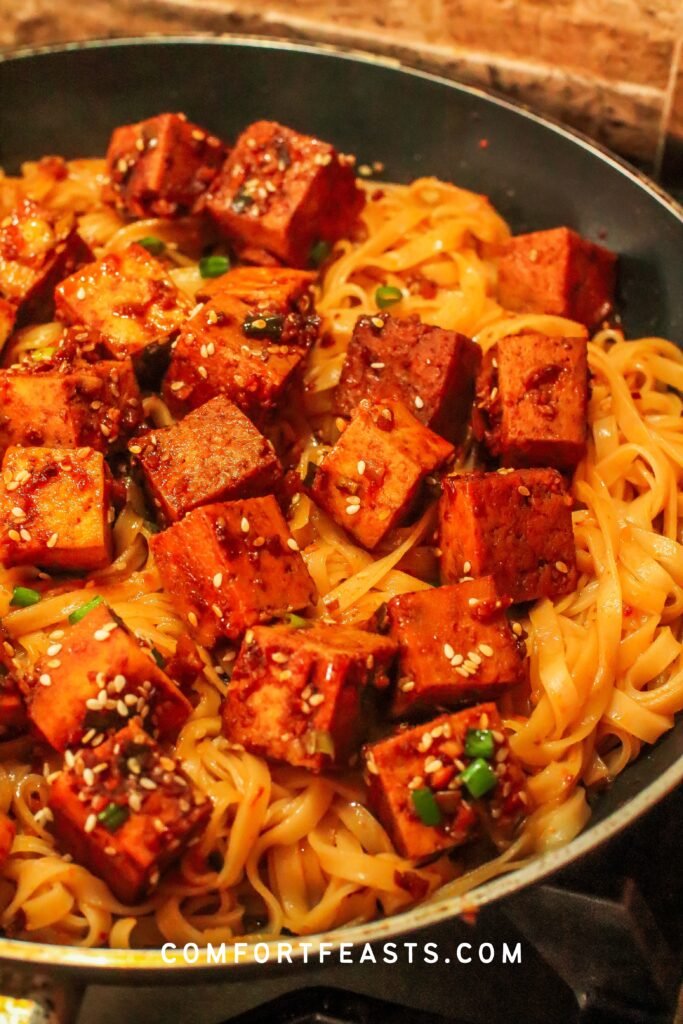
Step 8: Garnish and finish. Sprinkle over extra scallions and a few more sesame seeds. Finish with a little more chilli oil for that extra heat and enjoy.
Storage
Refrigerator: Store in an airtight container for up to 3 days.
Reheating: If serving the next day or later on, microwave in short bursts, stirring in between, until heated through.
Note: This dish is best fresh, since rice noodles can firm up a little in the fridge, but a quick reheat brings it back nicely.
Frequently Asked Questions
Why do my rice noodles taste bland even with a flavourful sauce? Rice noodles are naturally very neutral, they don’t carry much flavour on their own the way wheat noodles do. Two things help most: skip rinsing them under cold water after soaking, since rinsing washes away the surface starch that helps sauce cling, and season them directly with the prepared tamari soy sauce right after draining.
Why remove the tofu before adding the noodles? Tossing noodles into a pan that already has tofu in it risks breaking the tofu apart, since rice noodles can be a little unruly when stirred. Removing the tofu, letting the noodles get direct contact with the sauce, then bringing everything back together at the end protects the tofu’s texture and gives the noodles a proper chance to absorb flavour on their own.
Can I make this less spicy? Yes, simply reduce or leave out the chilli oil and use less gochujang. The dish will still have good flavour from the garlic, sesame oil, and tamari base.
Can I use a different noodle? Flat rice noodles or vermicelli both work well here. Just adjust the soaking time slightly, thinner noodles will soften faster than wider ones.
Can I make this ahead? I’d recommend cooking the tofu and noodles fresh for the best texture, since tofu loses its crispness once stored.
⭐ Tried this recipe? Leave a star rating and a comment below, I’d love to hear how your gochujang rice noodles with tofu turned out.
Equipment
- Kettle or pot
- Heatproof mixing bowl
- Frying pan or wok
- Measuring spoons
Ingredients
- 200g rice noodles
- 500ml boiling water
- 350g firm tofu
- 2 tbsp canola oil
- 3 tbsp tamari soy sauce
- 1 tbsp sesame oil
- 1 tsp chilli oil
- 6 tbsp water
- 1 tsp sugar
- 1½ tbsp gochujang
- 4 garlic cloves (minced)
- 4 scallions (sliced)
- 1 tbsp sesame seeds
Instructions
- Bring a pot of water to the boil, then remove it from the heat. Pour the boiling water over the rice noodles in a heatproof bowl (or add the noodles to the pot off the heat). Let them soak, stirring occasionally, until al dente, this usually takes 5 to 10 minutes, but check your package instructions for exact timing. Once soft, drain them, but skip the cold water rinse.
- In a bowl, whisk together the tamari soy sauce, sesame oil, chilli oil, water, sugar, gochujang, minced garlic, scallions and sesame seeds. Set this aside while you prep the tofu.
- Drain and pat the tofu really dry, then slice it into smaller cubes. Getting as much moisture off as possible here is the key to a proper golden crust.
- Heat the canola oil in a pan over low-medium heat. Fry the tofu on all sides until golden and crisp, this takes a little patience, so don’t rush it or turn the heat up too high, a slower fry gives a better crust.
- Pour half of the prepared sauce over the tofu in the pan, coating each piece evenly. Let it simmer gently for a few minutes so the tofu really absorbs the flavour. Once it’s glossy and well coated, remove the tofu to a plate, leaving any remaining sauce behind in the pan.
- Add the drained noodles to the same pan along with the remainder of the sauce. Toss gently over low heat for a minute or two, giving them real contact time with the sauce so they absorb flavour. Be careful not to stir these noodles too much as rice noodles tend to break easily.
- Return the tofu to the pan, or plate the noodles first and top with the tofu.
- Sprinkle over extra scallions and a few more sesame seeds. Finish with a little more chilli oil for that extra heat and enjoy.
Notes
- Don’t rinse the noodles after soaking. Rinsing strips the starch that lets the sauce cling.
- Reserve sauce specifically for the noodles. If it all goes on the tofu, the noodles end up bland no matter how good the sauce is.
- Pull the tofu out before the noodles go in. Tossing noodles in the same pan as the tofu breaks it apart and softens the crust.
- Best eaten fresh. Reheats fine in short bursts in the microwave, but rice noodles firm up a little the next day.



Easy to follow and turned out perfectly. The dish is flavourful and I achieved a proper golden crust on my tofu (patience pays off!)
Thank you so much for sharing Lisa! I’m so glad you enjoyed it 😁💕