Homemade Garlic Naan (Easy Stovetop Recipe)
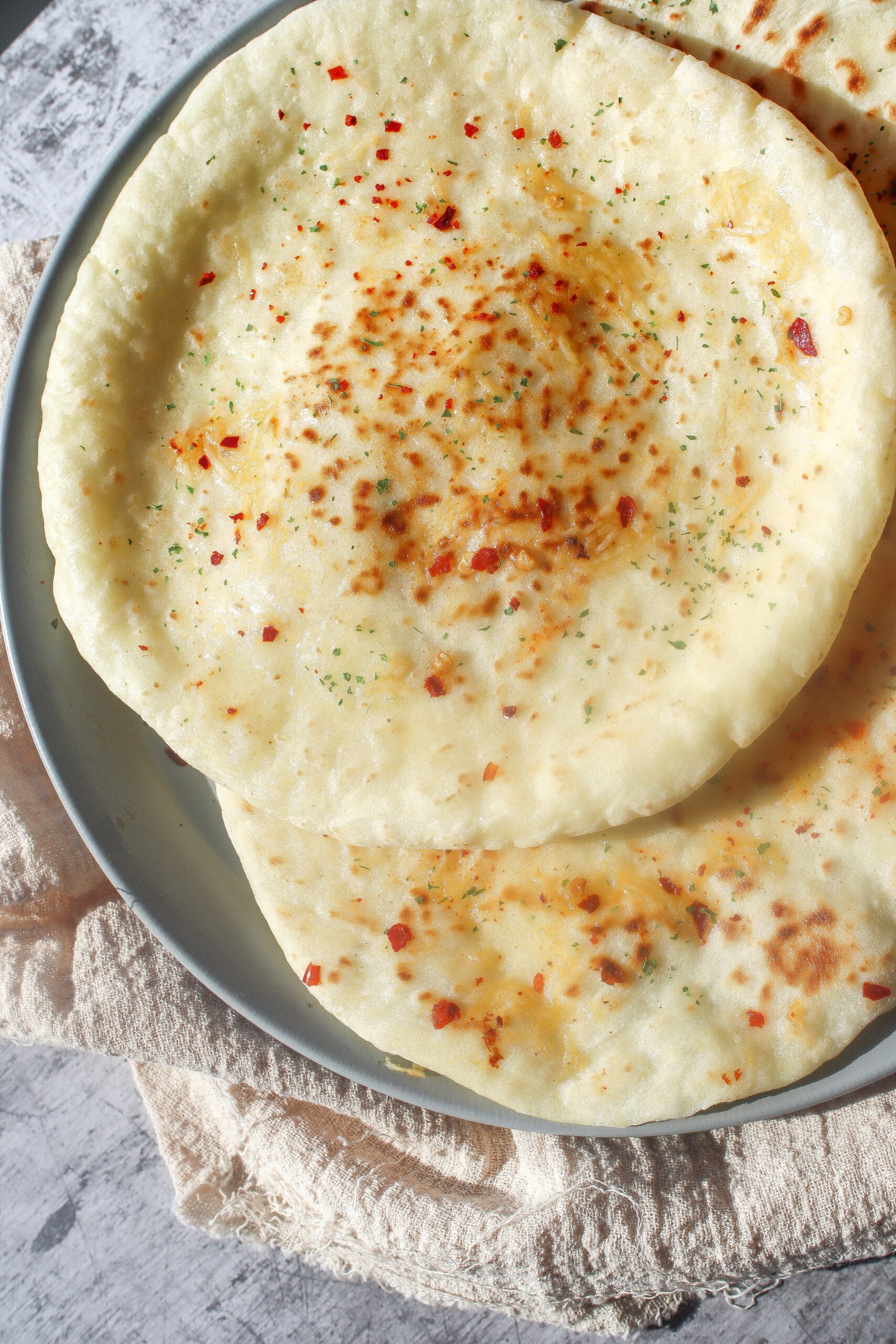
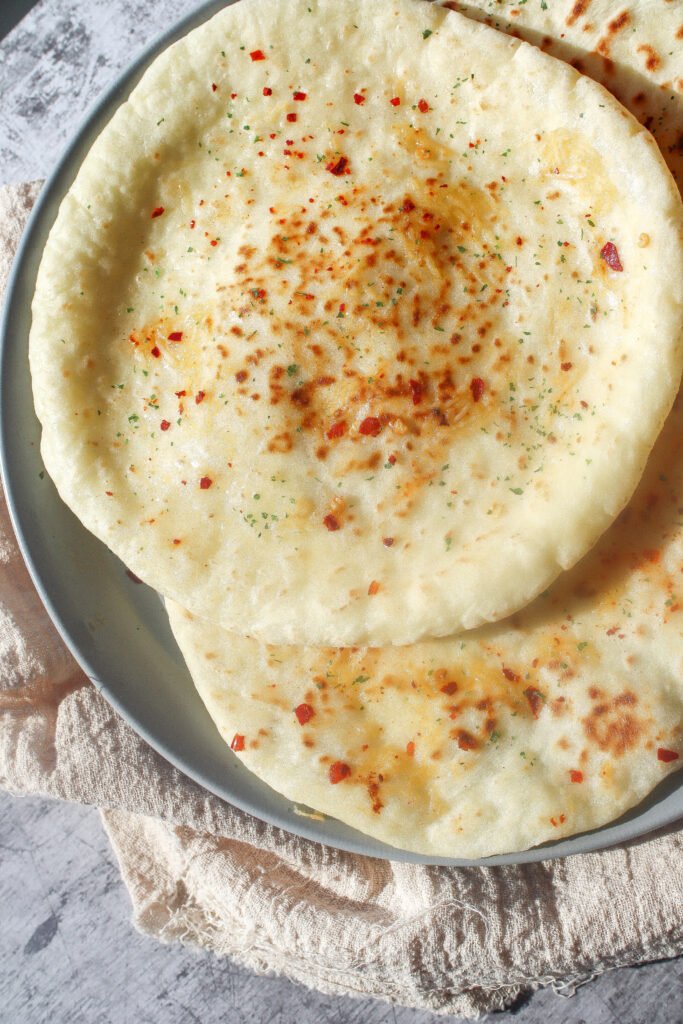
This homemade garlic naan is soft, fluffy, and made entirely on the stovetop – no tandoor oven needed. Made with a simple yeast dough infused with cumin seeds and fennel seeds, then brushed with a fragrant garlic and olive oil topping, this garlic naan recipe is perfect for serving alongside curries, stews, chutneys, or dips.
Unlike most garlic naan recipes that use butter, this version uses olive oil throughout, in the dough and as the garlic topping, giving it a lighter, slightly different flavour while keeping it just as soft and delicious. Ready in about 1 hour 30 minutes and makes 8 flatbreads.
⭐ If you try this recipe, please leave a star rating and comment below. It helps other readers find this recipe – thank you!
Why You’ll Love This Homemade Garlic Naan
- Stovetop method — no oven, no tandoor. A cast-iron skillet or tawa is all you need to get the characteristic charred spots and soft, airy texture.
- Cumin and fennel seeds — these optional but recommended spices add an earthy warmth and subtle sweetness that makes this naan stand out from a plain garlic bread.
- Olive oil instead of butter — lighter than the traditional butter version but still rich and flavourful, especially when combined with the fresh garlic topping.
- Pairs with everything — serve it alongside a Durban fish curry, dhal, or egg chutney, or use it as a wrap or dip base. It works beautifully with almost any South African curry or stew.
- No special equipment — just a bowl, a rolling pin, and a hot skillet.
Ingredients
Dough
Cake wheat flour (2½ cups / 350g): Cake wheat flour gives this naan a softer, more tender crumb than all-purpose flour. If you don’t have cake wheat flour, all-purpose flour works as a substitute, though the texture will be slightly chewier.
Dry yeast (1 tbsp): The key to soft and airy naan. Yeast ferments the dough and produces carbon dioxide that makes the bread puff up beautifully when it hits the hot skillet. Make sure your yeast is fresh — old yeast won’t activate properly.
Sugar (1 tbsp): Feeds the yeast and helps the dough rise. It also adds a very subtle sweetness that balances the savoury garlic and spice flavours.
Olive oil (2 tbsp): Keeps the dough soft and pliable. Unlike butter-based naan, olive oil gives a lighter texture while still preventing the dough from drying out during the rise.
Lukewarm water (1 cup / 250ml): Activates the yeast. The temperature is important — too hot and it kills the yeast, too cold and the dough rises very slowly. Aim for 37–43°C (98–110°F).
Cumin seeds (1 tsp, optional): Adds a subtle, earthy aroma that infuses through the dough as it cooks. The seeds create a slight crunch in the finished naan.
Fennel seeds (1 tbsp, optional): Brings a gentle hint of sweetness and freshness. They pair particularly well with the garlic topping and make this naan especially good alongside fish curry or dhal.
Garlic and Olive Oil Topping
Garlic cloves (5, minced): Use fresh garlic rather than jarred for the best flavour. The warmth of the freshly cooked naan releases the garlic aroma beautifully when brushed on immediately after cooking.
Olive oil (5 tbsp): Carries the garlic flavour across the naan and keeps it moist. You can substitute melted butter here if you prefer the traditional flavour.
Salt (½ tsp): Enhances the garlic flavour in the topping.
Fresh parsley (garnish): Adds a pop of colour and a fresh herbal note. Coriander works equally well if you prefer.
Chilli flakes (garnish, optional): Adds a gentle heat that works well if you’re serving the naan alongside a milder curry.
How to Make Homemade Garlic Naan
Step 1 — Mix the dry ingredients
Combine the flour, sugar, dry yeast, cumin seeds, and fennel seeds in a large mixing bowl. Mixing the dry ingredients together first ensures the yeast distributes evenly through the flour and the spices infuse uniformly throughout the dough.
Step 2 — Add the oil and water
Pour in the olive oil, then gradually add the lukewarm water. Mix lightly with your hands or a spatula until the dough begins to come together. Add the water gradually, flour absorbs liquid differently depending on brand and weather conditions, so you may need slightly more or less than the recipe states. If the dough feels too sticky, add a little more flour; if too dry, add a teaspoon of water at a time.
Step 3 — Knead the dough
Knead the dough on a lightly floured surface for 5–7 minutes until it becomes smooth and elastic. Proper kneading develops the gluten, which gives the naan its soft, slightly chewy texture. The dough should feel soft and smooth but not sticky.
Step 4: First Rise
Brush the surface of the dough with a little olive oil to prevent it from drying out. Cover the bowl with a clean kitchen cloth and leave it in a warm place for at least 1 hour, until the dough has roughly doubled in size. The yeast ferments during this time and produces the air pockets that make the naan soft and fluffy.
Tip: If your kitchen is cold, place the covered bowl in a slightly warm oven (turned off) or near a warm stovetop to help the dough rise.
Step 5 — Divide and shape
Once the dough has risen, punch it down gently to release the excess air. Divide into 8 equal pieces. On a lightly floured surface, use a rolling pin to shape each piece into a round disc about ¼-inch (6mm) thick. Dust the surface with flour as needed to prevent sticking.
Step 6 — Cook the naan
Heat a cast-iron skillet or tawa over medium heat — no oil needed. Place each naan onto the dry skillet and cook until small bubbles form on the surface, about 1–2 minutes. Flip and cook the other side until golden brown spots appear. The direct heat mimics a tandoor oven and gives the naan its characteristic charred spots.
Tip: Place cooked naan in a container and cover with a clean kitchen cloth while you cook the remaining pieces. This keeps them soft and warm.
Step 7 — Add the garlic topping
While the naan is still hot, brush each one generously with the garlic and olive oil mixture. The warmth of the bread releases the garlic aroma immediately and allows the flavour to soak in. Garnish with fresh parsley and chilli flakes if using. Serve immediately.
Tips for Perfect Homemade Garlic Naan
Water temperature matters — too hot kills the yeast, too cold slows the rise significantly. If you don’t have a thermometer, the water should feel warm on your wrist but not hot.
Don’t over-knead — overworking the dough makes it tough rather than soft. Stop when it feels smooth and elastic.
Resting time is essential — skipping or shortening the rise will result in dense, flat naan. Give the dough the full hour for the best texture.
Cook at medium heat — too high and the outside burns before the inside cooks through; too low and you won’t get the charred spots that give naan its authentic look and flavour.
Serve immediately — garlic naan is always best eaten warm, straight off the skillet.
What to Serve with Homemade Garlic Naan
This garlic naan pairs beautifully with South African curries and stews. Some of my favourite combinations:
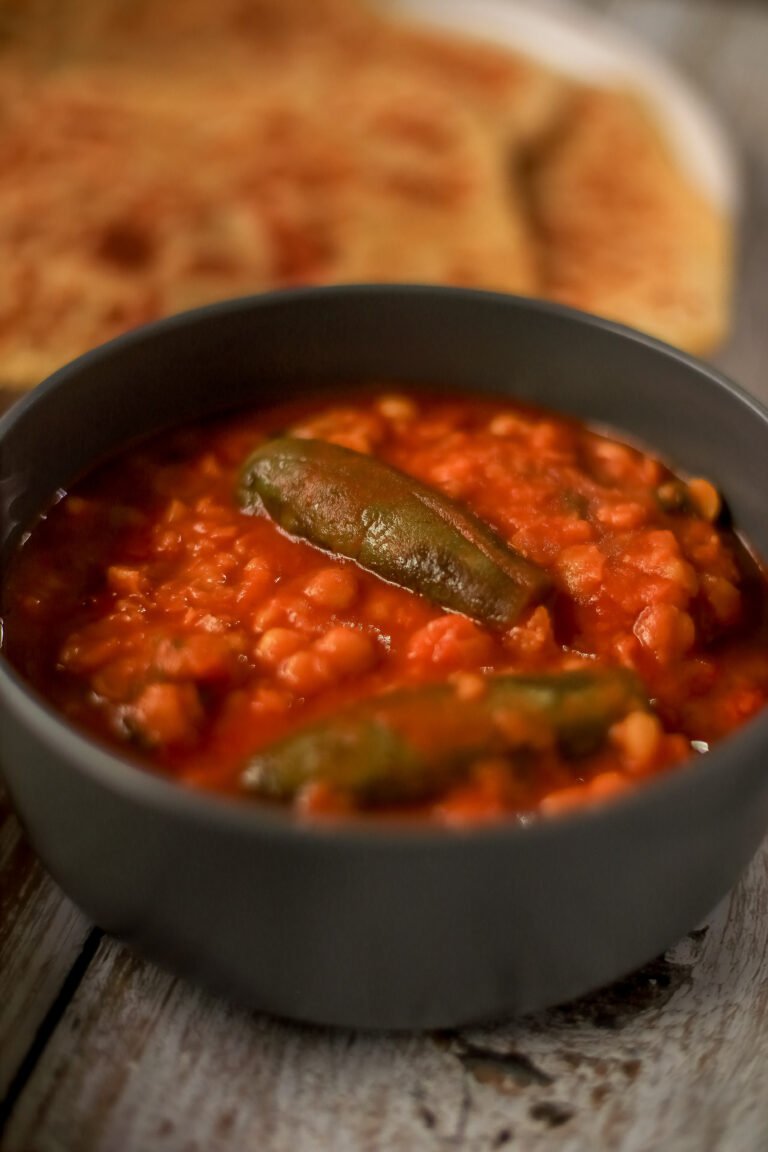
- Durban Fish Curry — the soft naan is perfect for scooping up the rich, tangy sauce
- Dhal (Lentil Curry) — a classic pairing, simple and satisfying
- Egg Chutney — one of the best ways to eat this naan, especially warm from the skillet
It also works as a wrap, a pizza base, or simply torn and dipped into hummus or any sauce you have on hand.
Frequently Asked Questions
Can I make garlic naan without yeast? Yes — substitute the yeast with 1 teaspoon of baking powder and skip the rising time. The naan will be less airy and fluffy than the yeast version but still soft and delicious, and ready in under 30 minutes. This is a good option when you’re short on time.
Can I use whole wheat flour? Yes, but the naan will be slightly denser. For the best balance of softness and nutrition, try mixing half whole wheat and half cake wheat flour.
Can I use butter instead of olive oil? Yes. Substitute melted butter for the olive oil in both the dough and the topping for a richer, more traditional garlic naan flavour. Both versions are delicious.
Why is my naan dense and flat? The most common reason is that the yeast didn’t activate properly. Check that your yeast is fresh and that the water was the right temperature (37–43°C). Also make sure the dough had enough time to rise — at least 1 hour in a warm spot.
Can I make the dough in advance? Yes. After kneading, place the dough in a lightly oiled bowl, cover tightly, and refrigerate overnight. The slow, cold rise actually develops more flavour. Remove from the fridge 30 minutes before shaping and cooking to let it come back to room temperature.
How do I store leftover naan? Store cooked naan in an airtight container at room temperature for up to 2 days. To reheat, wrap in a damp paper towel and microwave for 20–30 seconds, or warm in a dry skillet for 1 minute on each side.
⭐ Tried this recipe? Leave a star rating and a comment below – I’d love to hear how your homemade garlic naan turned out!
Equipment
- 1 Medium size bowl
- 1 Cast iron skillet or tawa
- 1 Rolling Pin
- Measuring cups
Ingredients
- 2 ½ cups (625ml/350g) cake wheat flour
- 1 cup (250ml) luke warm water
- 1 tbsp sugar
- 1 tbsp dry yeast
- 2 tbsp olive oil
- 1 tsp cumin seeds
- 1 tbsp fennel seeds
- 5 garlic cloves (minced)
- 5 tbsp olive oil
- ½ tsp salt
- parsley (garnish)
- chilli flakes (garnish)
Instructions
- Combine flour, sugar, dry yeast, cumin seeds, and fennel seeds in a large mixing bowl.
- Pour in the olive oil, then gradually add lukewarm water. Mix until a soft dough forms. Add more flour if too sticky or more water if too dry.
- Knead for 5–7 minutes on a lightly floured surface until smooth and elastic.
- Brush the dough surface with olive oil, cover with a kitchen cloth, and leave in a warm place for at least 1 hour until doubled in size.
- Punch the dough down gently. Divide into 8 equal pieces and roll each into a round disc about ¼-inch thick.
- Heat a cast-iron skillet or tawa over medium heat. Cook each naan until bubbles form on the surface, then flip and cook until golden brown spots appear.
- Brush immediately with the garlic and olive oil mixture while still hot. Garnish with parsley and chilli flakes. Serve warm.
Notes
- Water temperature: Aim for 37–43°C. Too hot kills the yeast; too cold slows the rise.
- Don’t over-knead: stop when the dough is smooth and elastic.
- Cover cooked naan with a cloth while cooking the rest to keep it soft.
- The dough can be made the night before and refrigerated overnight for a slower, more flavourful rise.