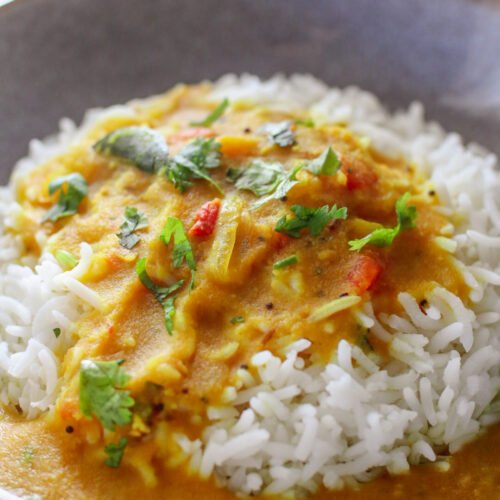
A simple and authentic Indian dhal recipe that’s creamy, flavorful, and perfect for weeknight dinners or meal prep. Packed with warm spices and plant-based protein, this dhal is comforting, nutritious, and naturally gluten-free.
Equipment
- 1 Pressure cooker
- 1 Medium size high pot (20cm)
- Knife
- Chopping board
- Wooden spoon or spatula
- Ladle for serving
Ingredients
- 1/4 cup vegetable oil
- 1 tsp mustard seeds
- 1/2 tsp jeera seeds
- 1 onion
- 1 sprig curry leaves
- 3 dried red chillies
- 1 tbsp vadouvan (optional)
- 5 cloves garlic
- 1/2 tsp ground ginger and garlic
- 1 tsp turmeric
- 1 jam tomato (similar to Roma-style tomatoes)
- 250g pea dhal (boiled)
- 4 cups water
- Rough salt, to taste
- Coriander, to garnish
Instructions
- Rinse the yellow split peas and cook them in water until completely soft and broken down. In a pressure cooker, this takes about 35 minutes. The dhal should be creamy and easy to mash.For convenience, you can cook a large batch, portion it, and freeze it for future meals.
- Heat the vegetable oil in a medium size high pot over medium heat.
- Add the mustard seeds and cumin seeds. Allow them to sizzle until fragrant.
- Add the onions, dried red chillies, curry leaves, garlic cloves, and vadouvan. Cook until the onions soften and turn lightly golden.
- Stir in the tomatoes, ginger and garlic paste, and turmeric. Cook until the tomatoes soften and the spices release their aroma.
- Add the cooked dhal, water, and salt to taste. Allow the dhal to simmer gently until it reaches your preferred consistency.
- Finish with fresh coriander and serve with basmati rice or your choice of biryani.
Notes
Adjust the spice level: Increase or reduce the amount of dried red chillies to suit your heat preference.
Meal prep friendly: You can boil 1 kg of yellow split peas in a pressure cooker, divide them into four portions, and freeze them for quick and easy meals later.
Consistency tips: If the dhal becomes too thick, add a small splash of water. If it is too thin, allow it to simmer for a few extra minutes.
Equipment tip: A medium, tall pot works well for simmering with the spices and aromatics, while a pressure cooker helps soften the lentils more quickly.